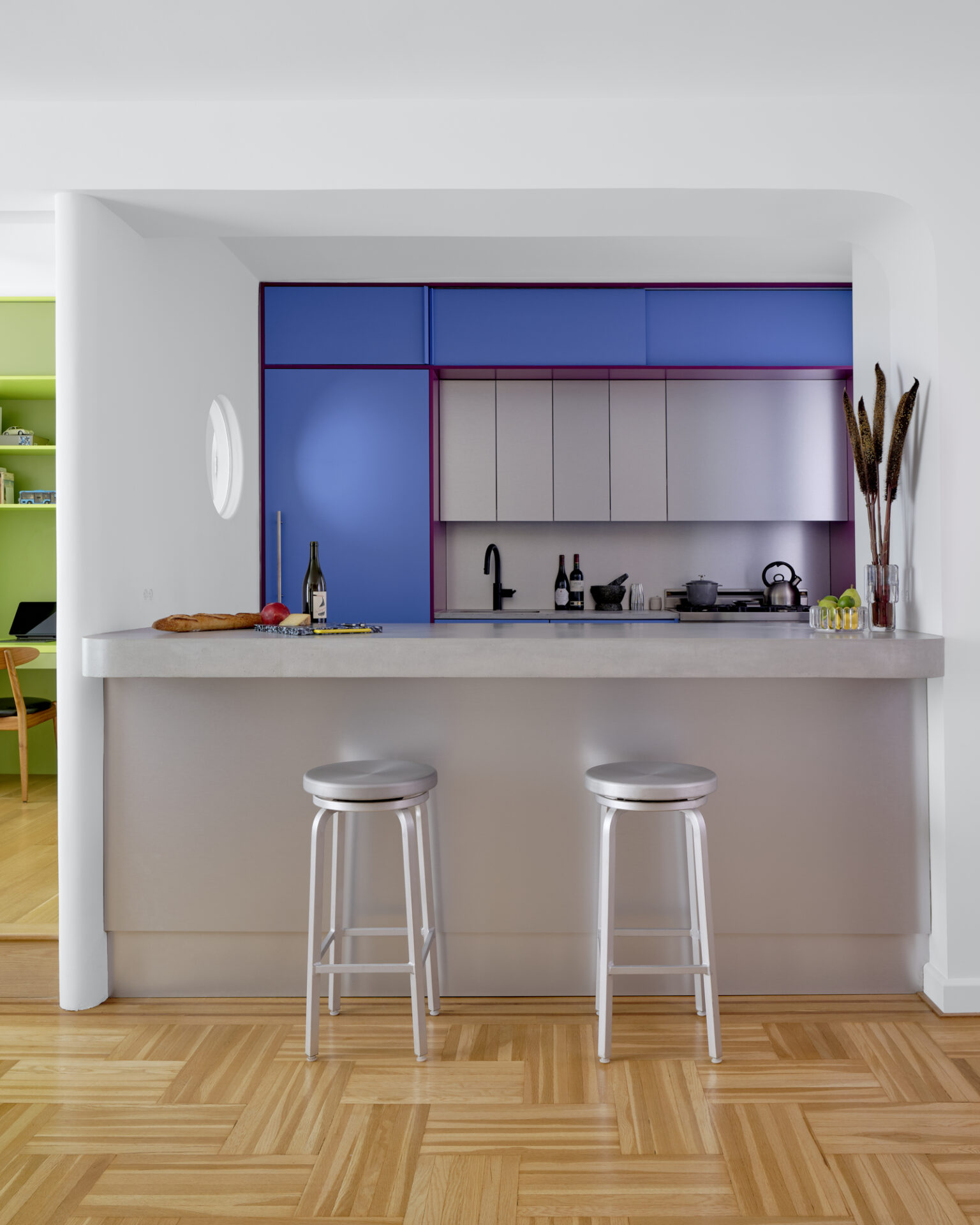
Located within a 1940s art deco building, this upper Manhattan apartment takes inspiration from the era’s proclivity for shiny surfaces and colored light to help a small kitchen feel more spacious. Designed by local firm Ideas of Order, the kitchen’s facelift was part of a larger renovation, including a new flex room and additional entryway storage. “The clients had been living there for years and decided to invest to make it a home they’ll continue to live in for a long time,” said the architect and firm cofounder Henry Ng.
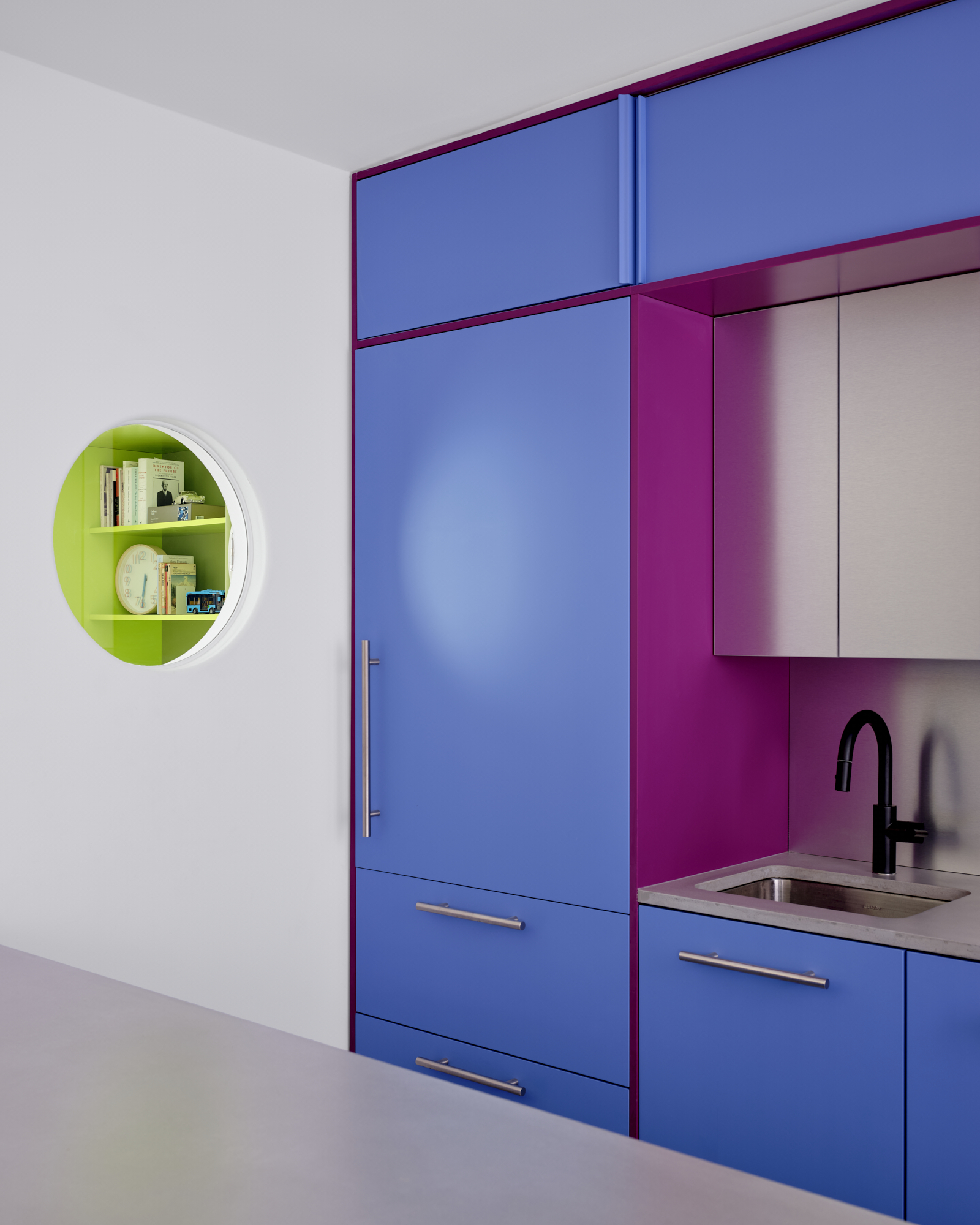
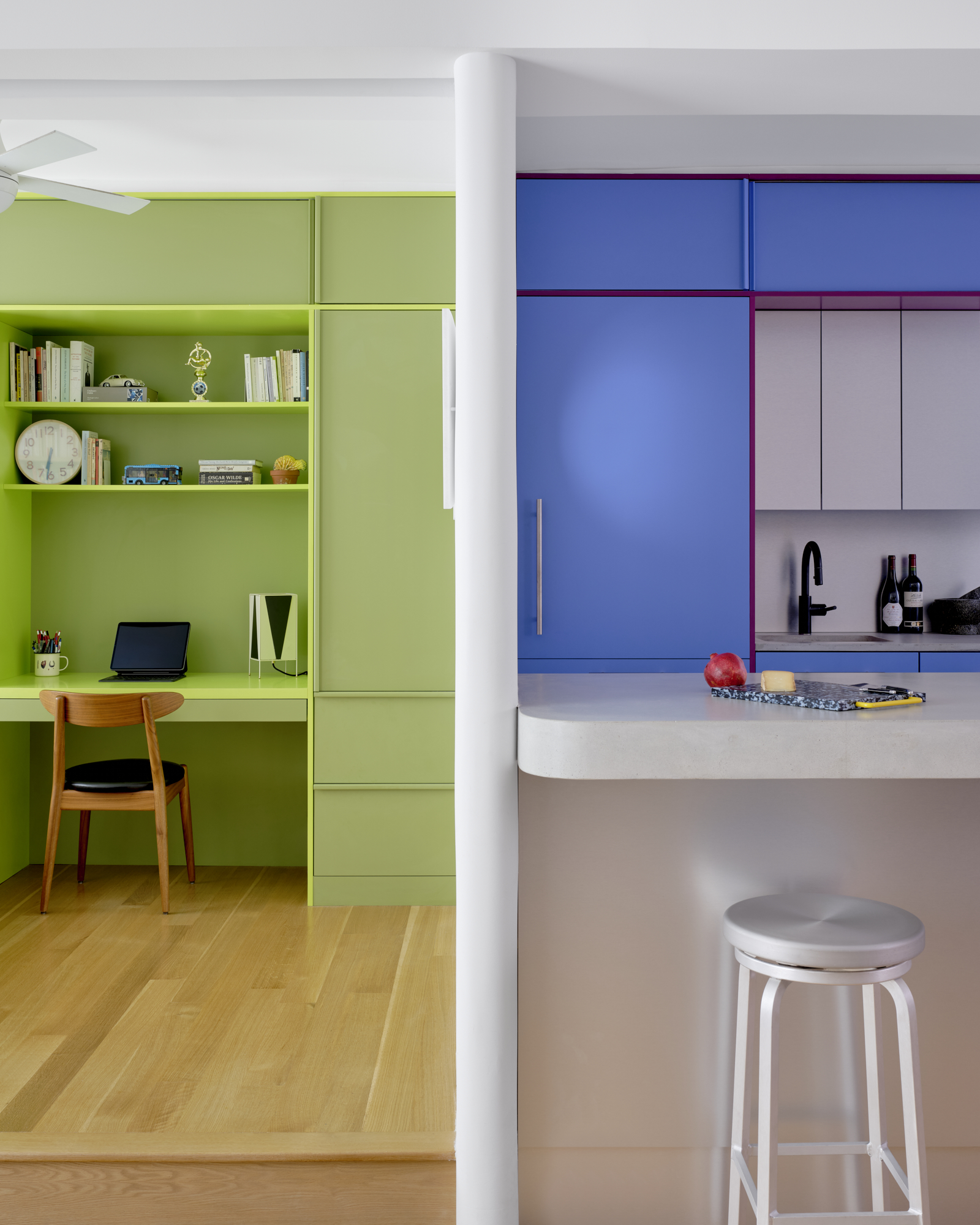
The kitchen’s aluminum cabinets, backsplash, and paneling beneath the eat-in counter offer a subtle reflectivity that amplifies each volume. Concrete countertops ground the space with polychrome painted millwork providing visual interest: different color palettes demarcate the kitchen from the other zones of the open-plan apartment.


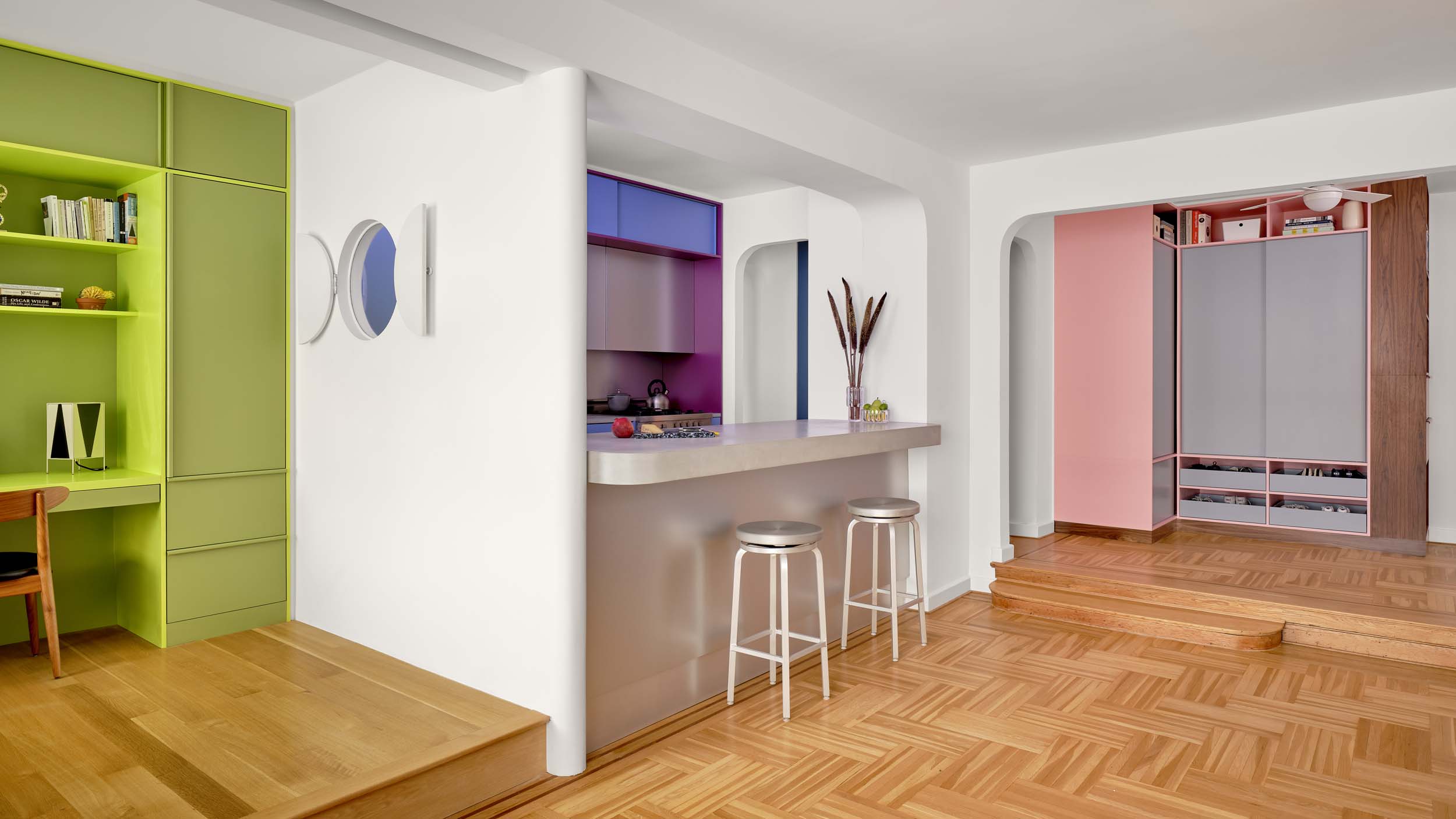
A circular window between the kitchen and flex room becomes a playful porthole, while also drawing in natural light. Overhead cabinetry with sliding panel doors maximizes access in a tight space. “We approached the design with as much attention as we would have a larger space,” said architect and cofounder Jacob Esocoff. “It was an understanding that small scale can be an asset and value in design.”