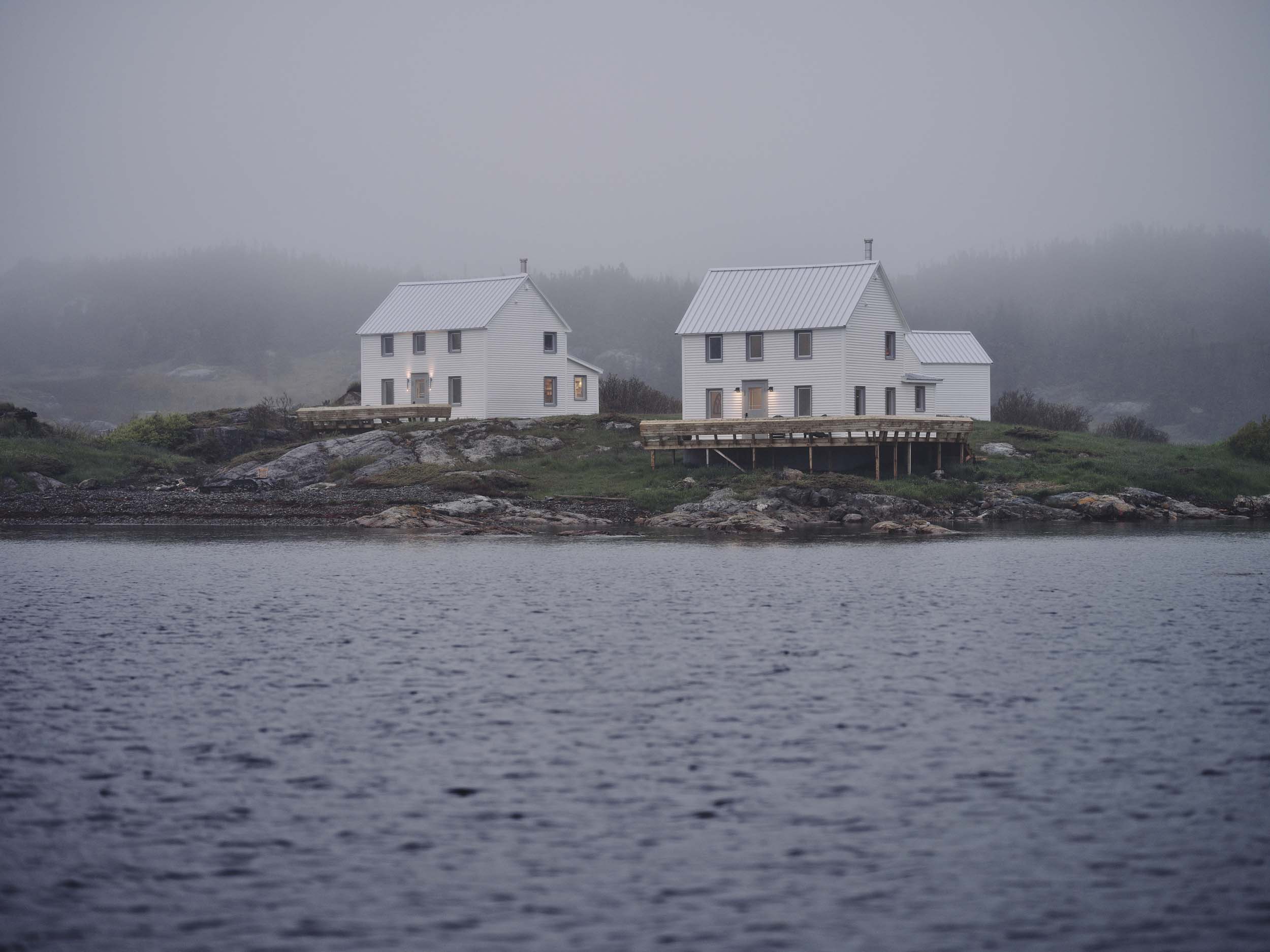
Salvage is a historic fishing village in Canada’s Newfoundland with a population around 108. Between its town center and the neighboring North Atlantic Ocean lies a peninsula where two simple rectangular volumes with a gabled roof are accessed only by boat or on foot. The pair of homes, as well as a nearby shelter, are known altogether as the Burdens Point Residence. The residence acts as a seasonal abode for a Toronto-based real estate agent and her family. They called on Reflect Architecture to evolve Burdens Point to fit a contemporary lifestyle while maintaining its vernacular and Salvage-specific history.
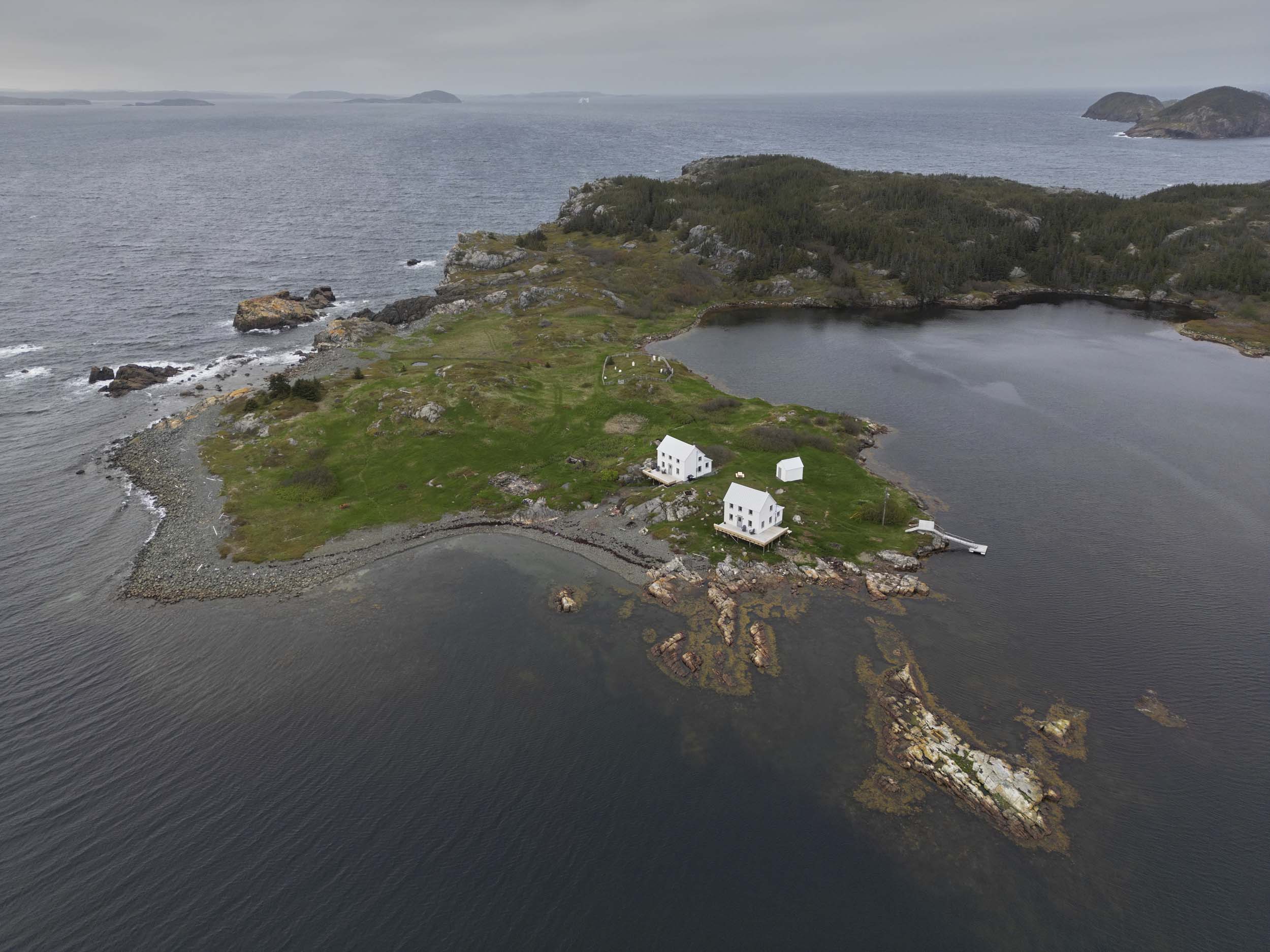
The two homes that make up Burdens Point are the Burden House, the slightly larger house built in 1914 that acts as the main residence for the client, and the Dunn House, built in 1912 that functions more as a guest house where the children and their friends can stay.
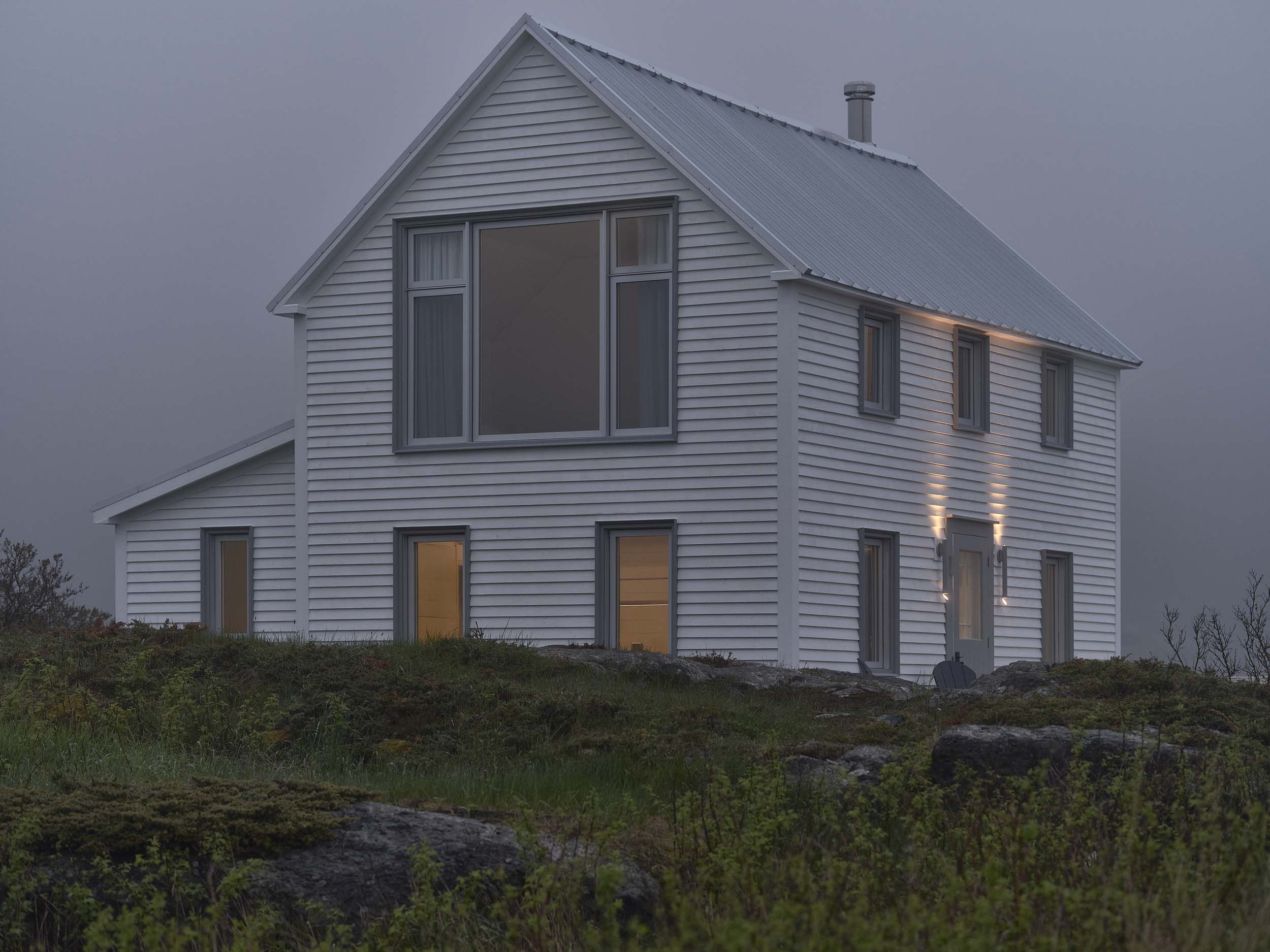
To honor Salvage’s saltbox typology, interventions remained subtle and spare. The architects maintained the volumes of the homes, its traditional white shiplap cladding, and the scale and sizing of all (except one) windows. Differences appear in the details: the galvanized steel roof to better endure the elements, projecting window boxes, and the one outlier picture window on the Burden House, turned away from the town center so the facade still aligns with the local style.
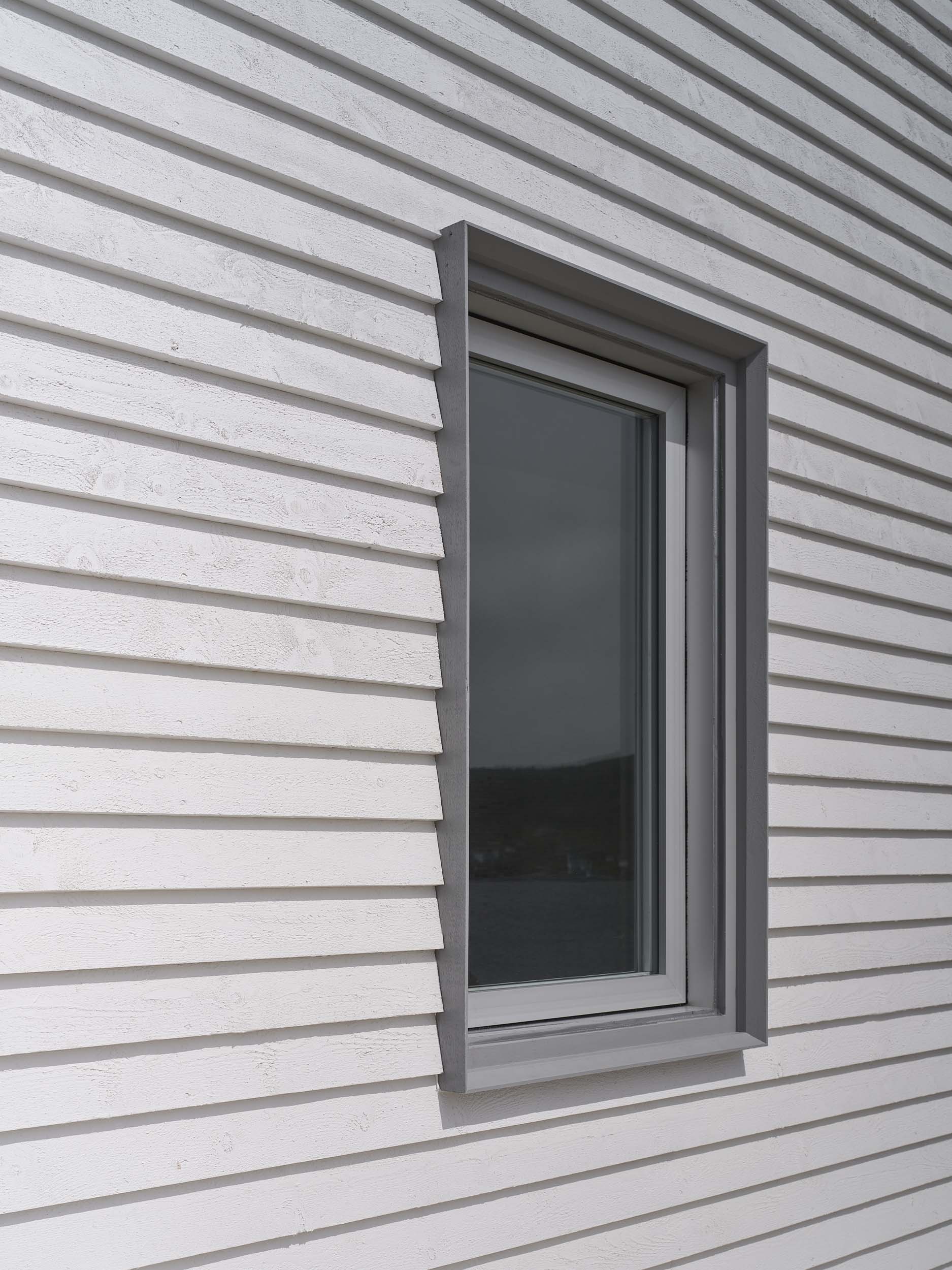
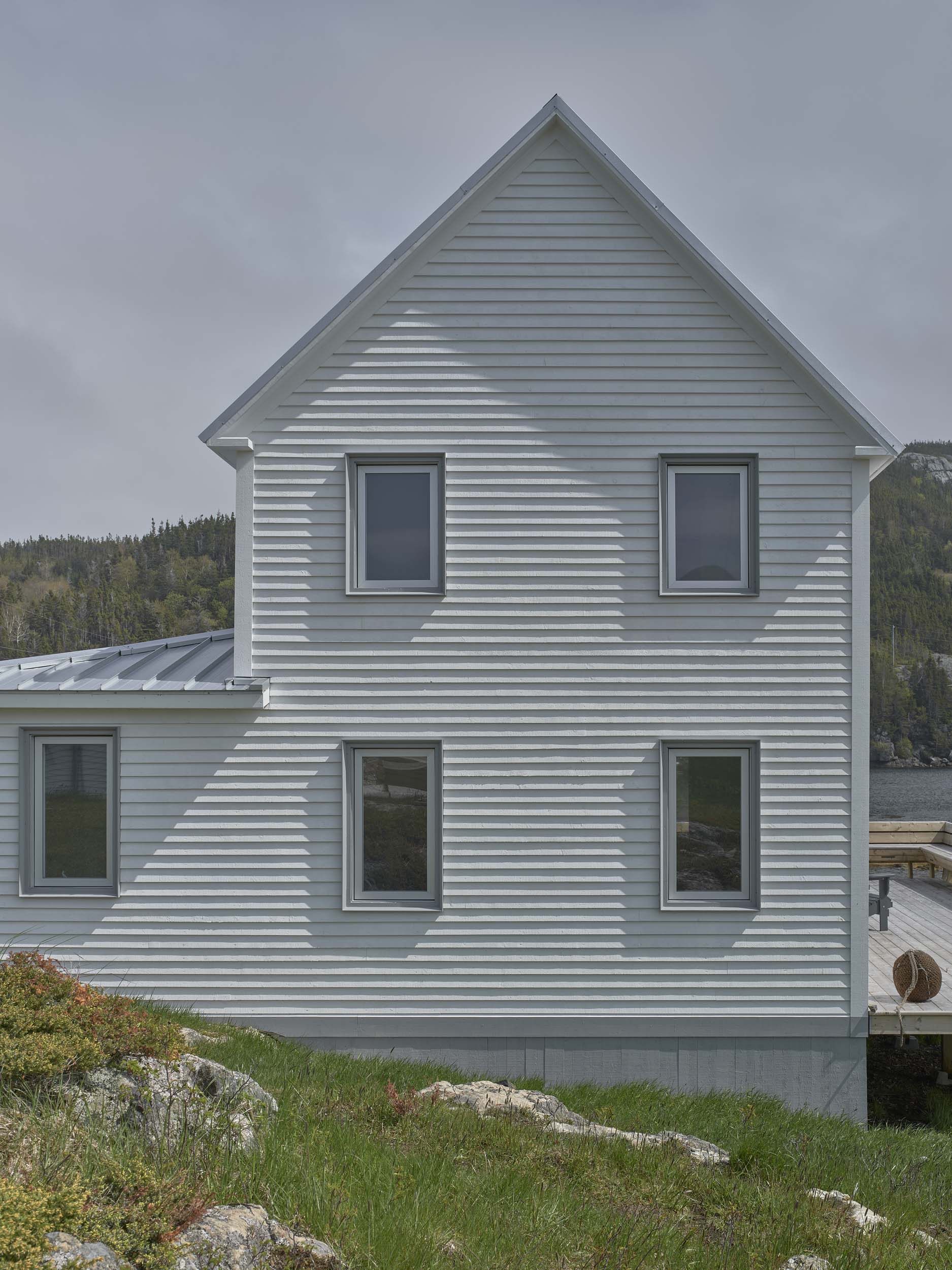
The architects were careful about introducing new materials as, on one hand, all materials had to be delivered by boat. Meanwhile, the salt air is likely to degrade any material chosen, so the architects kept to materials made locally when possible for easier repair. For the Burden House’s renovation, much of the materials were salvaged and repaired. For Dunn, as its damage was greater, new replacements were required.
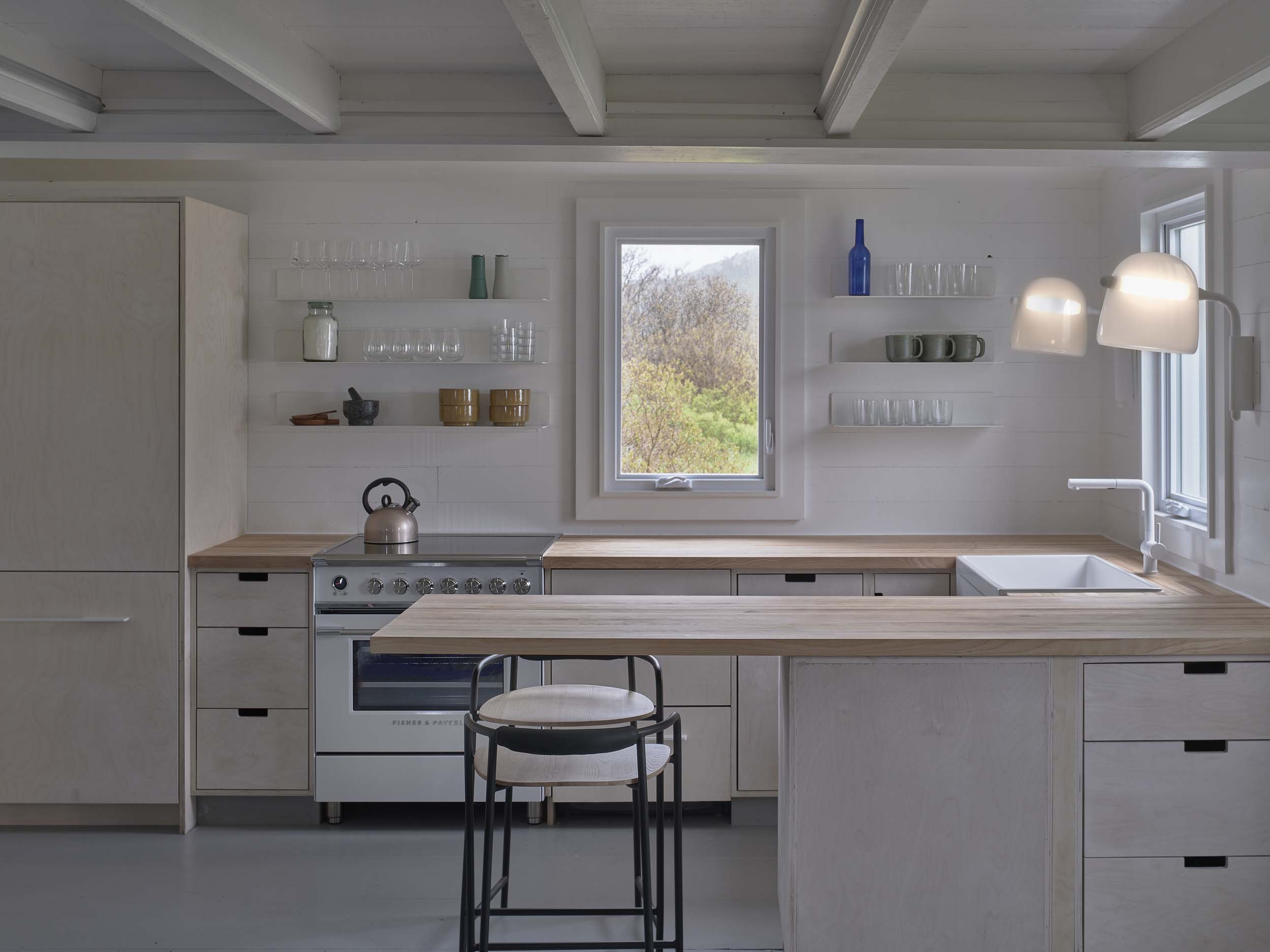
Inside Burdens and Dunn, the architects continued to use shiplap. It falls alongside Baltic Birch plywood in the kitchens of both residences. Here the design opts for butcher blocks to reference commonly found materials and fabrications in Salvage.
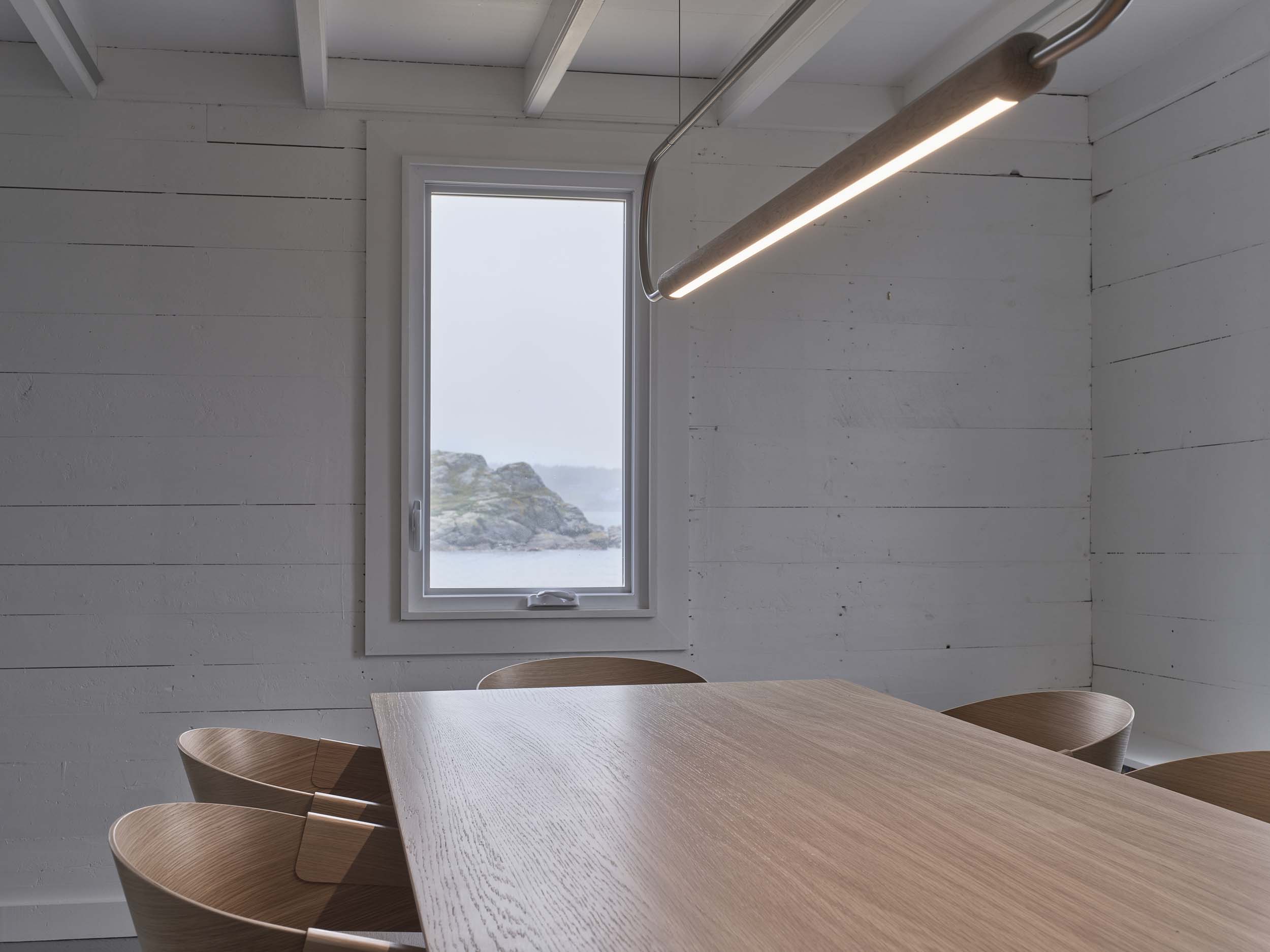
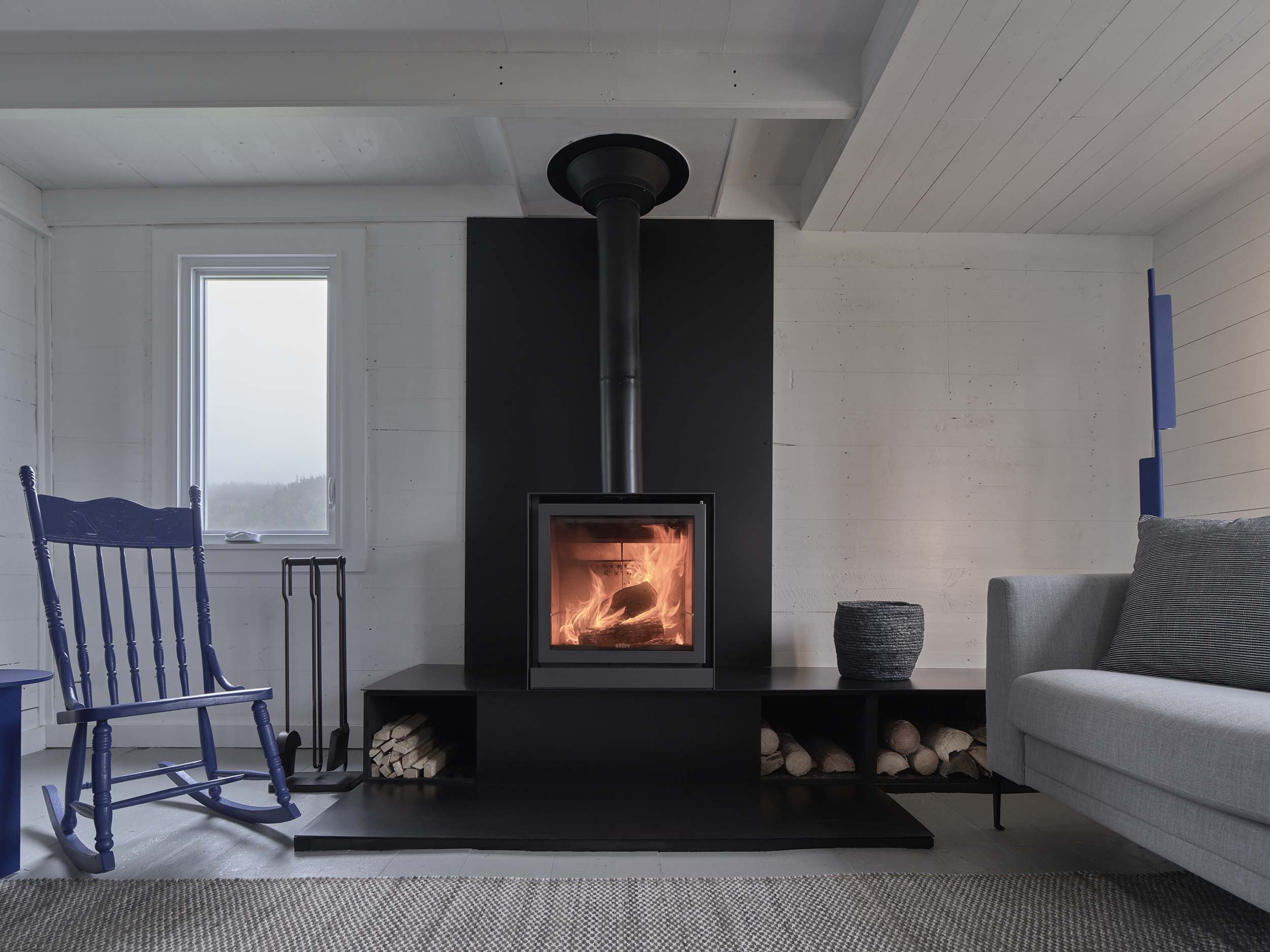
The kitchen reflects the ground floor’s neutral tones. It runs through the living room and dining room, as well as the additional TV room found in Dunn. Wooden furniture and modern lighting help provide a modern lens to the interior, interrupted intermittently by pops of electric blue that are found throughout the home like a small motif.
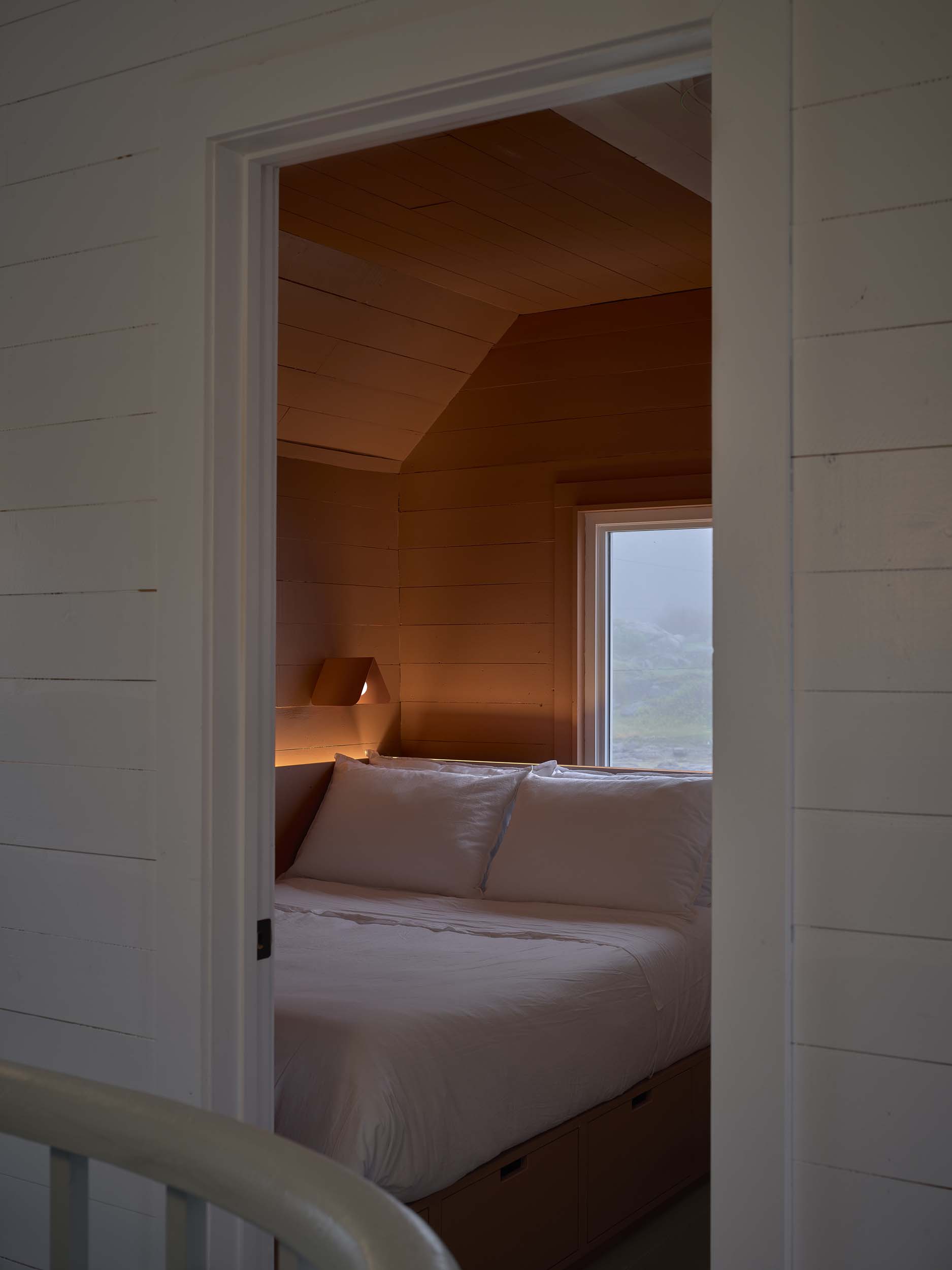
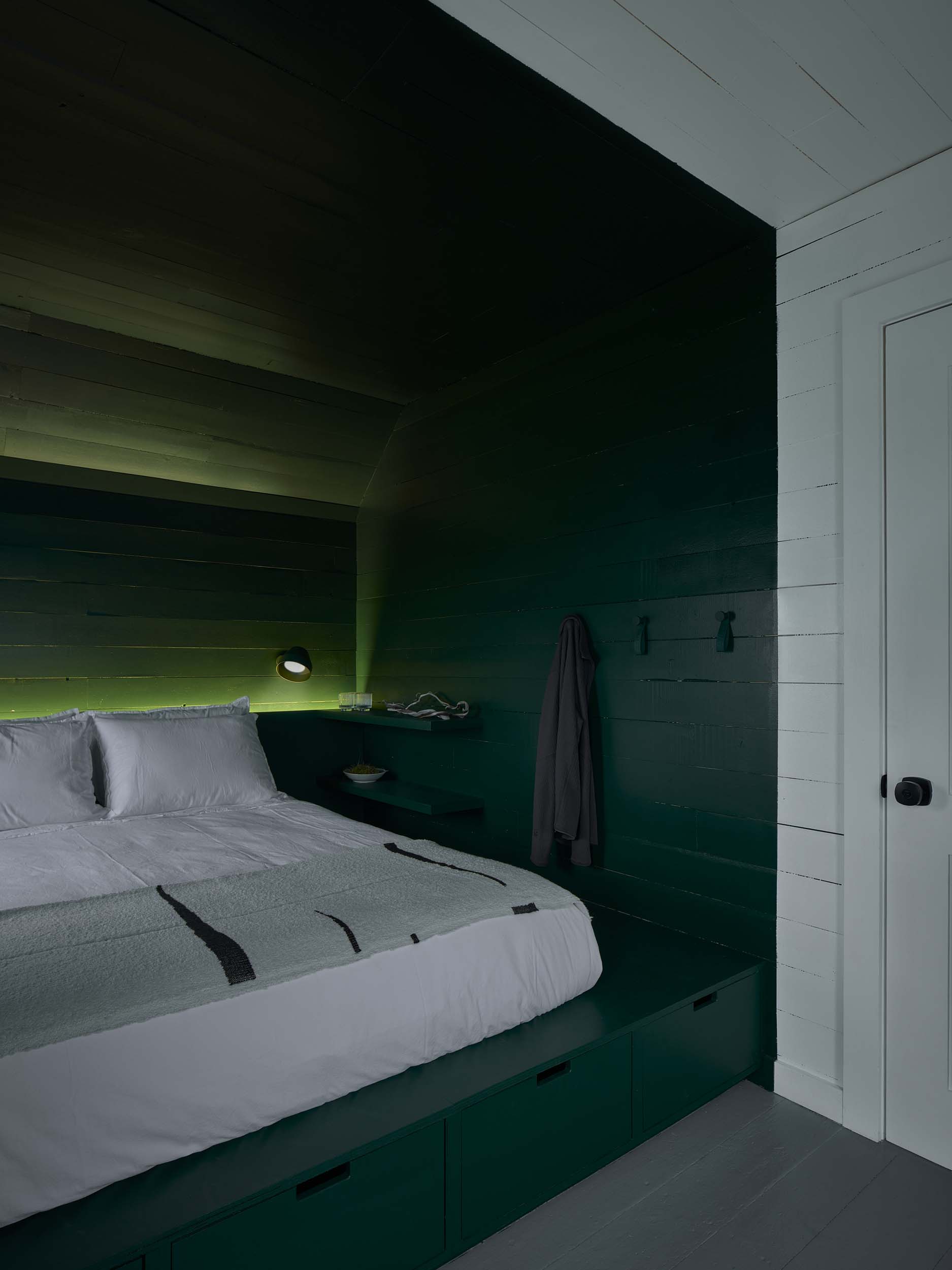
Following color will lead upstairs where the architects raised the height of the ceiling that previously required hunching over. Shadows and saturation inform the second floor, from the curved railing along the stairs to the color blocking used in each bedroom. In the Dunn house, two bedrooms are coated in orange and green respectively. It makes for a more contemporary replacement for the wallpaper traditionally found in these homes, while providing some added comfort. Each also features built-in platforms for the beds, lit by either a gable-shaped sconce or task light, similar to the setups in the rooms found in the berths of ships.
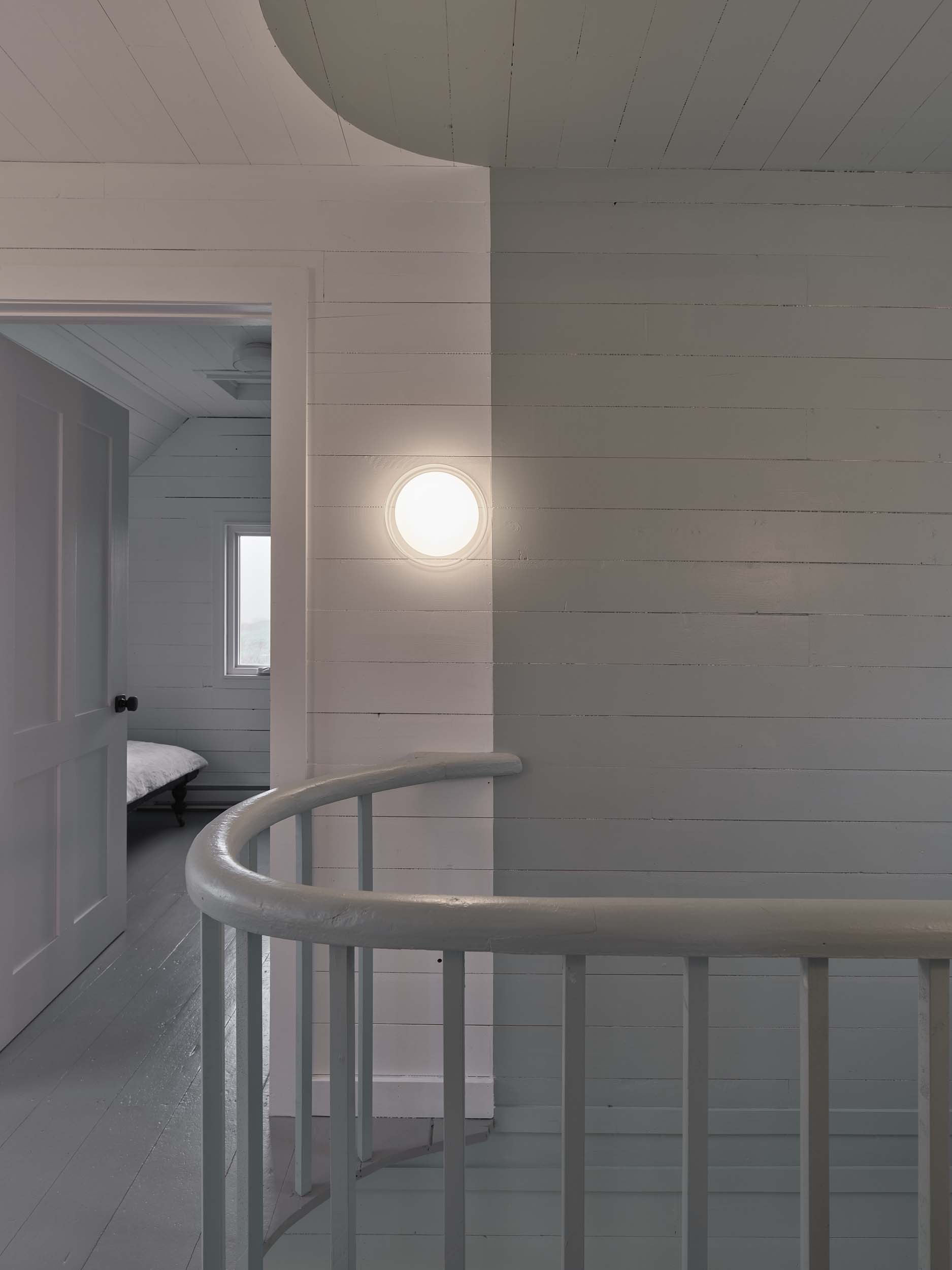
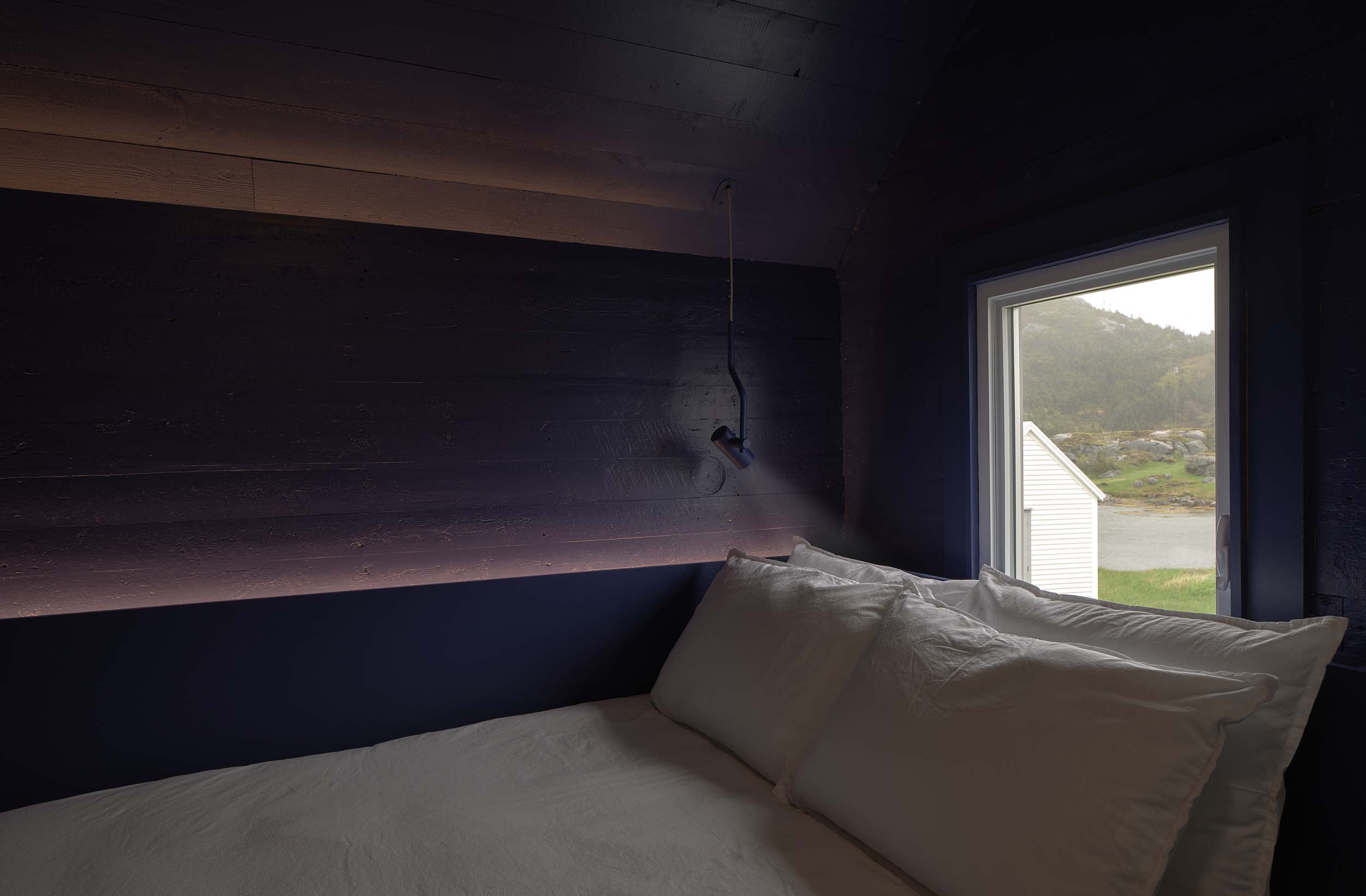
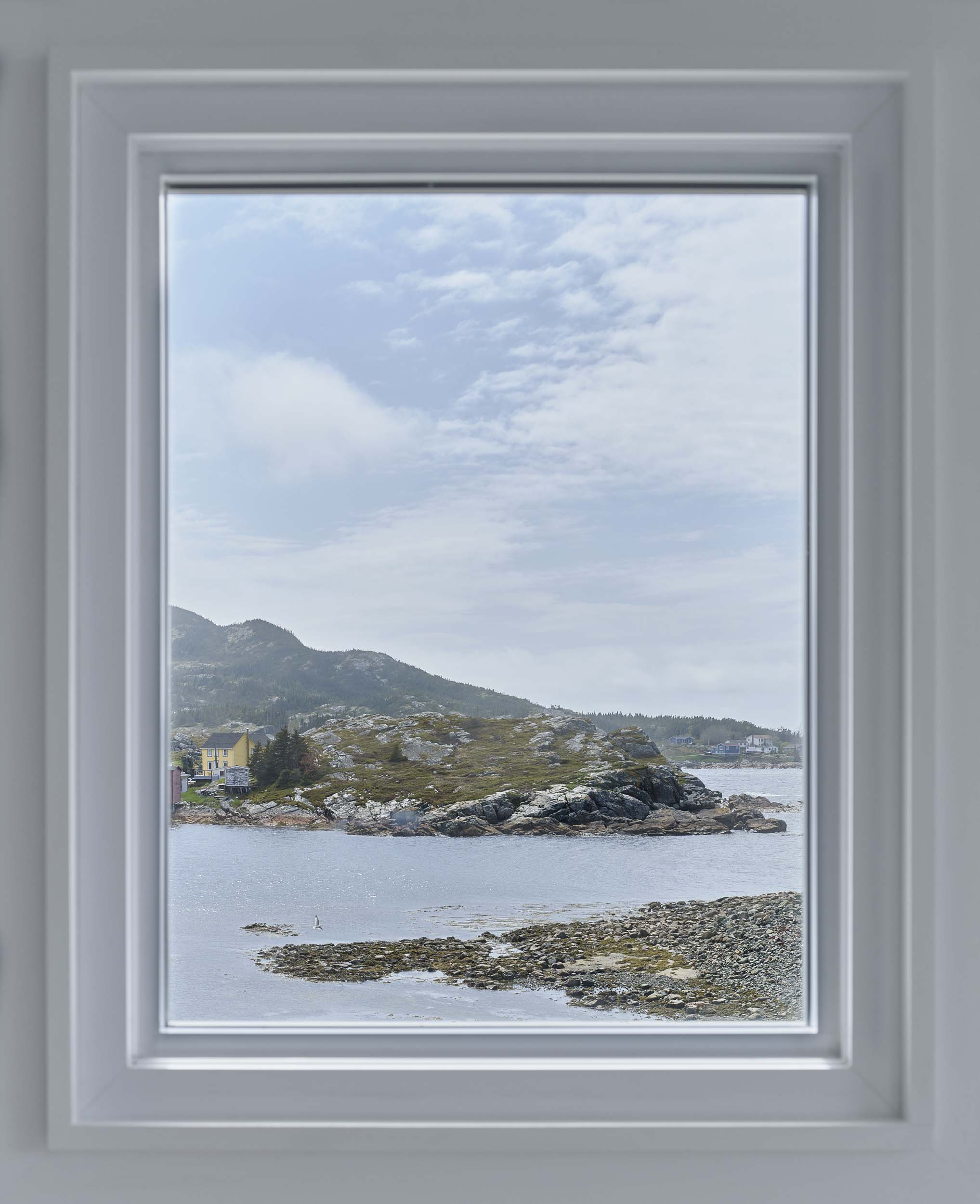
In Burden, a primary suite and guest bedroom lie on the second floor. The primary bedroom is more quiet with a white color scheme and the picture window overlooking the landscape. In contrast, the guest room is clad in a dark, moody blue. Its horizontal lighting casts an orange glow along the siding.
“The through-line of this entire project was creating a home that felt familiar to the place, but in an application that was contemporary,” said Trevor Wallace, principal of Reflect Architecture. “It was ultimately an exploration of what lines could be crossed and which couldn’t. How far could we go while still creating a design that was authentic to Salvage?”