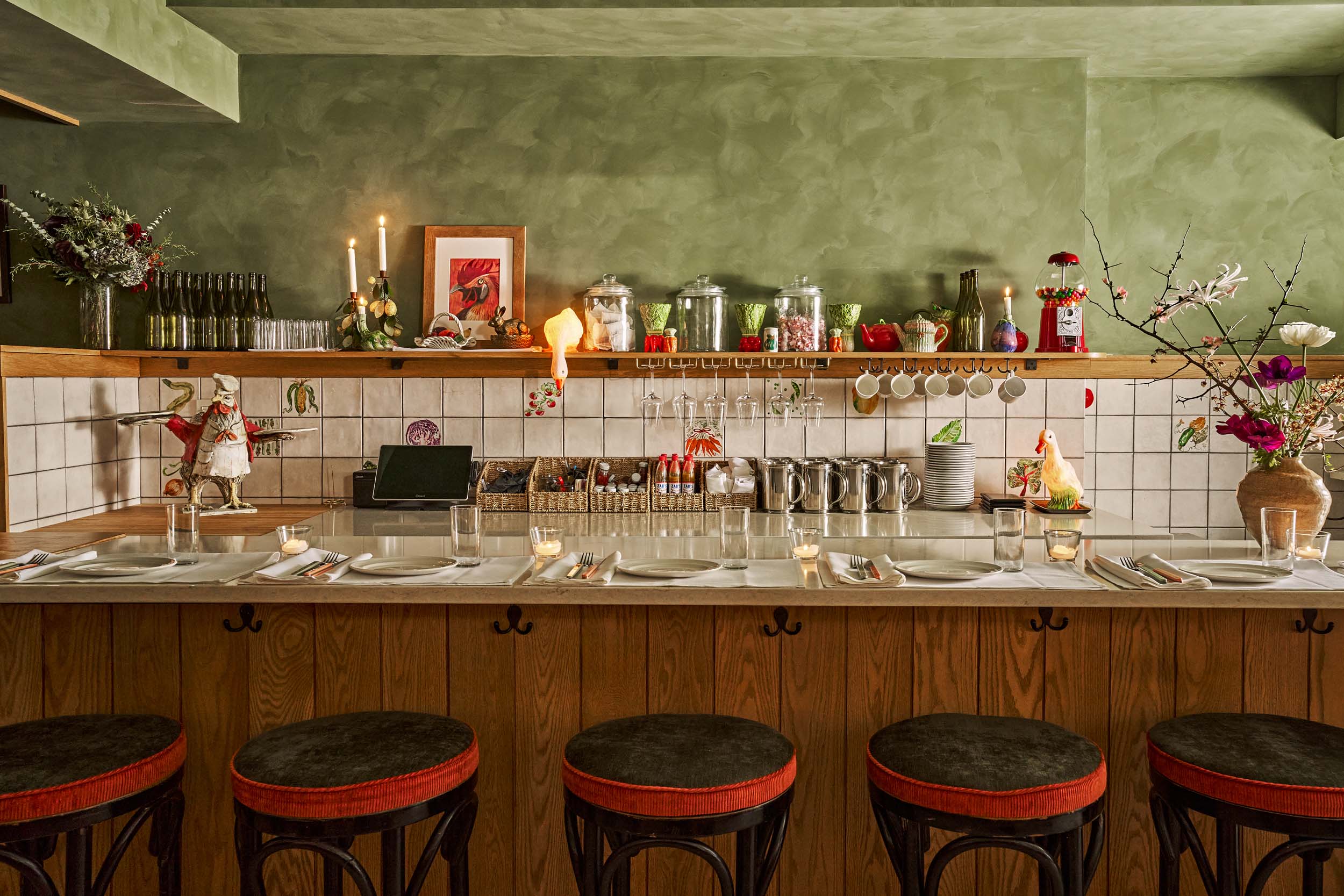
The term restaurant derives from the French word meaning “restore,” a fact that the owners of Pitt’s in Red Hook, Brooklyn, have taken to heart. The cozy corner spot—in a neighborhood suddenly surging with destination restaurants—offers a homey, nostalgic feel for diners, expertly crafted by up-and-coming interior designer Sydney Moss.
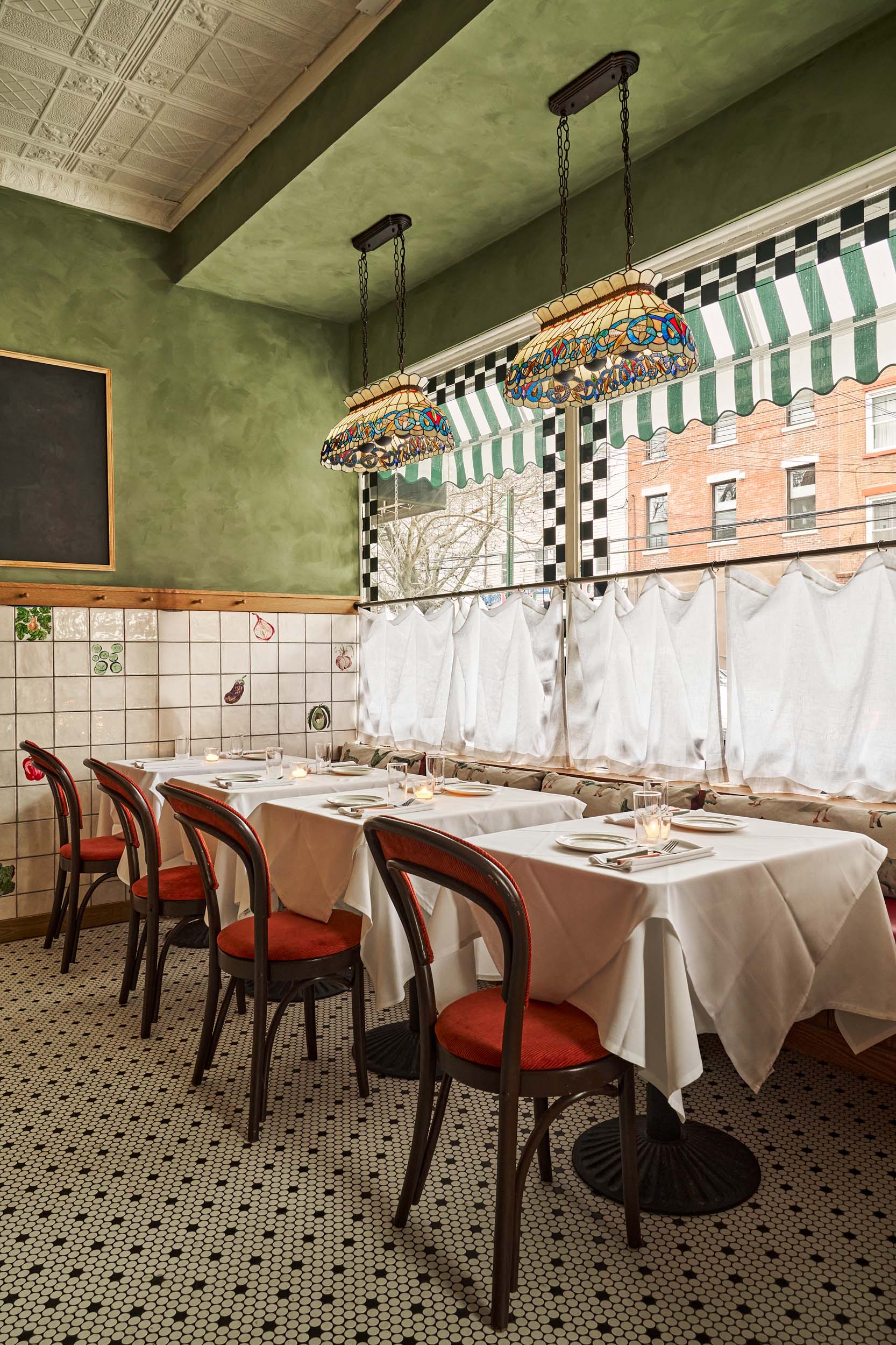
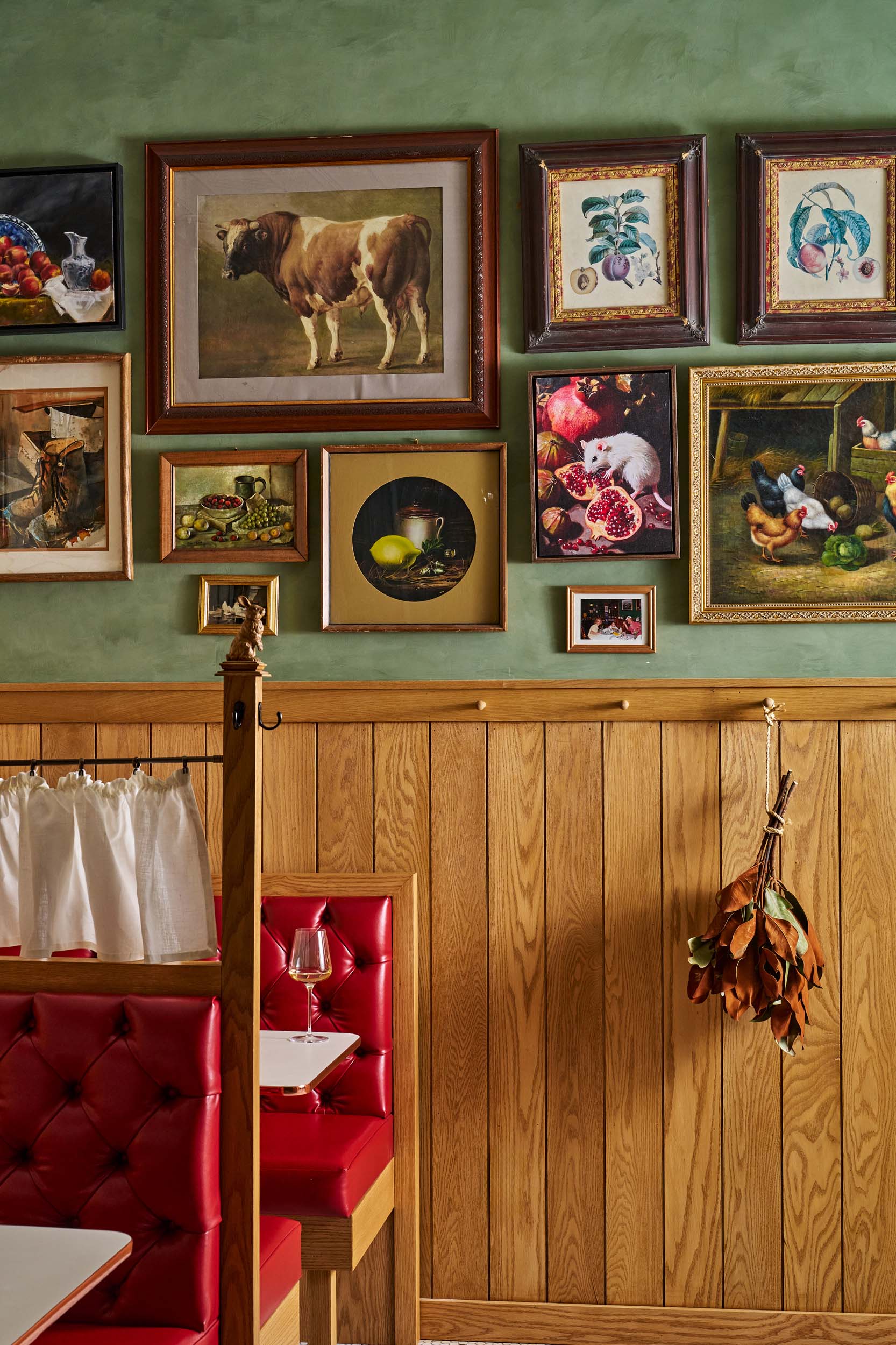
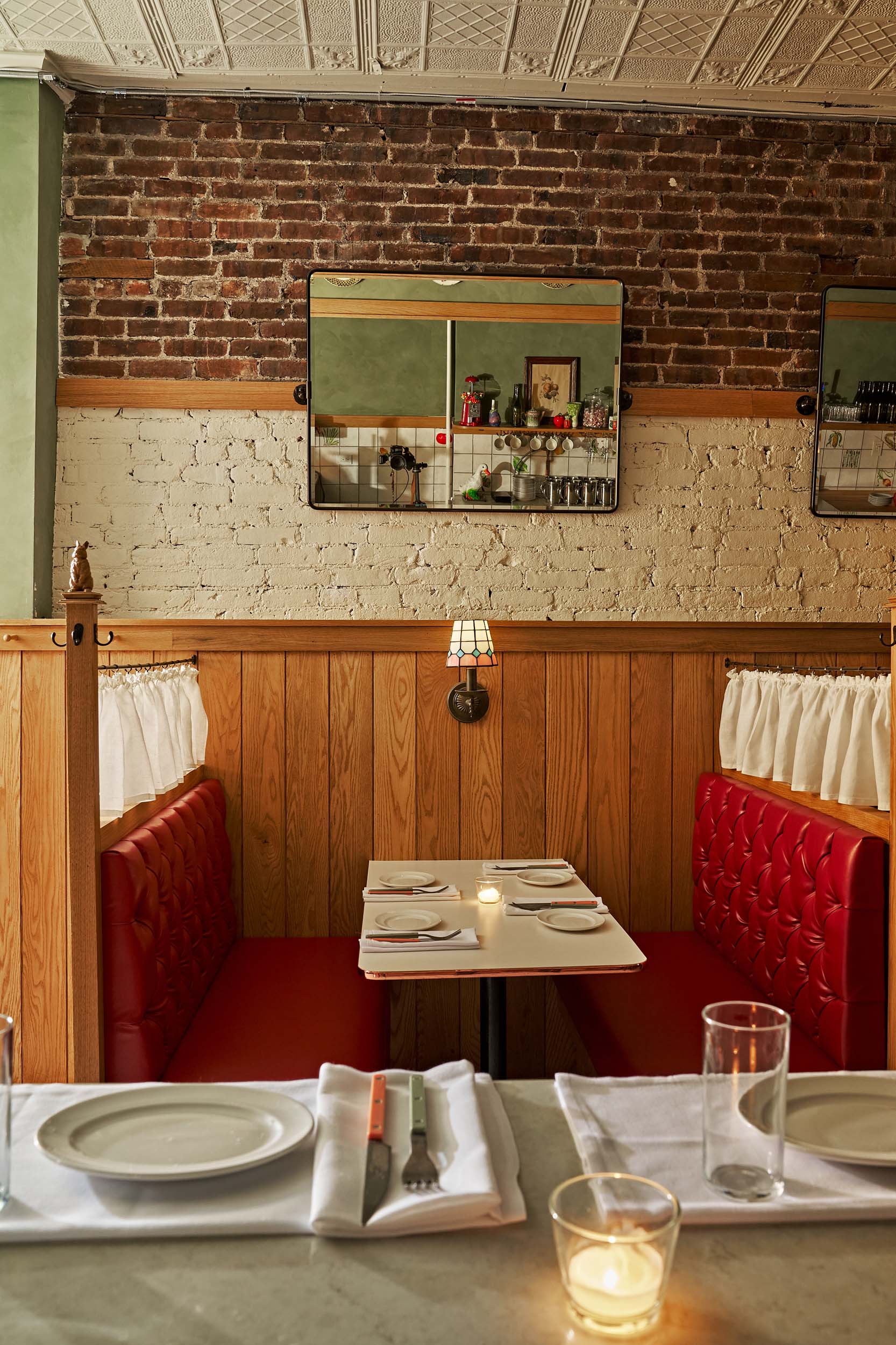
Pitt’s guests enter into a dining area with red leather booths along wood-paneled and brick walls, a counter with upholstered stools, and a romantic nook up front with windows peering out to Van Brunt Street and statement mosaic chandeliers overhead. The design elements toggle between high and low, elegant and almost kitschy—decorative wall plates and ceramic animals are always within view—connecting to the menu’s Southern-inspired, country-chic dishes.
Moss told AN Interior that the chef and co-owner Jeremy Salamon, who earned citywide acclaim with his first restaurant Agi’s Counter, requested a space that was “ugly pretty” when reaching out to the designer about Pitt’s, and told her she’d be “perfect” for it.
“I wasn’t sure if that was a compliment at first,” Moss said. “But as we got working on the space, it became clear that our tastes are incredibly aligned.”
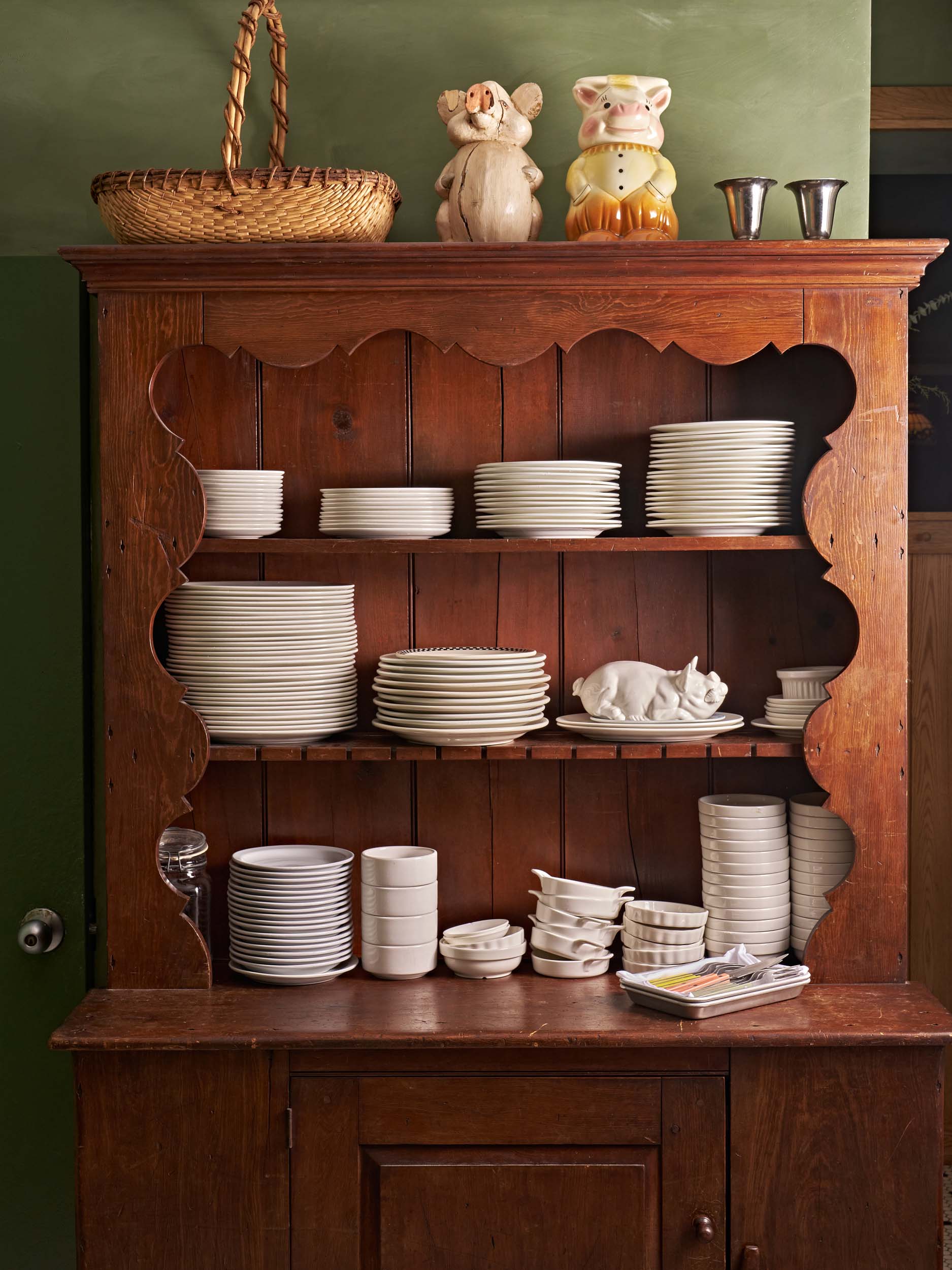
The decor is inviting and familiar to anyone who has visited a family member’s country home, with an open hutch for plate storage, wall tiles hand-painted with images of vegetables, and Southern-influenced bric-a-brac.
“I wanted the space to feel like one story and one narrative,” Salamon told AN Interior. “A place that felt like it had been there forever and was embedded in the neighborhood. Pitt’s is in many ways an homage to my childhood and growing up in the South.”
The “ugly pretty” or jolie-laide design dictate proved inspirational. Moss said that Salamon sent her still-life oil paintings as a reference; she in turn aimed to make diners feel like they were seated in their own personal tableaux, “with enclosed seating of booths and divider walls that created private nooks,” she explained.
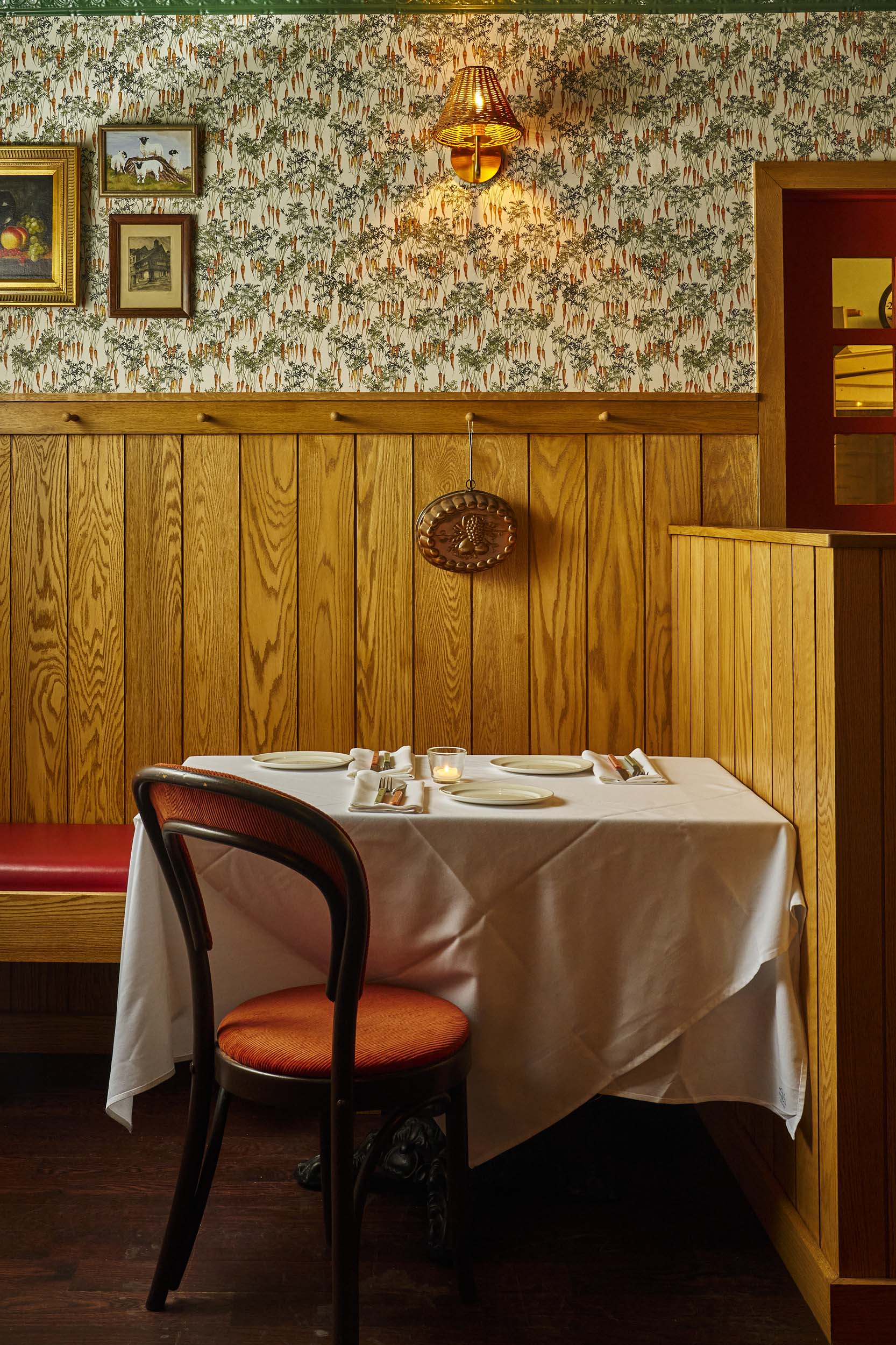
During the monthslong process of transforming the multi-room corner space into an entirely new restaurant, Moss employed an adaptive-reuse mentality. She reimagined the cafe chairs inherited from the previous tenant, the now-closed Fort Defiance, in order to minimize waste. “I insisted we keep [the chairs] even though the seats were ripped and in bad shape,” she said. Moss sanded and painted the wood of the seats and hired her former boss from Stitchroom—where Moss had worked as lead tailor—and who now owns an upholstery shop, Find the Thread, which specializes in refurbishing used furniture. They reupholstered the revived chairs using Cozy Cord by Knoll, ”with a double welt, which felt more refined than upholstery tacks,” Moss added.
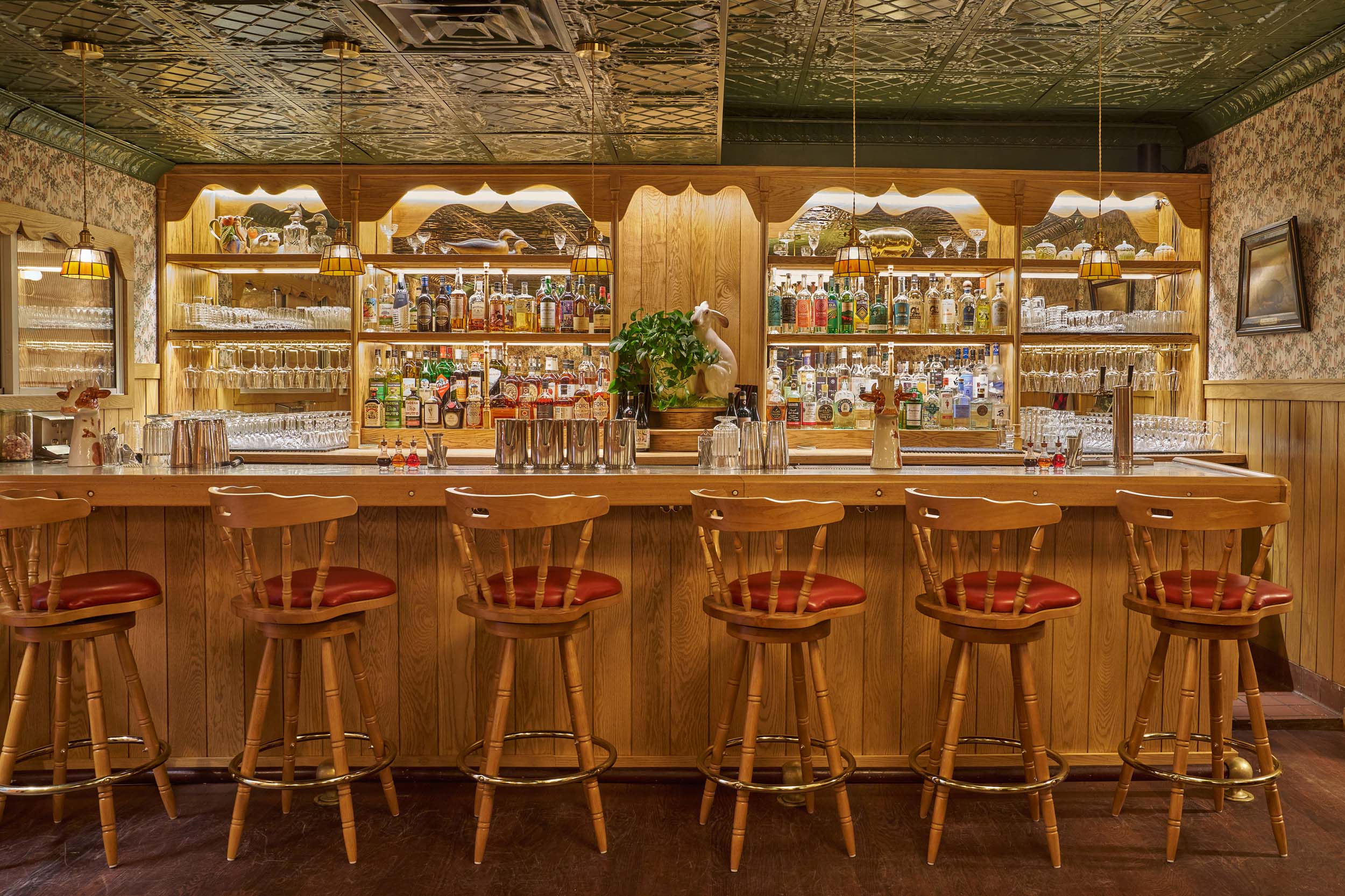
The cafe chairs bring a sense of sophistication to the main dining room; they’re also remarkably comfortable. In the back room, which features a smaller dining area as well as a bar with stools and ample space for eating when the tables are all occupied (as they often are), Moss set a different, less whimsical mood. Carrot wallpaper by Bertioli served as the thematic guidepost for the back room and influenced the entire restaurant’s decor.
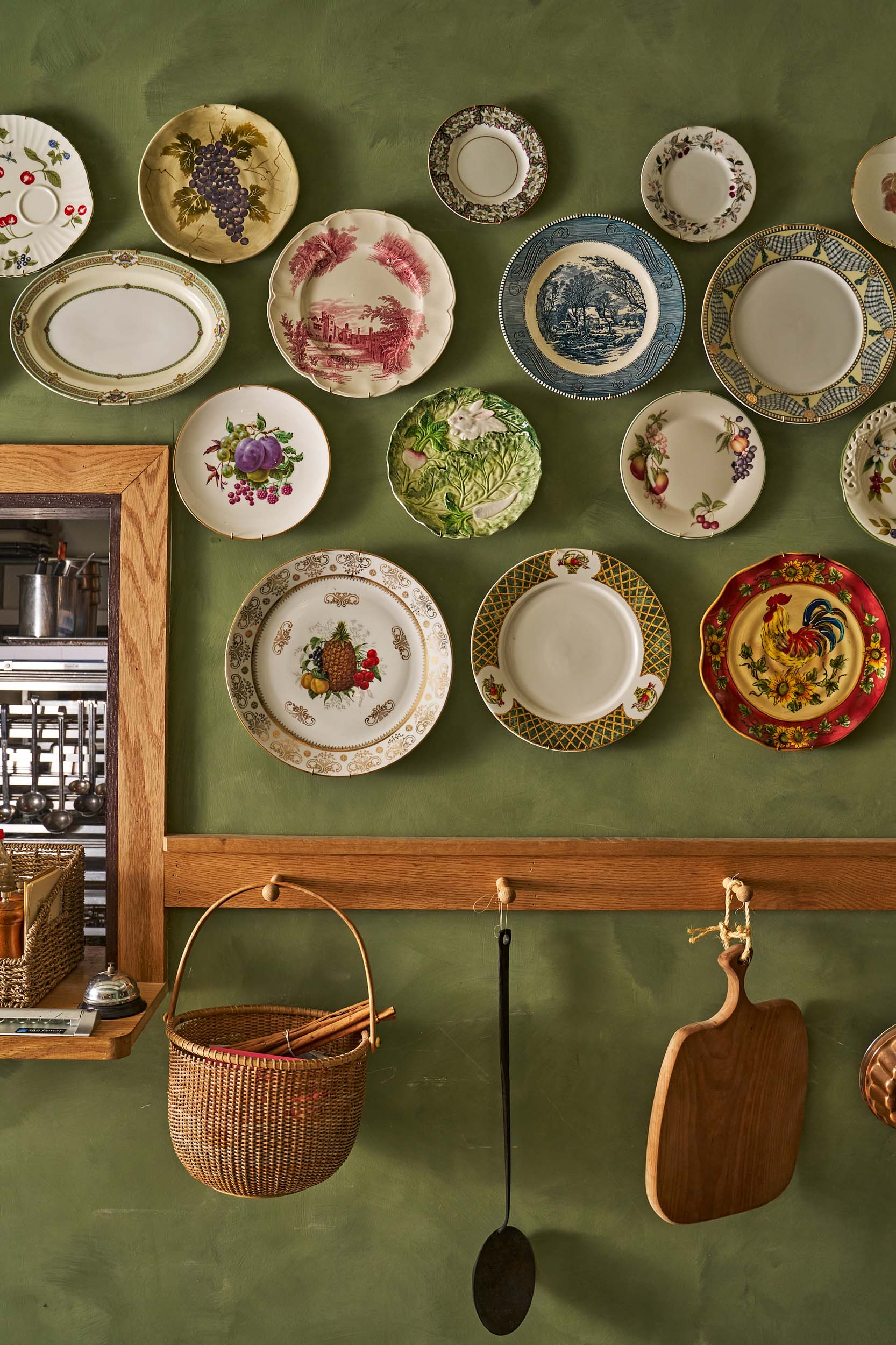
“Pitt’s is designed to evolve and change over time,” she added. “We wanted it to feel like a place that belongs in Red Hook, as if it has always been there, so taking things slow and letting it mature over time was very important. I don’t think the design will ever be 100 percent complete, and I intend to keep buying every plate I see with fruits and vegetables on them until there is no more space on the walls.”
The young designer has good reason to keep an attachment to her first big restaurant project. It helped her establish a voice and a presence as an interior designer. She recently finished another project, a retro-inspired burger joint with “modern flair,” as she wrote on her Instagram page. It’ll be interesting to see what Moss comes up with next.