The Bicknell’s thrush is a humble little bird. Beak to tail, it stretches no longer than the length of a human hand. Its dusty plumage is the color of a field mouse, and at first glance, it’s difficult to tell apart from the gray-cheeked thrush—until you hear its warble, which staccatos like a digital glitch.
It’s this call, and the sight of this bird—among Maine’s rarest—that draws onlookers to Saddleback Mountain during warmer months. Over the winter, when the birds have flown south, skiers flock to the slopes of Saddleback for runs like Black Beauty, Warden’s Worry, and Frostbite. Now, thanks to an intervention from New York City–based firm Davies Toews Architecture, skiers, hikers, and birders can enjoy the views from Saddleback with a drink in hand at a restaurant called The Nest.
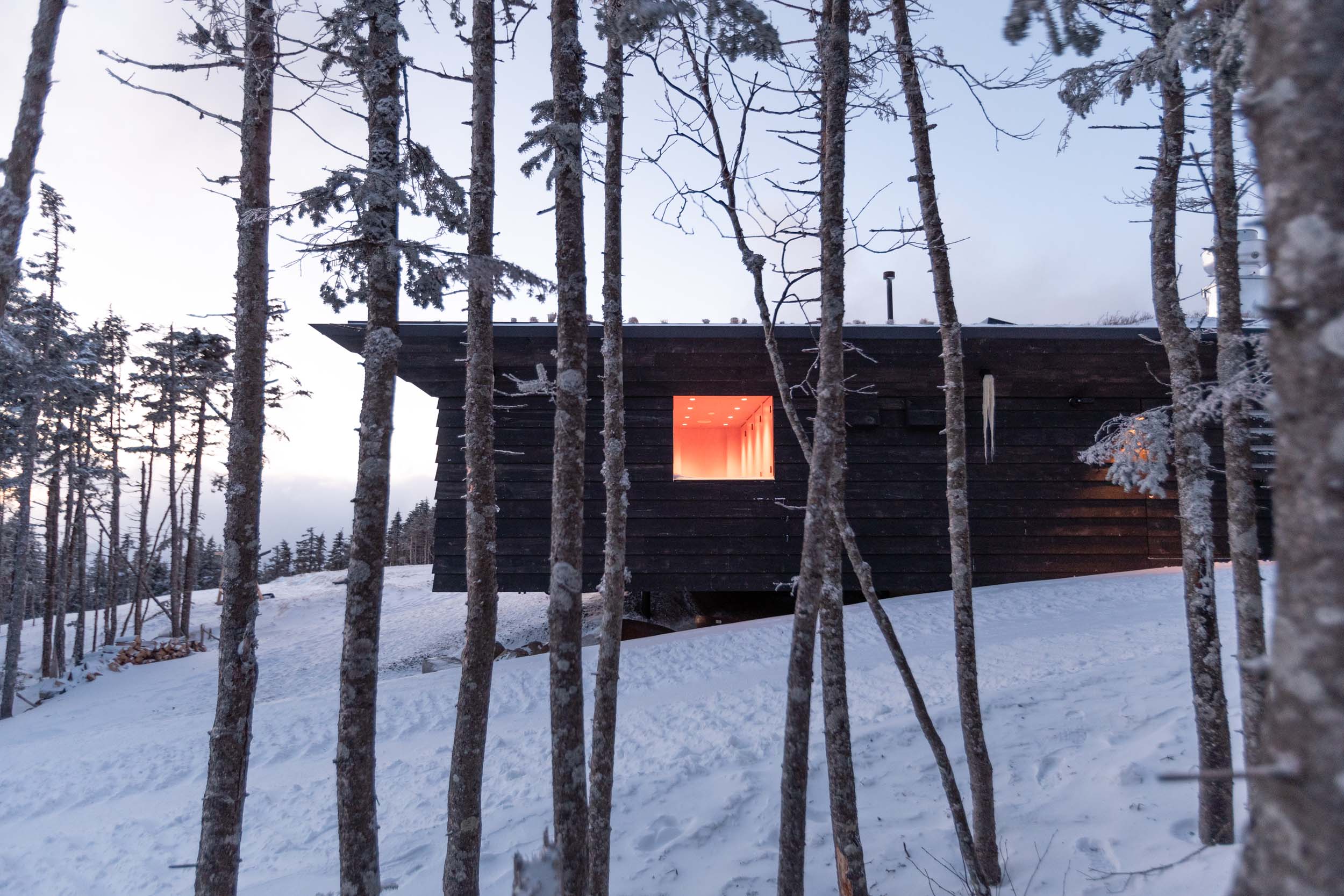
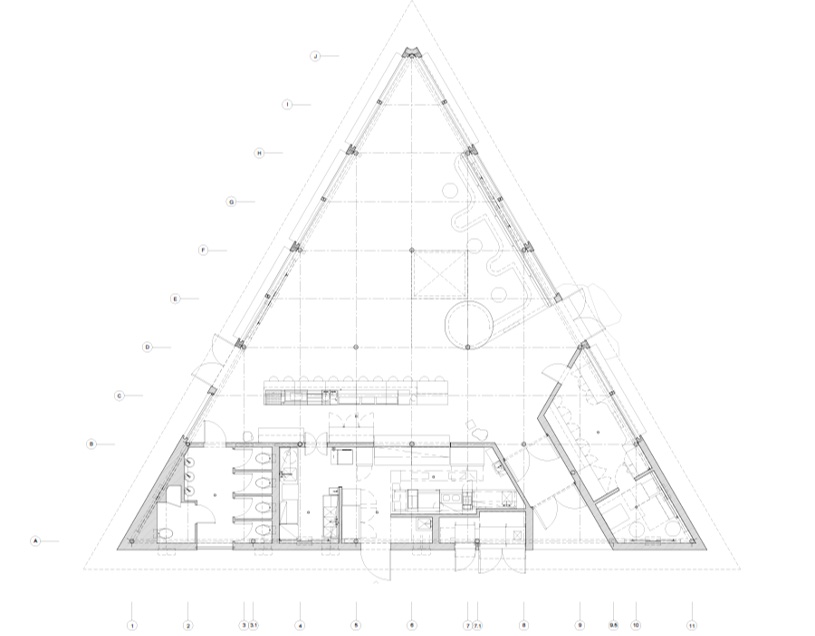
Appropriately, the 2,700-square-foot Nest perches on the slope, rather than cutting into it. Set on posts to mitigate disruption to the natural watershed, the building seems “like it’s running down the mountain,” as Davies Toews principal Trattie Davies put it, “like it burgled the piece of land.” From the ski lift, the structure’s equilateral-triangle plan looks like a play button.
That unusual layout allowed the architects to consider the three exterior experiences: the grove, the meadow, and the “beach,” or grand view. At the latter, the firm installed an operable glass wall, leaving the panorama uninterrupted. On another edge, there’s a ski-up bar—also usable by hikers in the offseason.
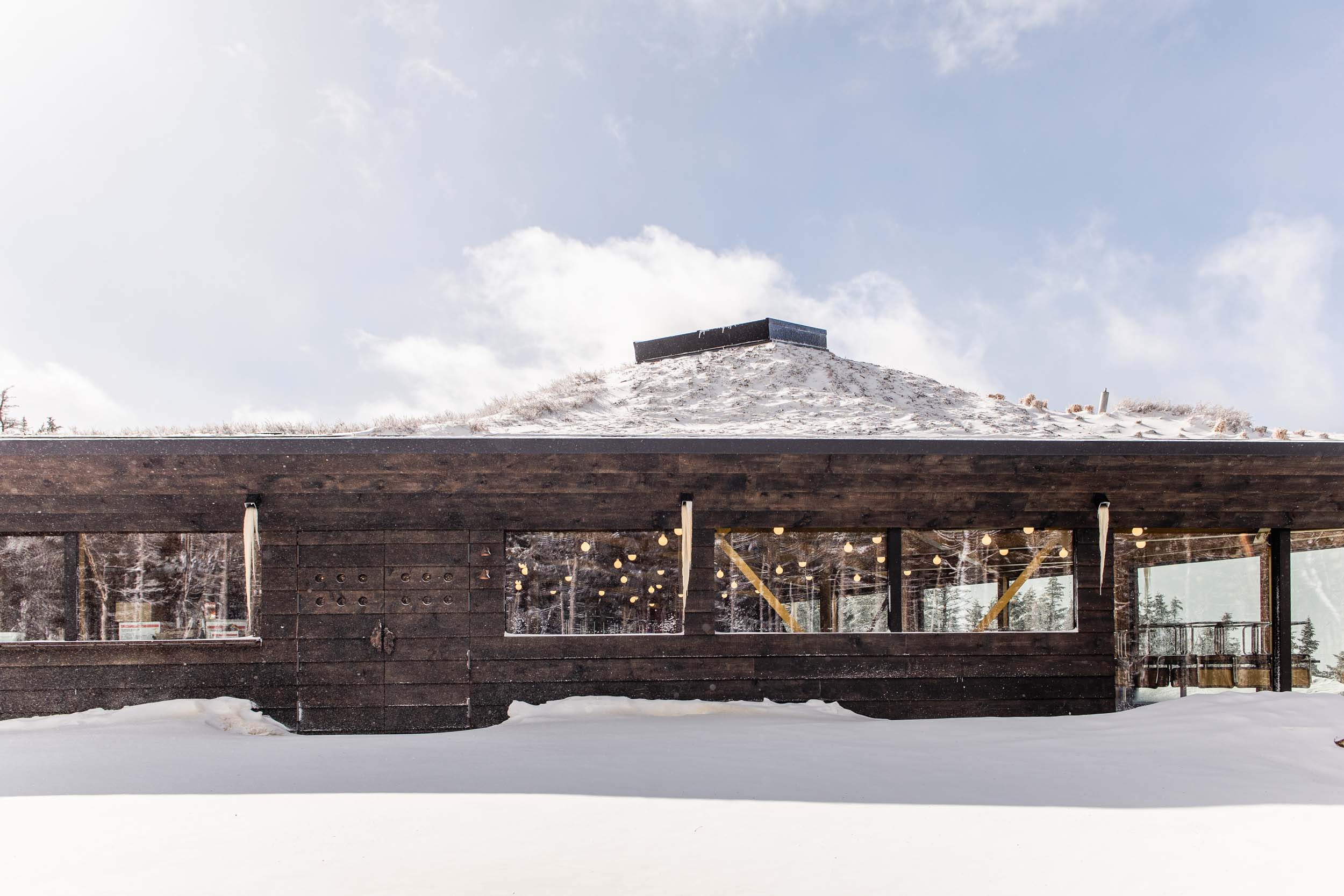
Like its avian neighbors, The Nest is modest on the approach. Jonathan Toews—who is married to Davies, as well as being her fellow principal in the architecture office—likened it to a “secret hut you discover in the woods.” Part of that is due to its native-plant green roof, which lifts the meadow off the mountain and into the sky. For the rest of its skin, Davies Toews took cues from Norwegian vernacular structures, deploying pine tar–covered clapboard siding—a darkened material that is all the starker against the pure white of the slopes. But there are Easter eggs here, too, like the doors’ bronze pulls cast from tree fragments found at the architects’ Vermont cabin, which also functions as a second office for their studio.
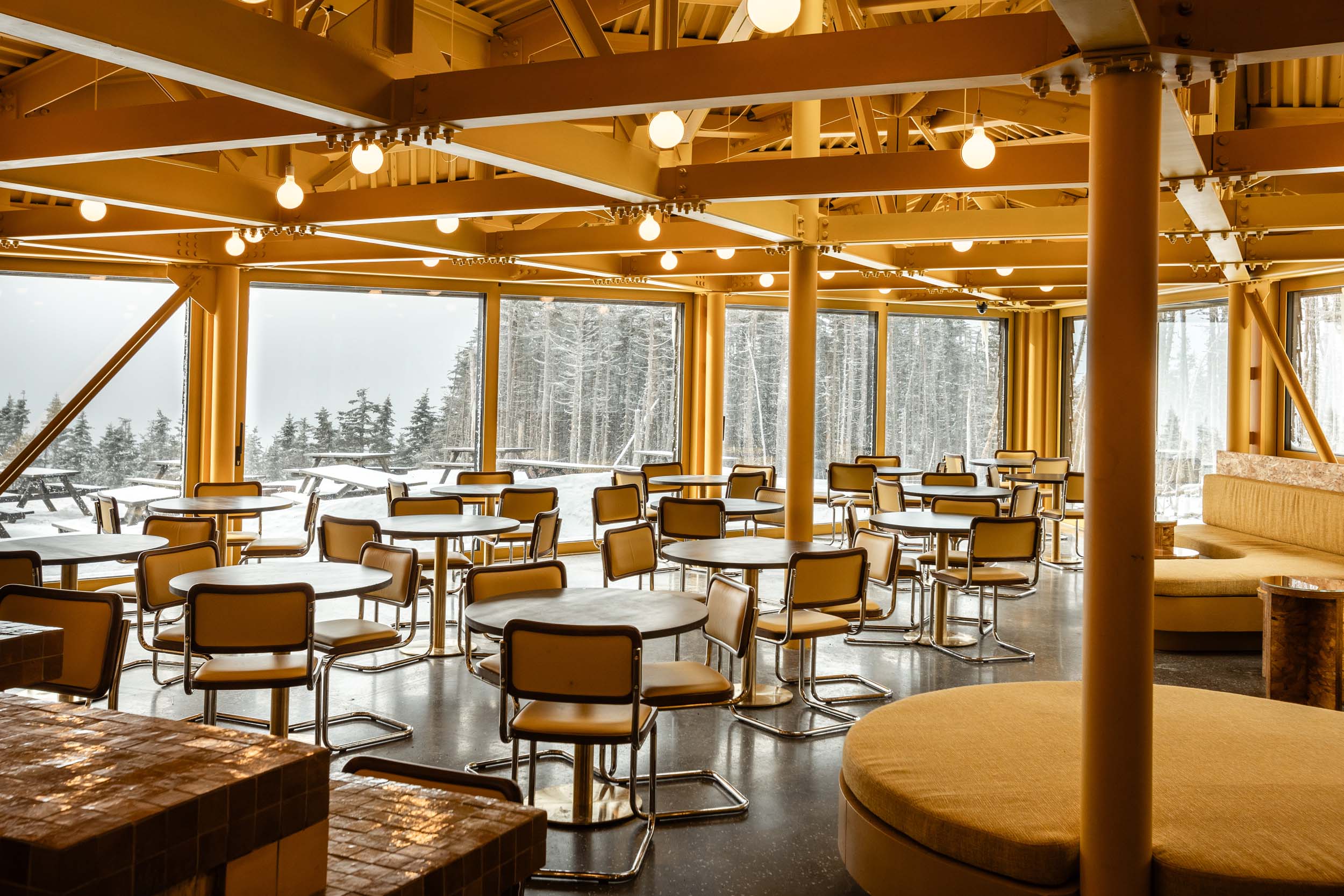
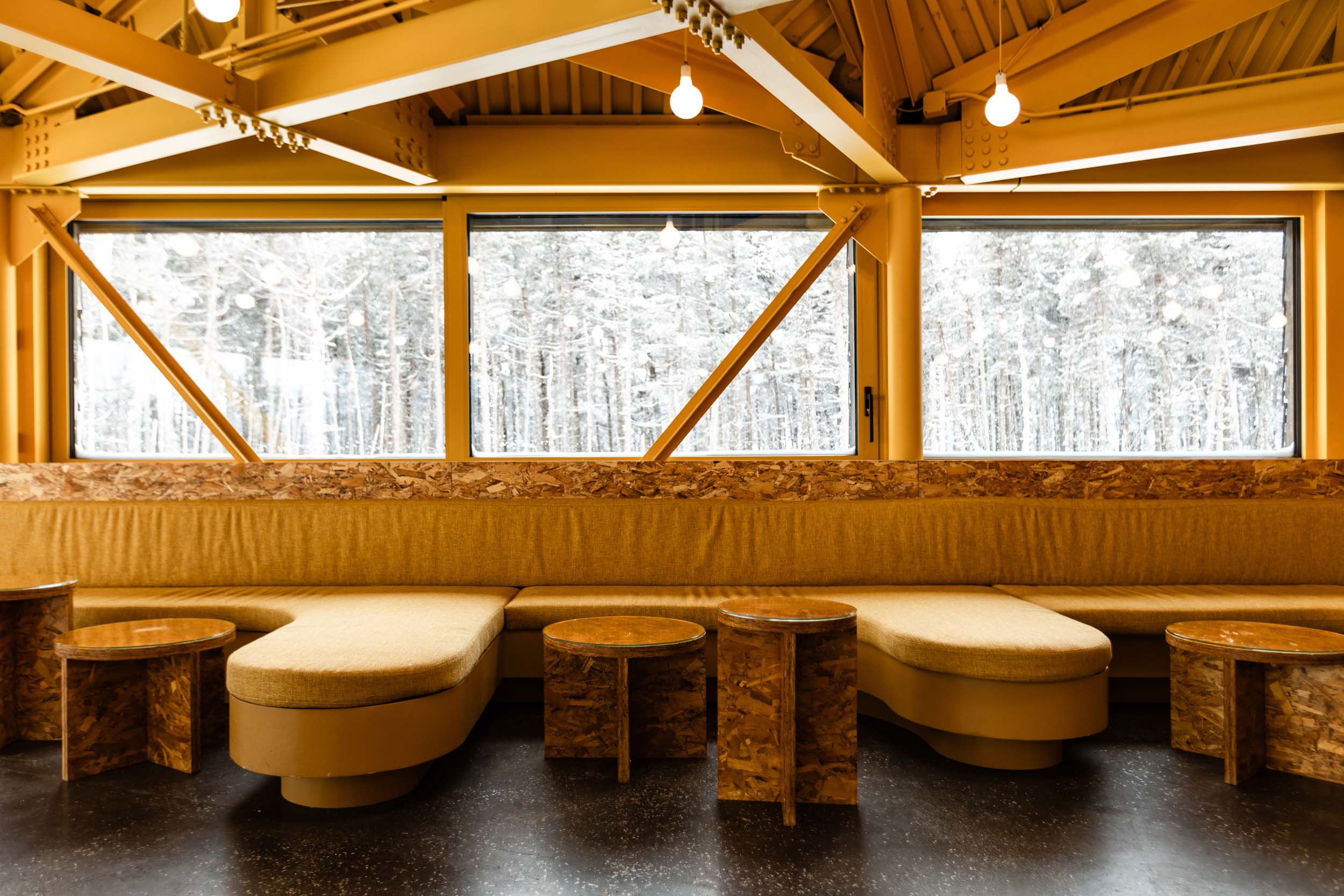
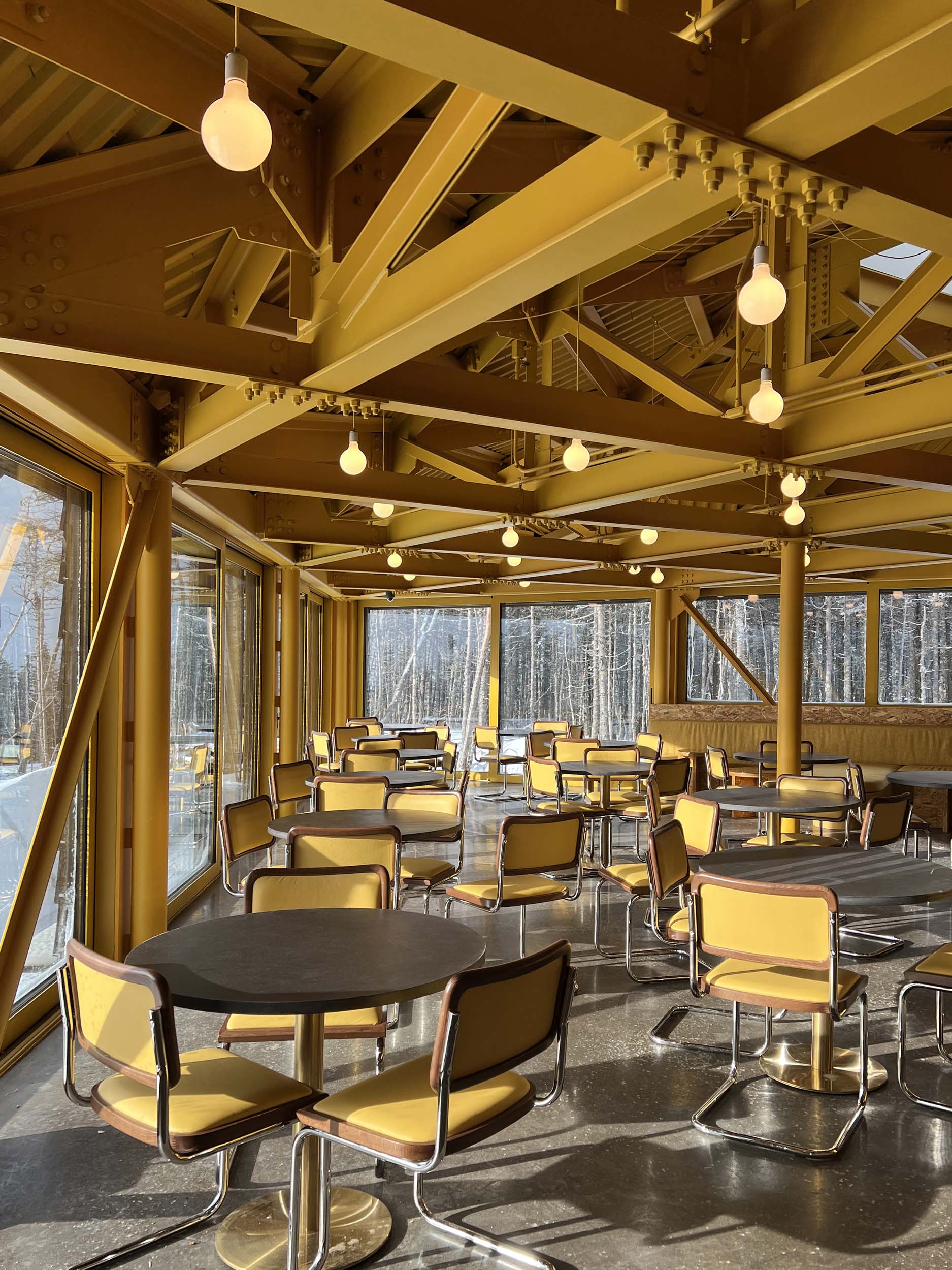
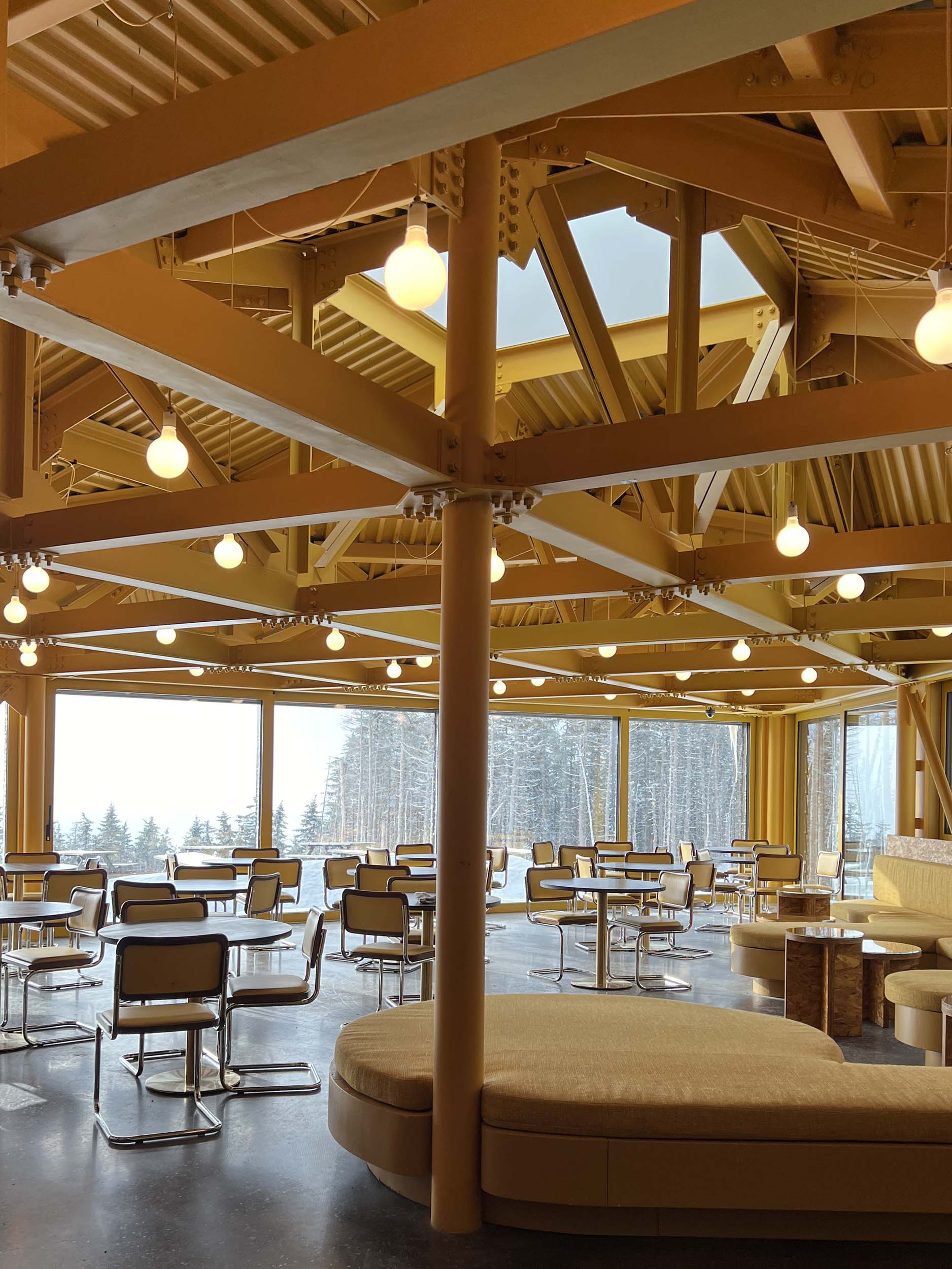
Through those doors, spectacle awaits. A shocking saffron shade drenches the 80-seat, skylit interior, running across built-in and movable furnishings (designed and fabricated by the office), light fixtures, and a tangle of steel beams overhead. Even the particleboard used across the eatery’s undulating banquette is a honey shade, allowing it to fade into the campfire warmth. Psychedelic as it all is—Davies and Toews mention that the The Teletrips of Alala, a children’s book from 1970, was a source of inspiration—it isn’t pulled out of thin air: The yellow is the same hue as moss found just beyond The Nest’s walls. The color even briefly returned there: “We actually brought the palette of materials up into the forest when it was under construction,” Toews said.
Due to the difficulty of site access, the structure was prefabricated at the base of the mountain. And because the restaurant interior welcomes guests coming in from rugged conditions, it, too, needed to be hard wearing. The fittings and materials at The Nest lean modern and utilitarian—a Maya Romanoff burlap lines the walls, for instance, and the floors are custom-mixed dyed concrete. Even the Marcel Breuer–designed Cesca chairs that surround cafe tables have ditched their typical caned backs for wood and leather—yellow, of course.
Through all of this, the plight of the Bicknell’s thrush was never out of sight. Because of the bird’s summer breeding season, construction timelines were constrained, leaving The Nest’s build window even more limited than the cold temperatures demanded. “That bird made us more thoughtful and sensitive about how something really tiny can invert the logic of something really big, like a building,” said Davies. The architects even created their own bird-deflection screens to safeguard the thrushes from run-ins with The Nest’s expansive windows, a move that earned them the inaugural BirdSafe Maine Award. How’s that for a feather in the cap?