
Arising from a concrete garage, Trilogy House’s rectilinear massing, triple-pane glazing, and vertical wood batten feel nearly commercial next to the traditional residential homes in Portland’s Alameda neighborhood. But it is a home for Jeanne Feldkamp and her husband Dan Diephouse. The duo are cofounders of Corollary Wines in Willamette Valley. Feldkamp is also the founder of the Portland-based interior design firm Heirloom Modern. She came to Waechter Architecture with a plot of land and a dream of a forever home. The collaboration brought forth a unique vision, devised into three distinct experiences.
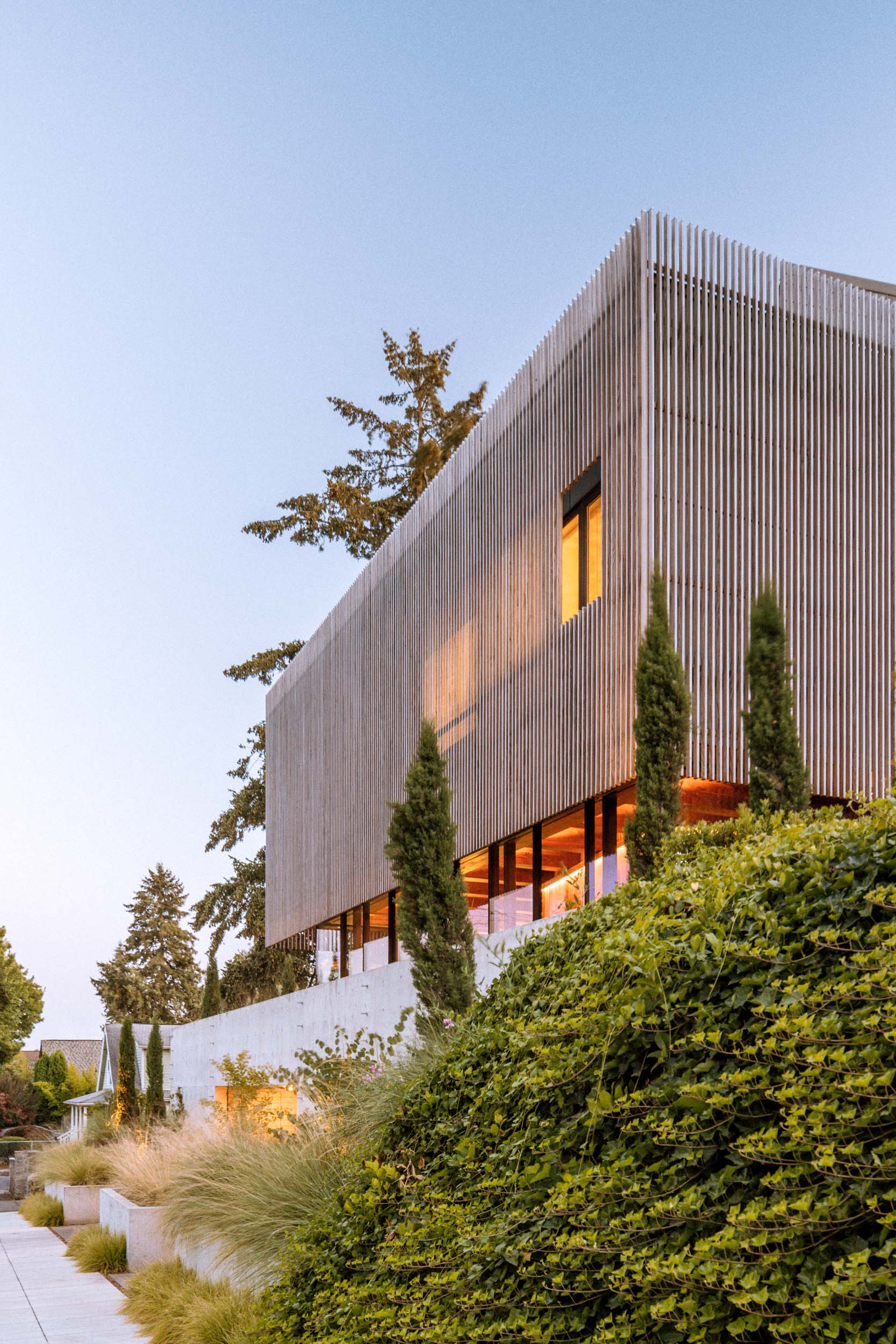
While Trilogy House may appear distinct from its neighbors, one of the driving factors of its design was a connection to the community. “Most of the houses on the street are built on a berm, and the garage is built into the hill,” said Ben Waechter, founder of Waechter Architecture. Thus, the architects did something similar with cast-in-place concrete. As Waechter explained, “Similar to the other houses, we built a garage into the berm, but we also built a house into the berm, and then we re-bermed it so that it felt like it was kind of carved into the ground.”
This means entry into the home begins subterraneanly, the first experience that makes up the trifold project. From within this concrete cave, a stair core connects the three floors of the home. The stair and its enclosure are compressed and completely wrapped in walnut to heighten the journey from one part of the home to the next. In this case, the stairs lead from a concealed tucked-away experience to the completely open first floor.

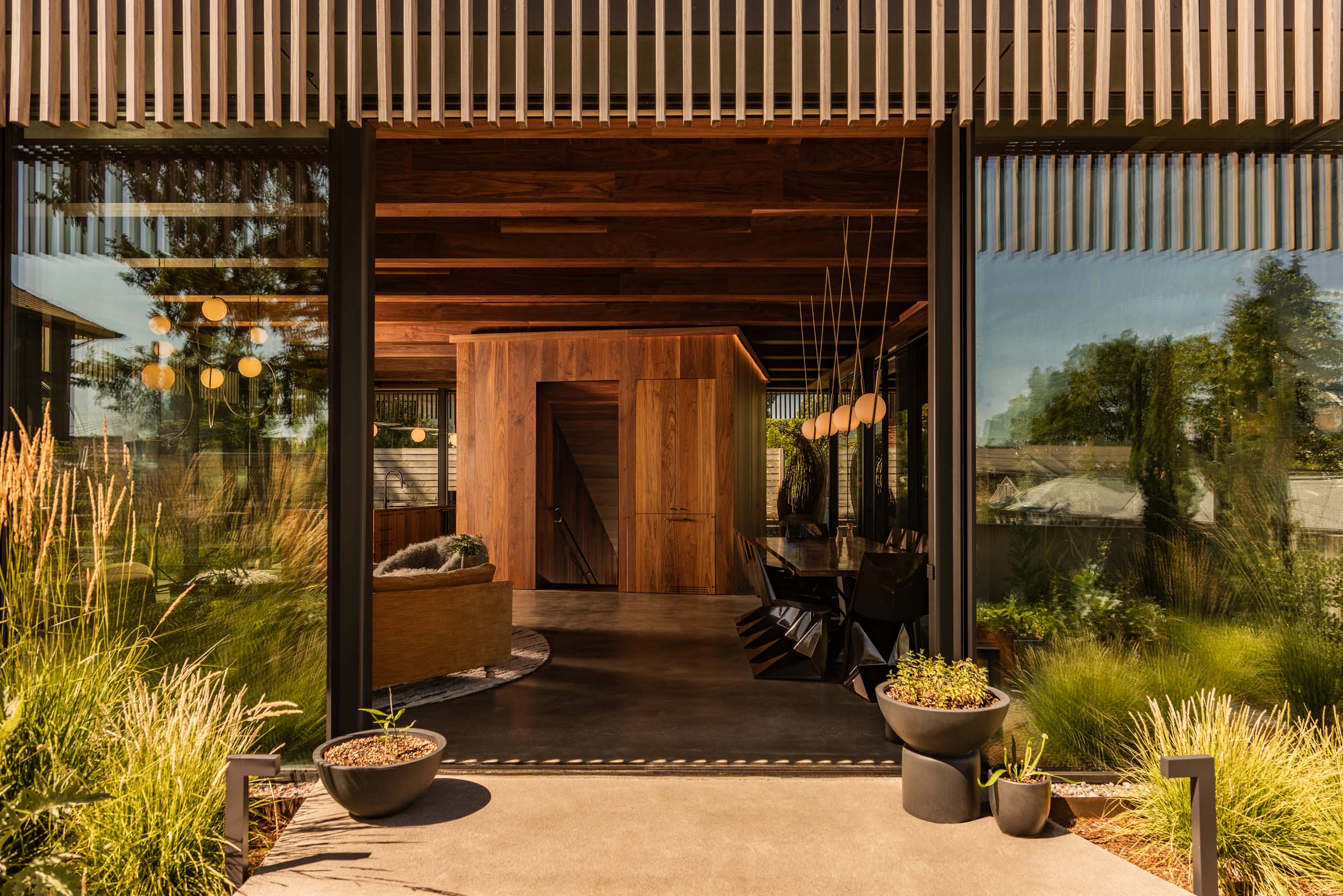
The first floor is surrounded by triple-pane glazing. Fourteen steel pillars were inset behind the glazing to support the structure. Here an immersive connection to the surrounding area is paramount. “The entire backyard acts as an extension of the living area, so hardscape and furnishings and indoor/outdoor plant palettes had to complement each other,” Feldkamp told AN Interior. She worked with landscape designer Lilyvilla Gardens so that the home’s soft grasses and trees create connection while offering privacy.

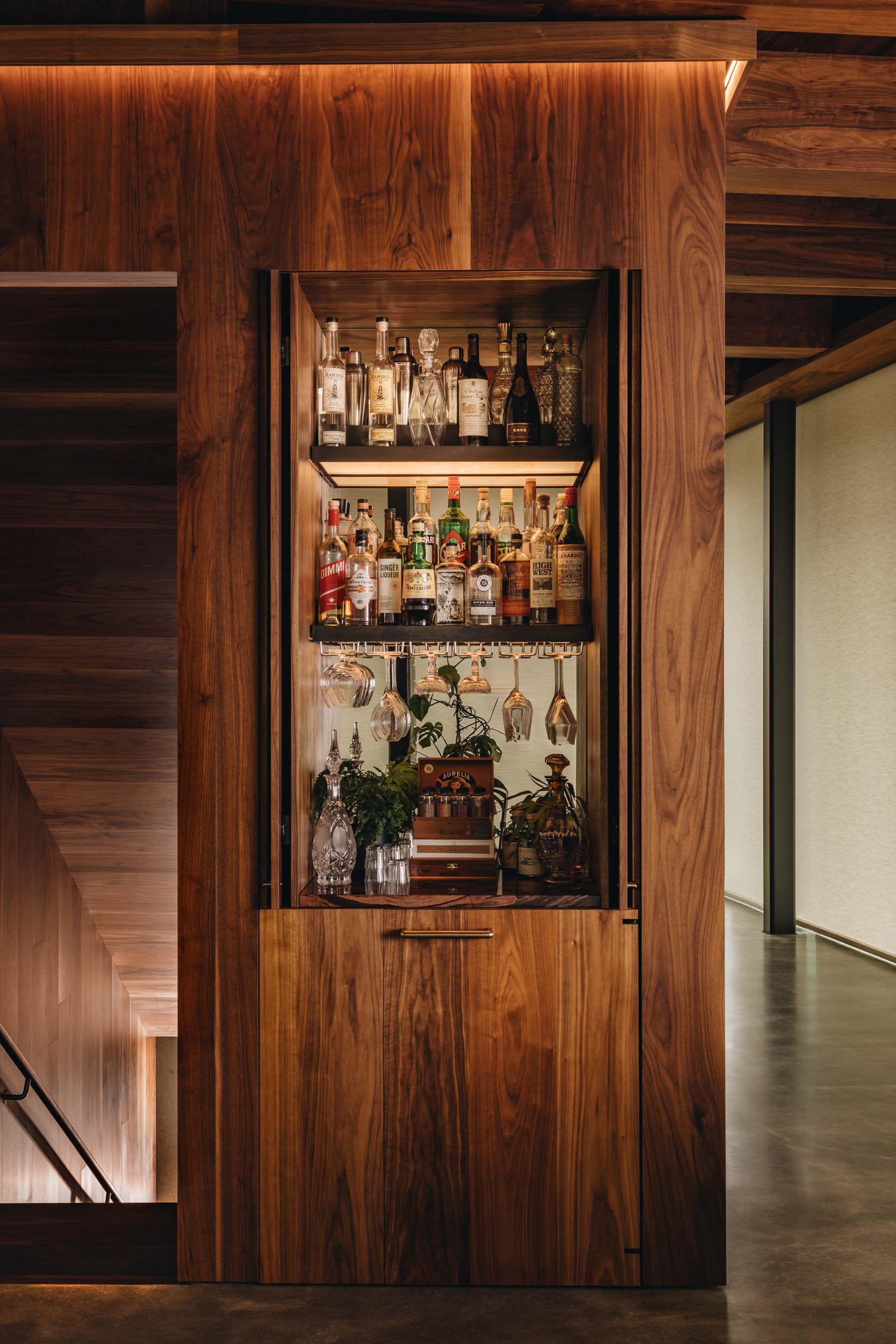
The space is organized around the stair core’s walnut-clad cube—which also craftily houses all the HVAC, plumbing, and electrical within the home. Both functional and a visual element on its own, the stair enclosure is set off-center and rotated 10 degrees from the footprint of the building. “Setting it slightly askew was one of the most important design decisions we made,” continued Feldkamp. “It both respects the building’s rigorous geometry and injects a sense of play into the structure.” On one side of the stair enclosure is the powder room, pantry, and bar, concealed within casework. On the other side is the kitchen, clad in Brazilian Mirage Quartzite and brass cabinets.
On the top-most floor, the design focuses on its third element: a sense of nesting. “The whole upper level is kind of clad with a scrim, a two-by-two vertical batten that kind of encases it as a nest, or protected wooden top piece. The idea is that the bedrooms feel held and nested,” said Waechter The four bedrooms make up the corners of the floor while an office, studio, and bathrooms break them up.
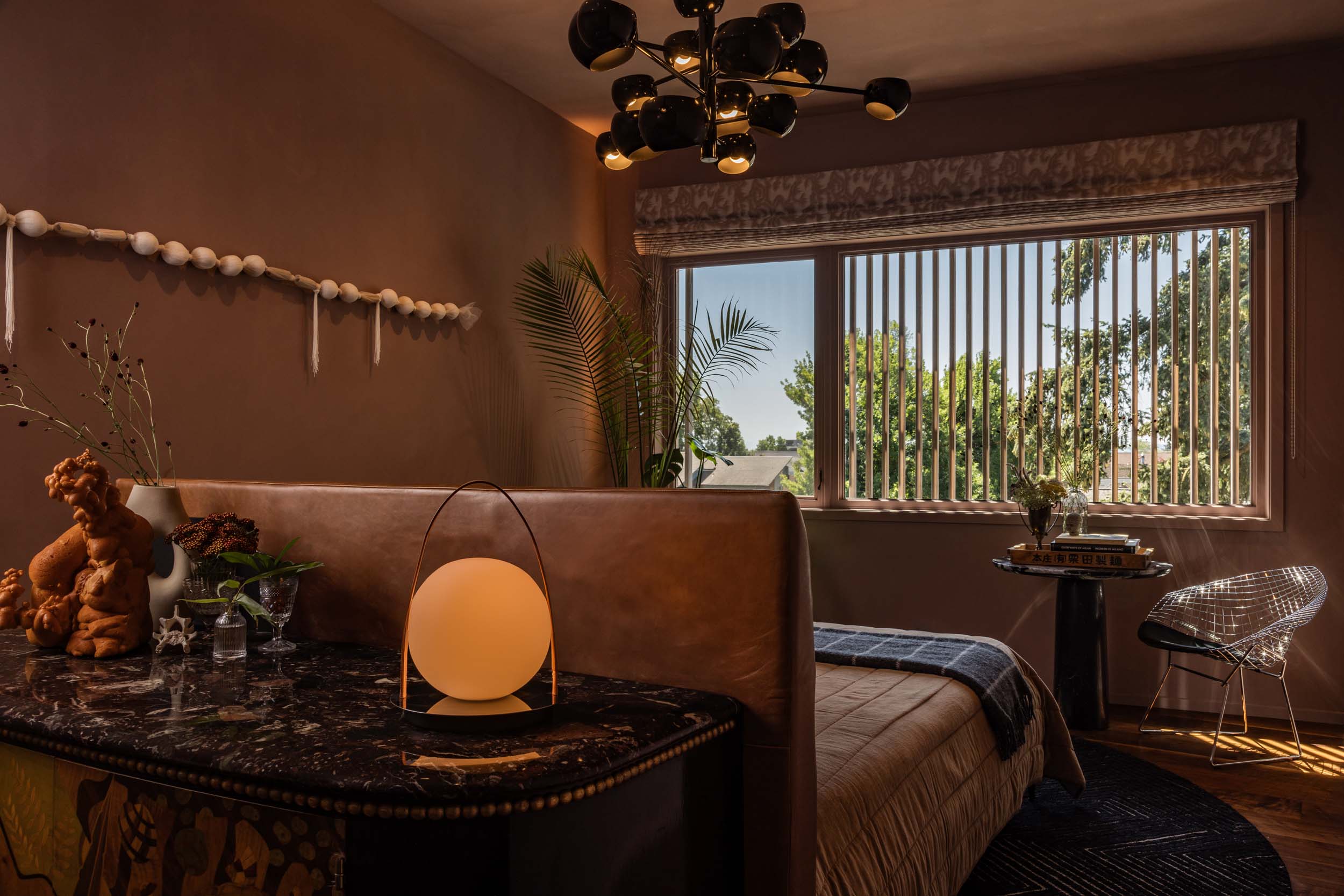
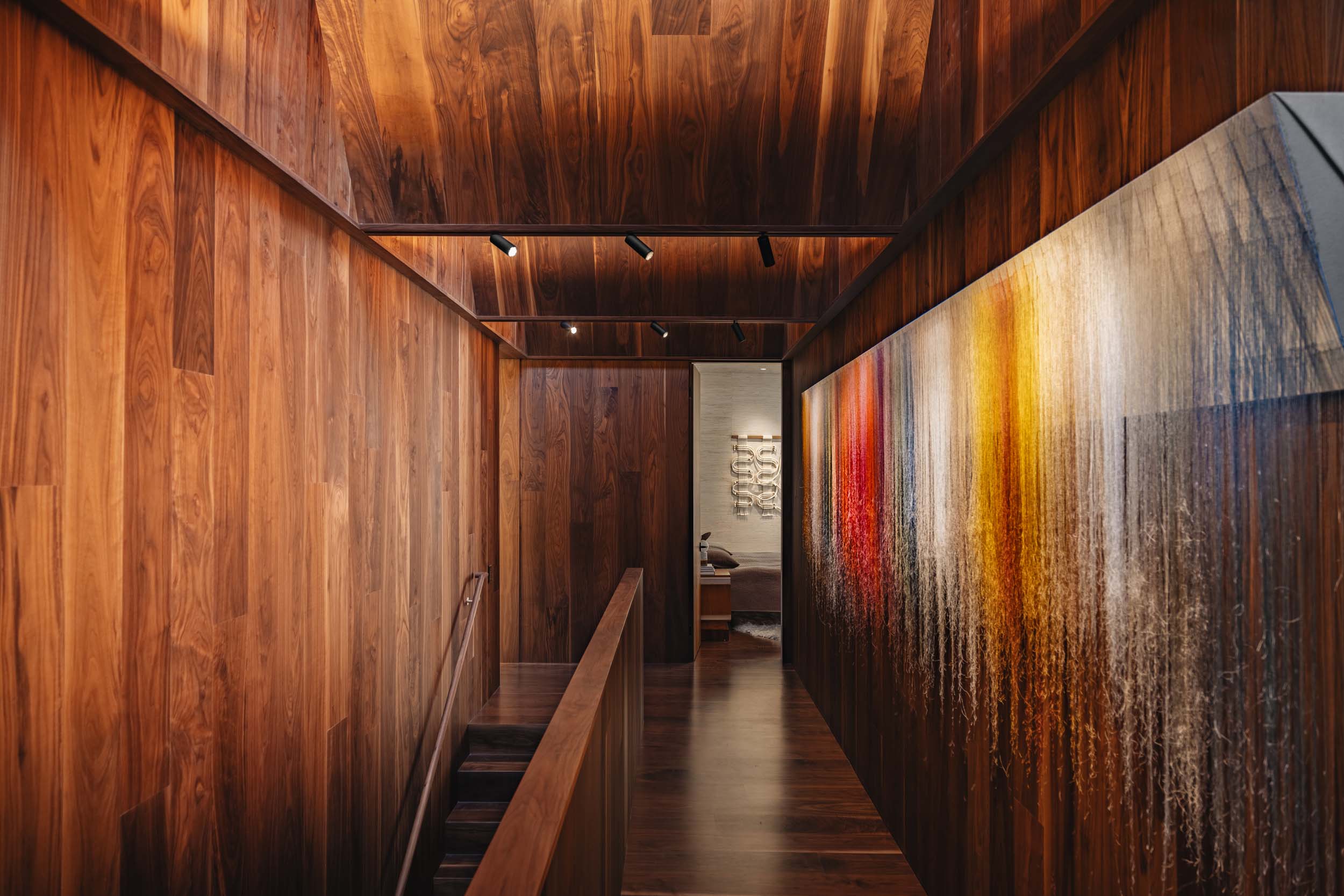
The stair core continues to the third floor where the walnut cladding extends to the floors, walls, and ceiling of the upper stairway and hall. This uniform space acts as a gallery for the couple’s art collection, and as such, lit on top by sawtooth skylights. This presented a lighting challenge, as Feldkamp explained she harbored “a gut-level dislike of recessed lighting” and insisted “that no luminaires be visible on the walnut-clad ceiling.” She worked with Ella Mills of Biella Lighting to conceal architectural lighting between beams around the perimeter and under alcove trims, and reveal decorative pendants and chandeliers.
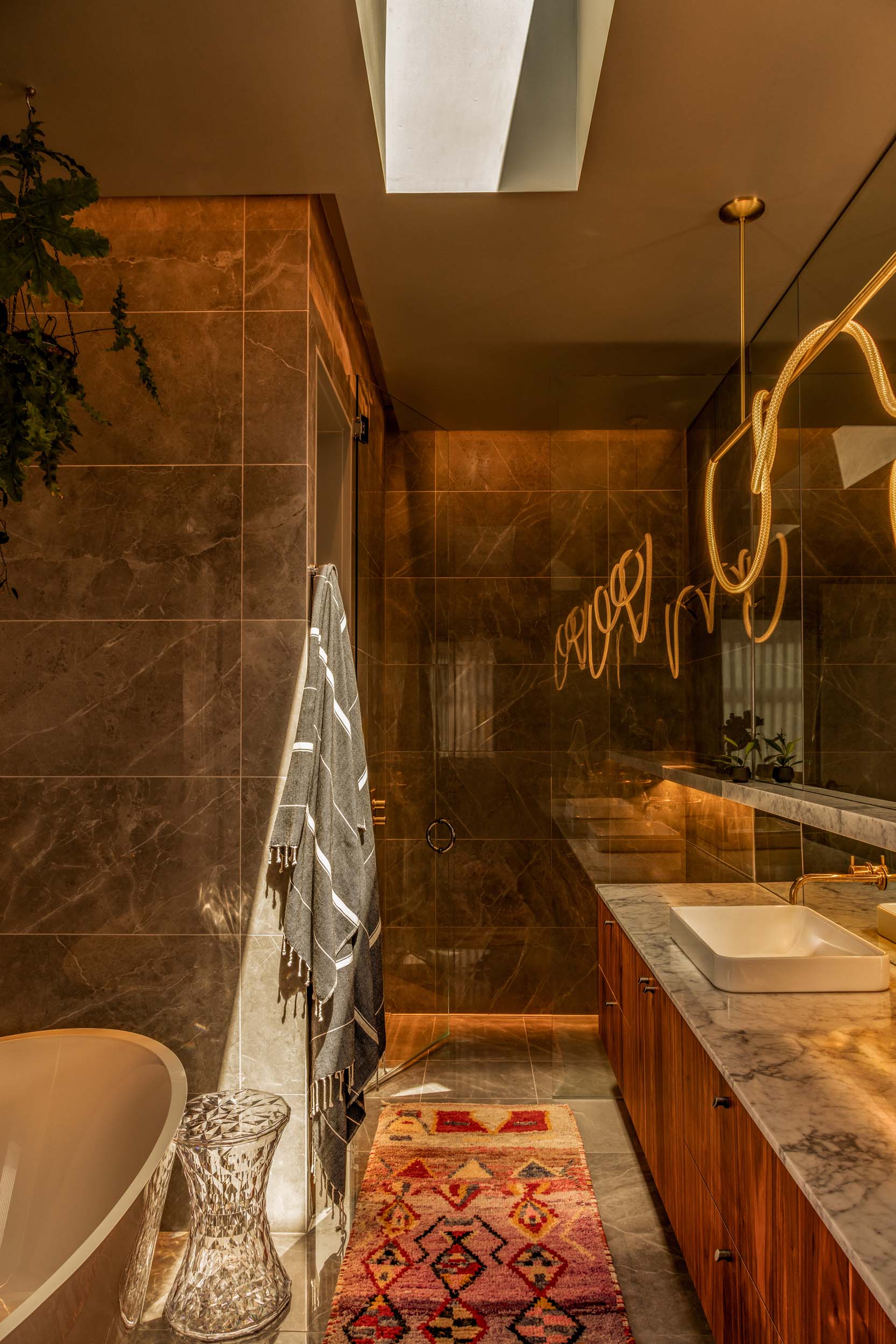
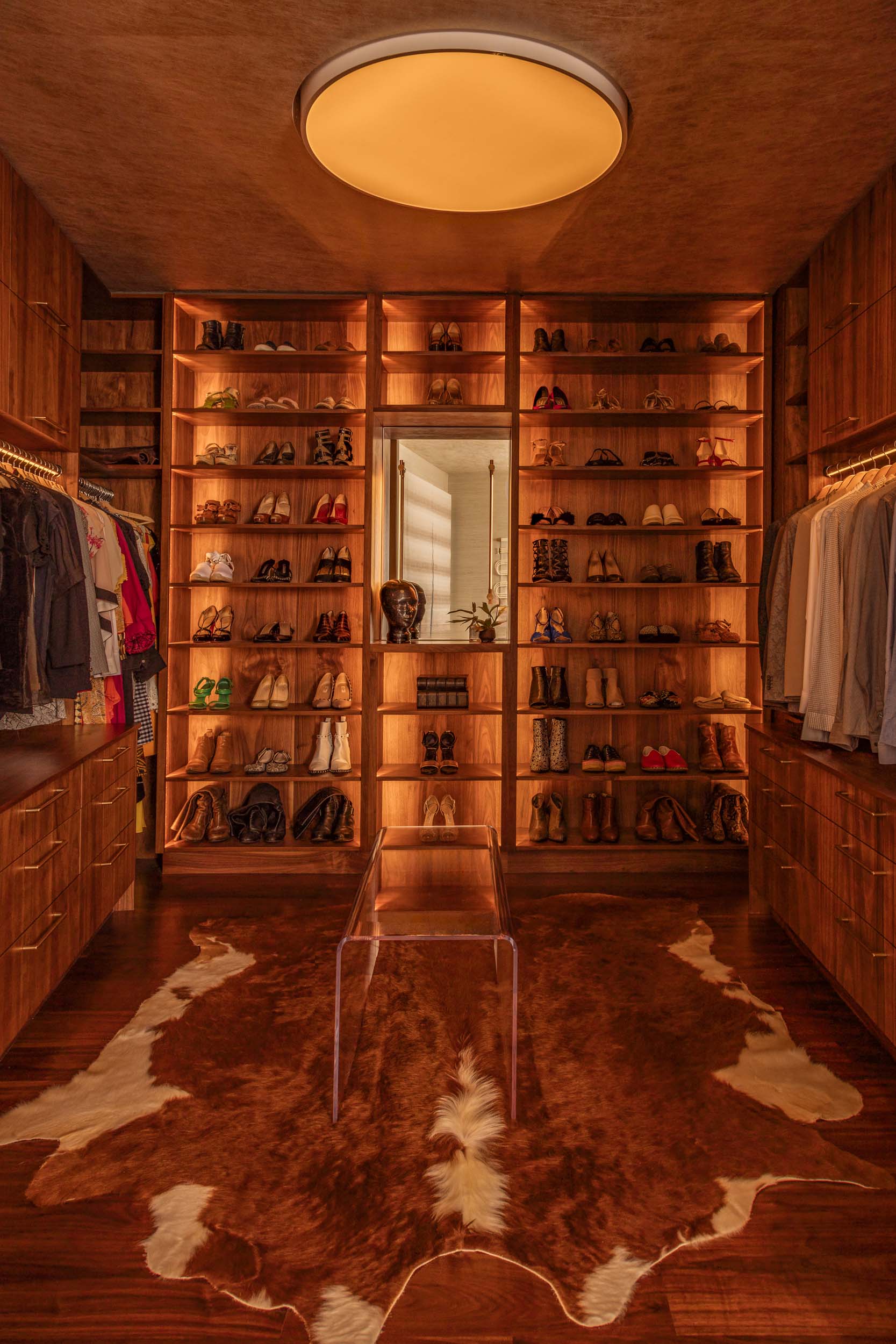
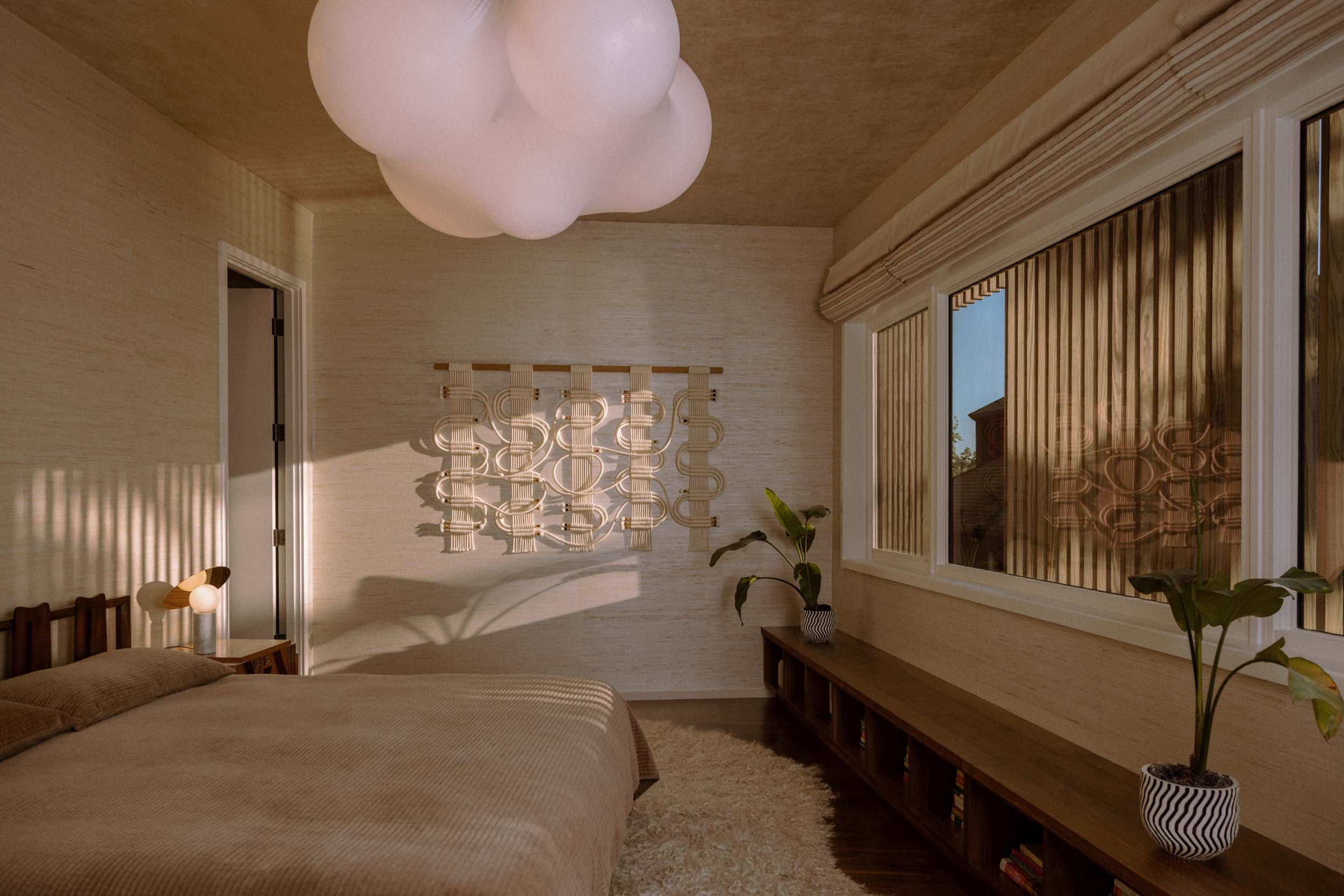
As a whole, Trilogy House uses its three parts to organize its spatial experiences. “The home combines elements of modernism—design clarity, a reinvention of traditional forms, large expanses of glass—with a brutalist sense of physicality that celebrates raw, honest materials,” said Feldkamp. The home is more than a sum of its parts; it reinterprets traditions of a Portland home in an individual, distinct way.