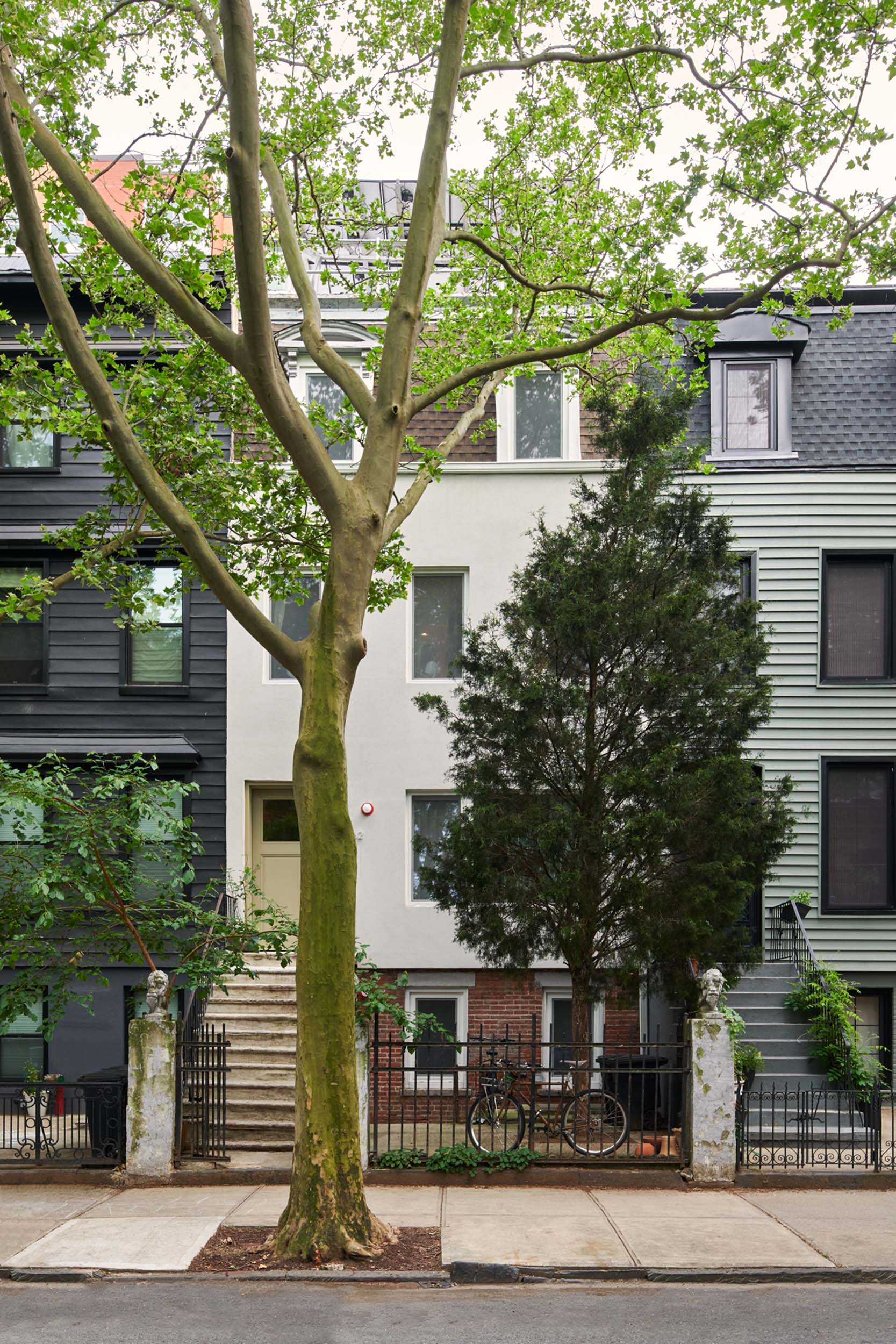
Graphic designer Courtney Gooch, whose work has appeared in exhibitions for New York Public Library and Jewish Museum, bought a 2,400-square-foot rowhouse in New York’s Bedford-Stuyvesant neighborhood with her husband and two young children. The family upholds certain ideas about ways of living and its aesthetics: Think less ornamental or excessive and more considered and curated. To update her three-unit rowhouse, Gooch looked to previous collaborator, New Affiliates, to navigate the home’s compact spaces while promoting affinity between family and neighbors.
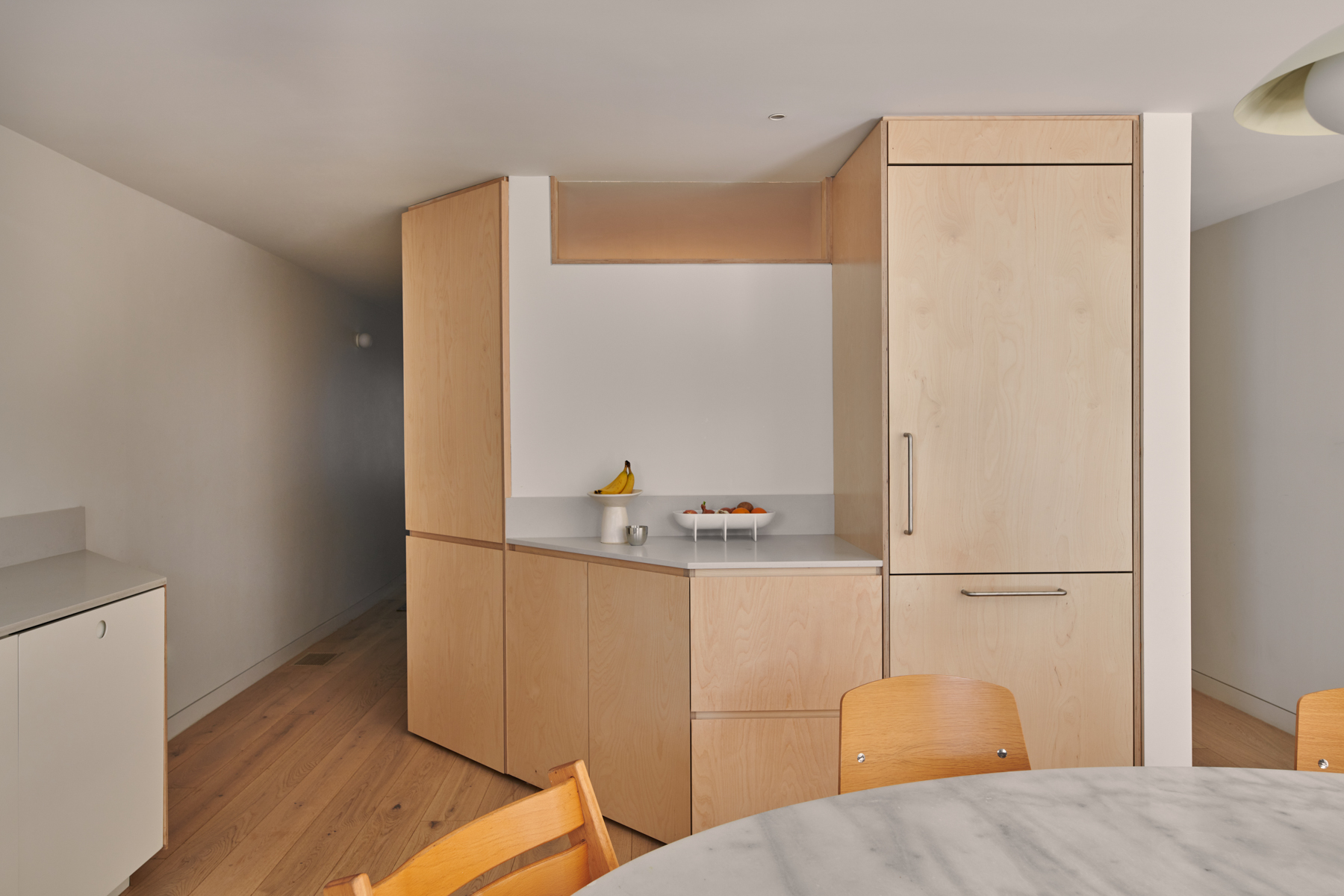
While most think of maximizing space as opting for open floorplans, New Affiliates took the opposite approach. The young family’s home, situated on the first two floors of the building that leaves the upper levels as rental units, begins with a sense of enclosure. The layout is anchored by a custom built-in plywood millwork, hinged to an off-center structural spine, that houses a central bathroom and organizes circulation. The piece is conceived as a pocket knife as it’s both tucked away yet efficient.
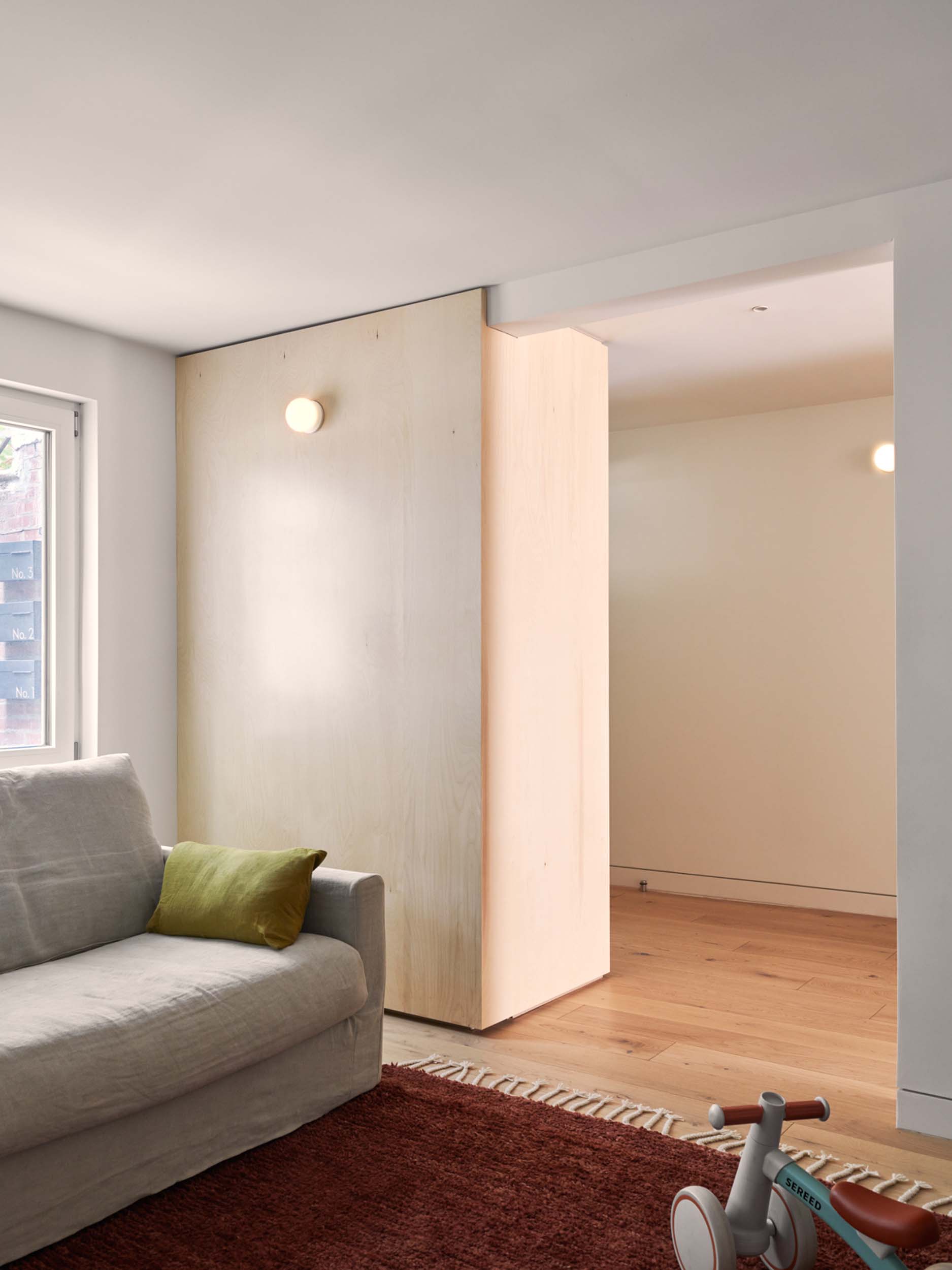
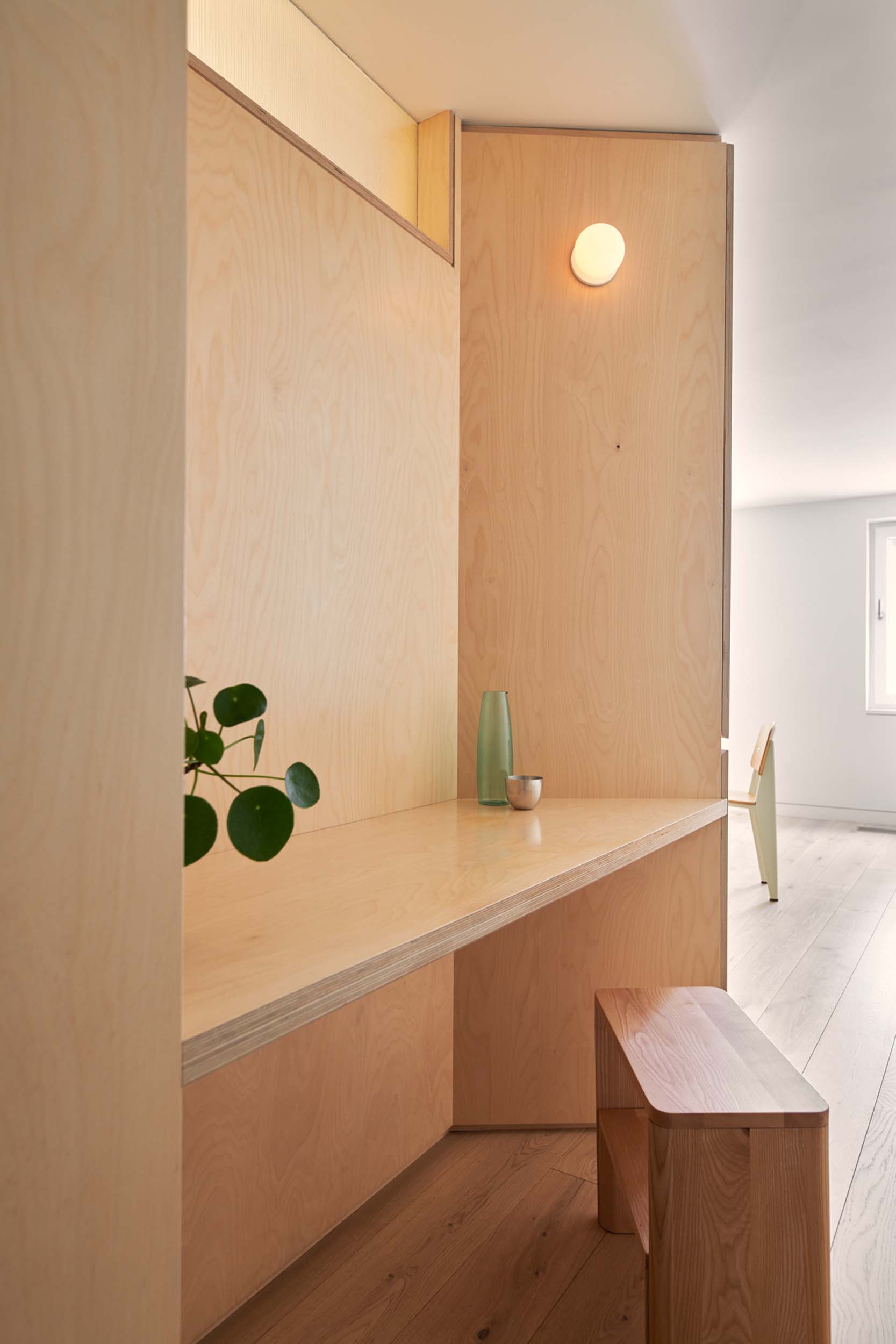
“As typical in a Brooklyn townhouse, these homes rely on one another for stability. This is a rowhouse where the rhythm of walls was very important,” Ivi Diamantopoulou, cofounder of New Affiliates, told AN Interior. “It would be a massive expense to forgo that wall. Instead, we decided to choreograph around it and imagine pockets of life attaching themselves to it.” On one side, the millwork helps define a living room, while its adjacent face carves out space for a work station. Along an angled wall, the millwork then open into the kitchen and living room.
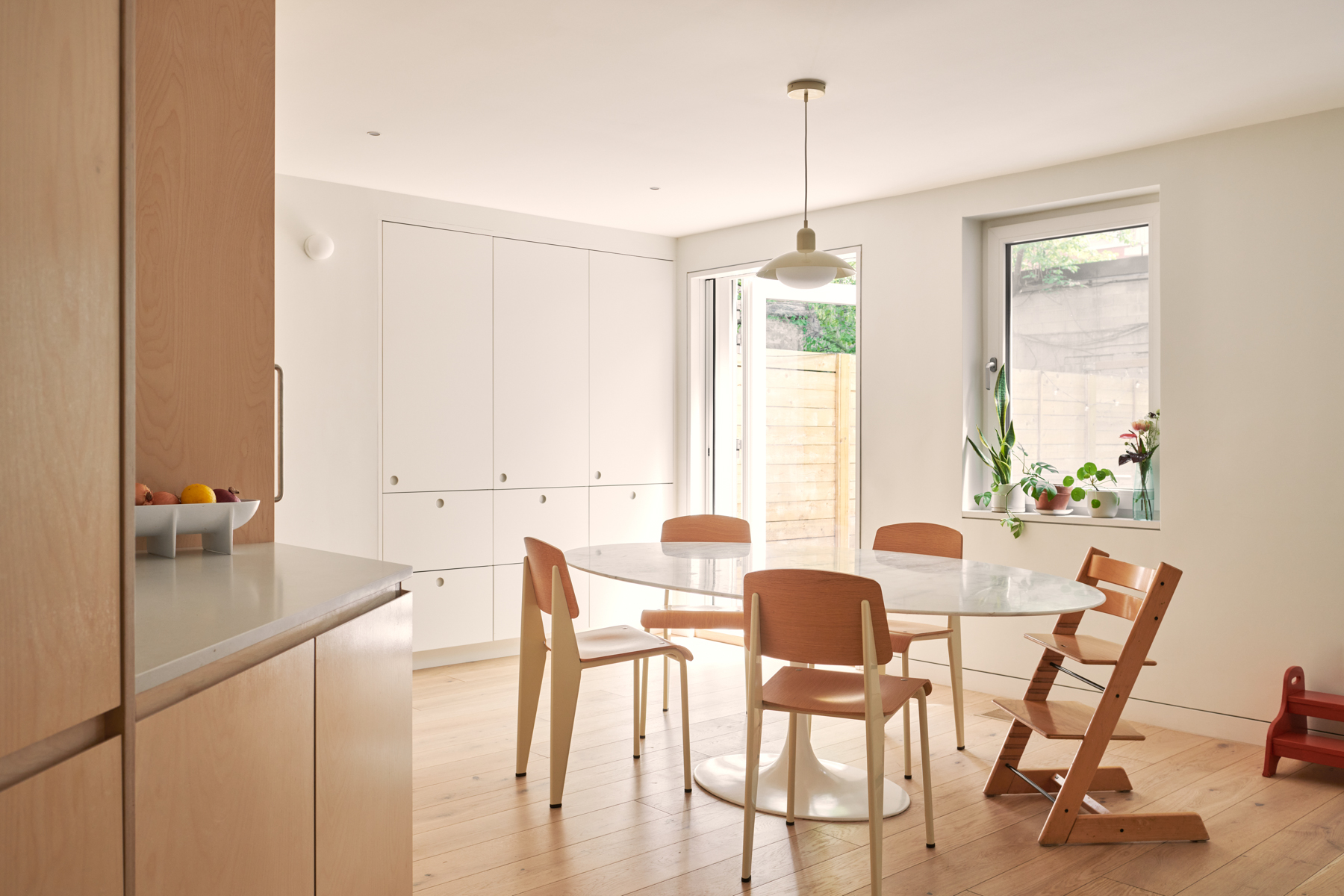
The spatial sequencing lends itself to a sense of surprise and a cavernous quality, which helps the interior feel larger than it is. “I think there’s a general interest of ours to not always have things stuck on the perimeter,” continued cofounder Jaffer Kolb. This methodology draws from the practice’s work, frequently on arts spaces like the in-progress cultural venue Canyon, as well as The Shed and Park Avenue Armory. Moving through the ground floor, then, is “almost like moving through a gallery space. One of the things was really important to us was to make this not feel totally residential, but to have a kind of strangeness,” said Kolb.
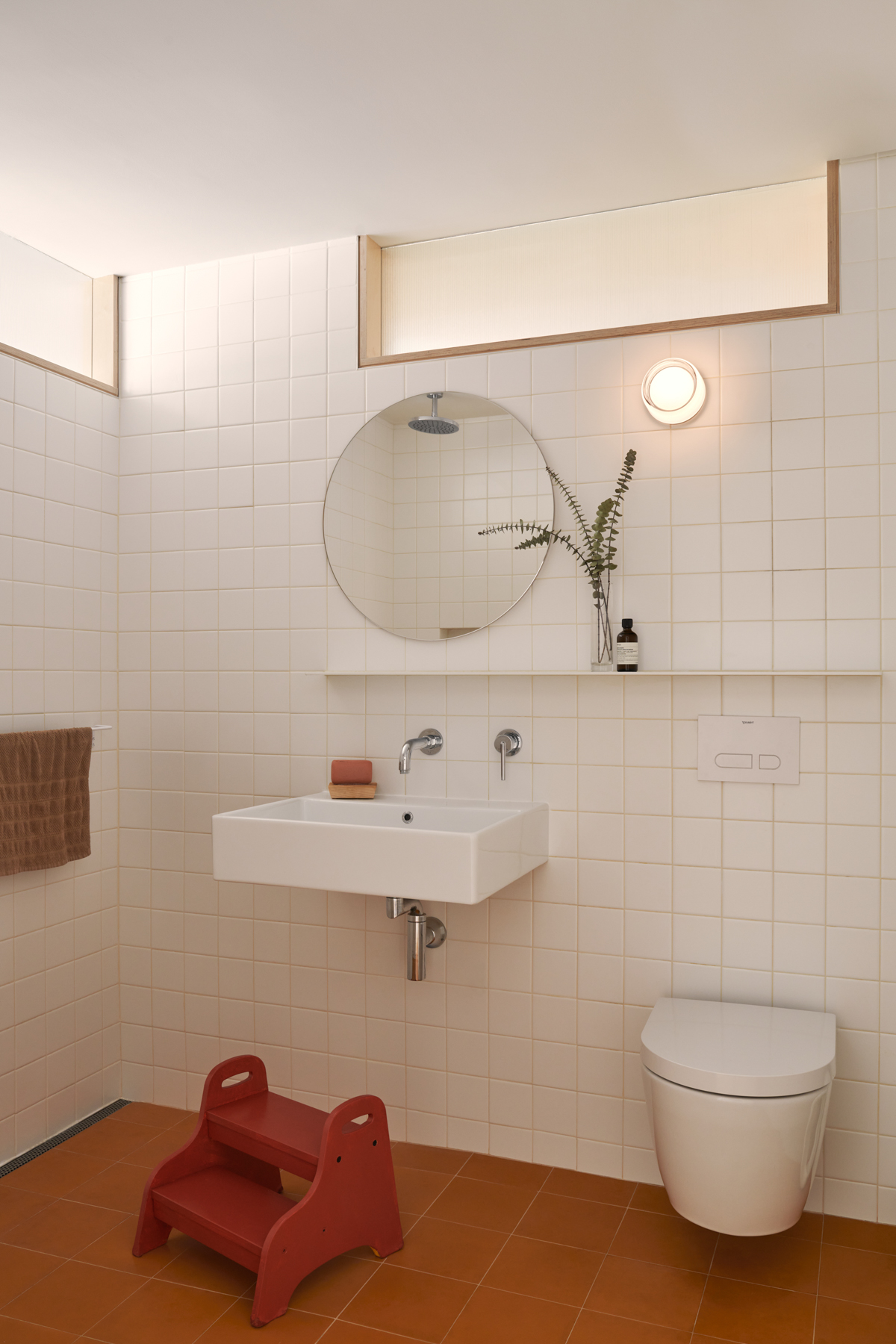
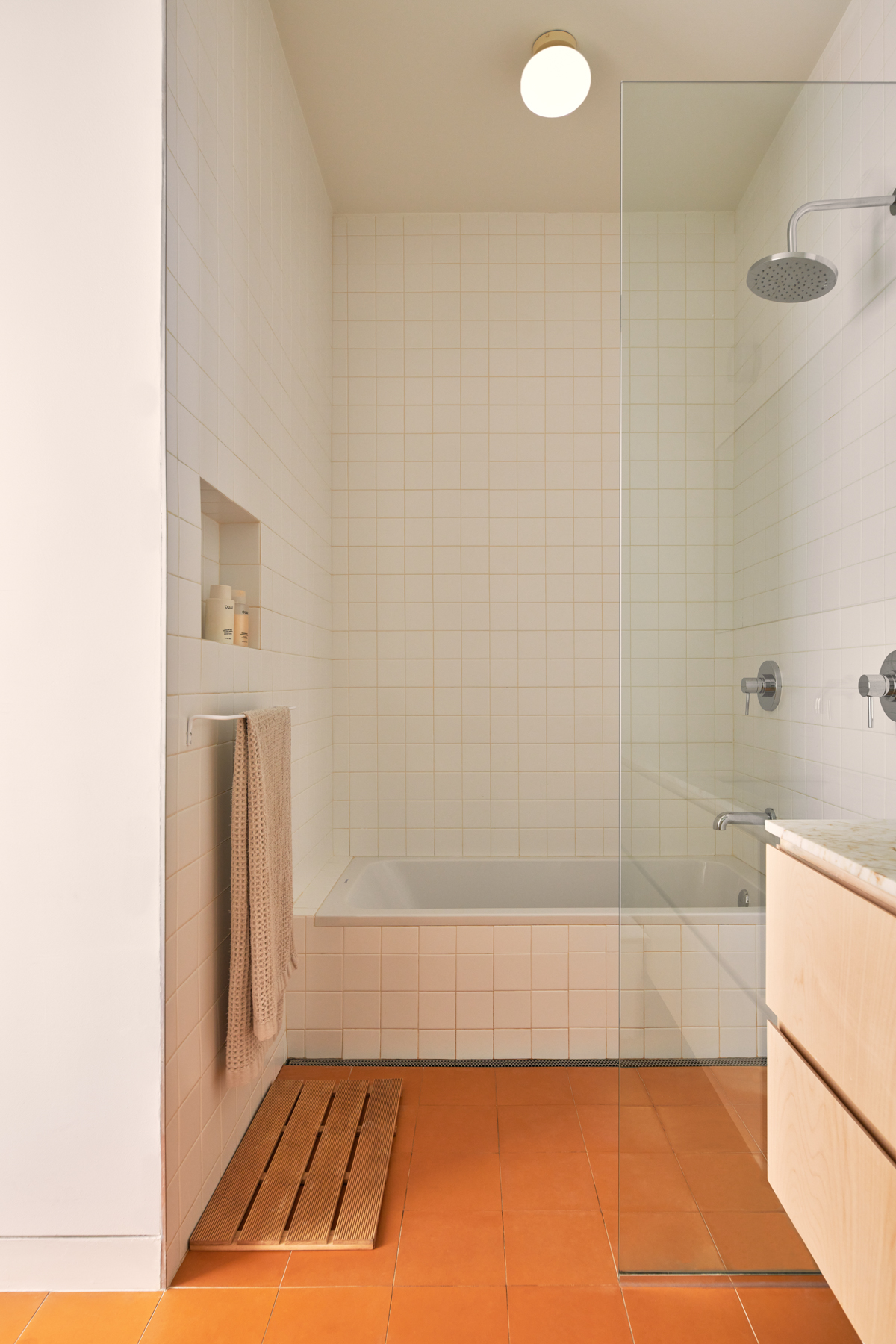
White hues and millwork dominate the interior with the exception for pockets of color. Inside the millwork core, the bathroom is one such exception where orange floor tiles lighten up the space, along with clerestory windows.
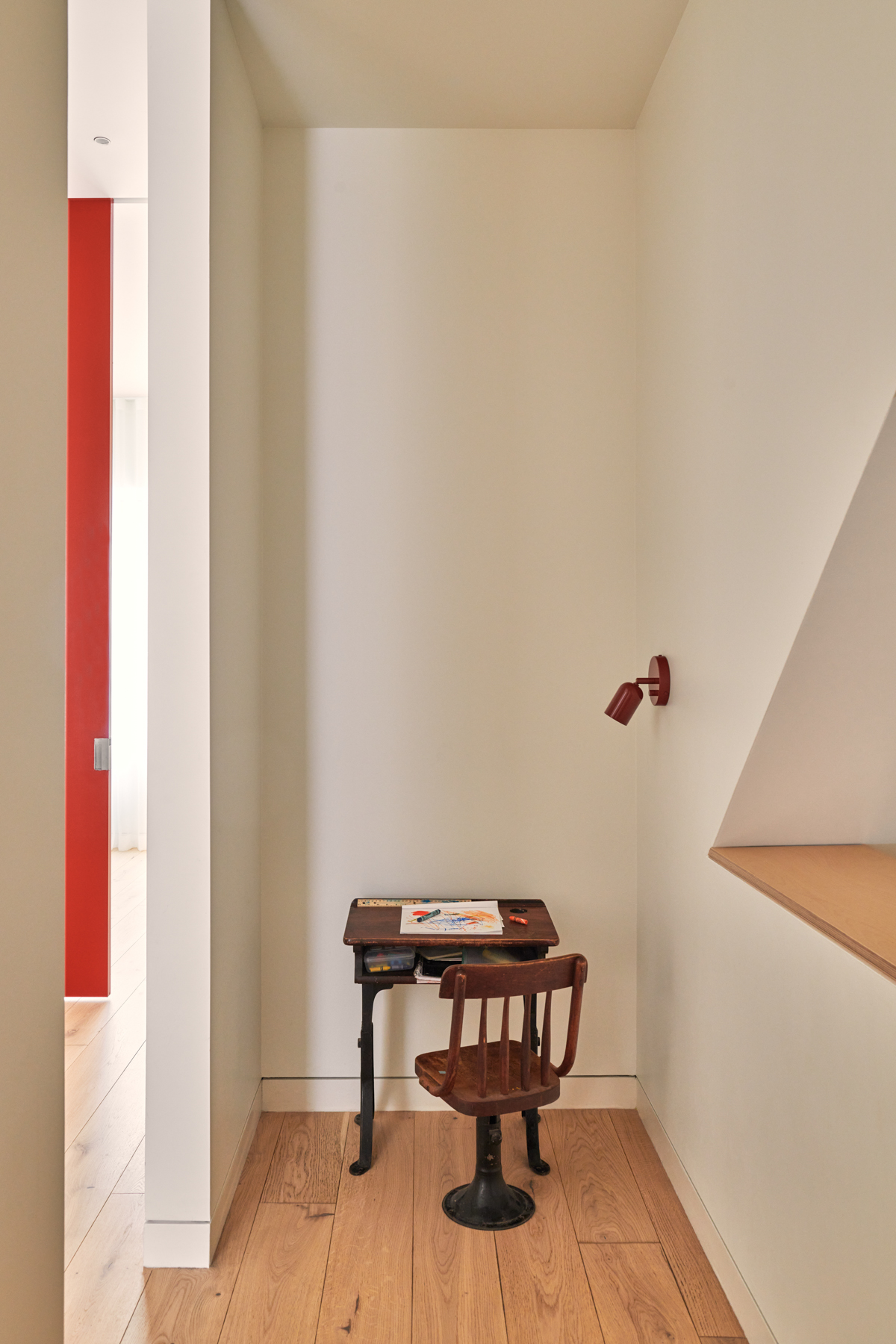
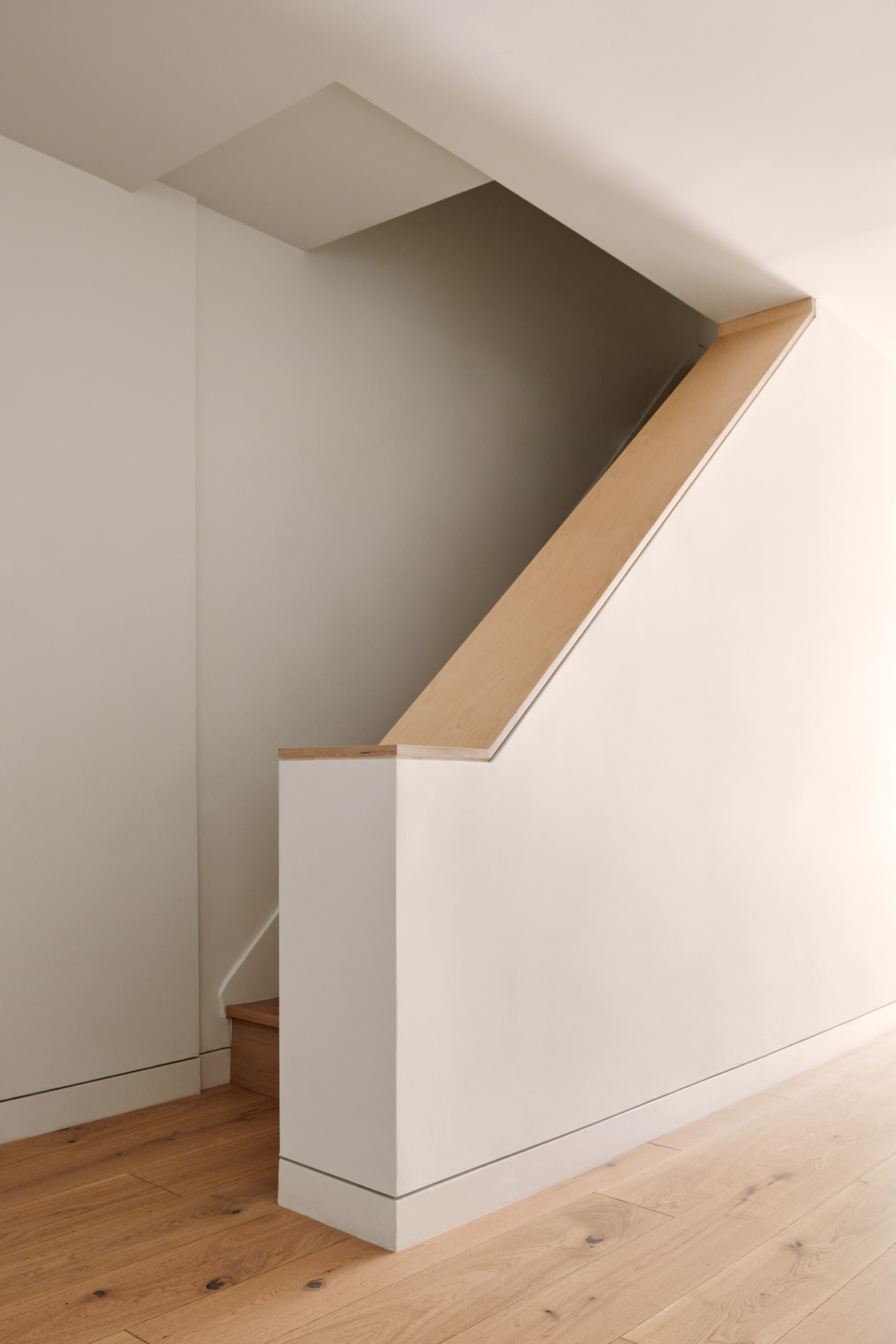
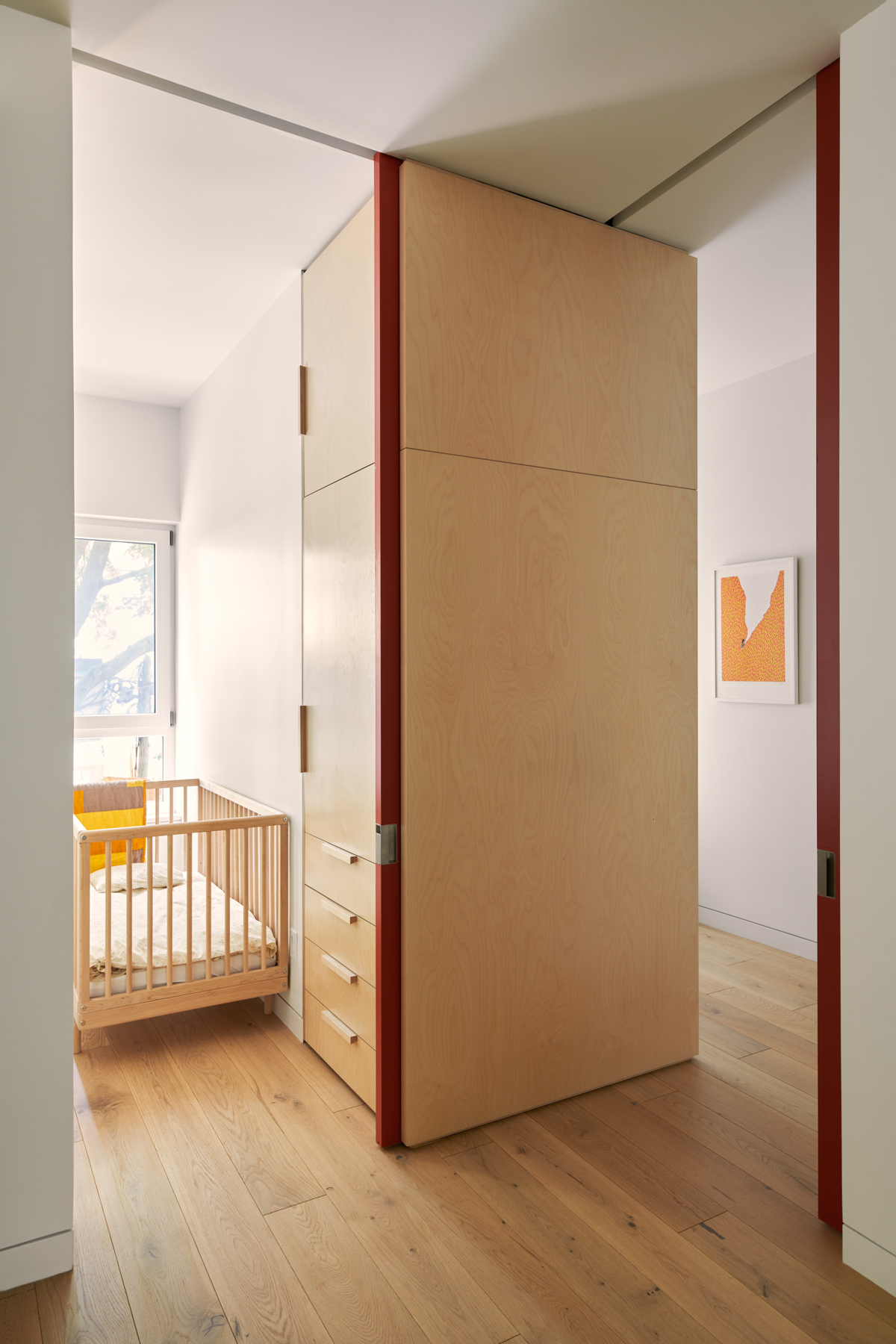
Upstairs, the cavern-like organization opens up entirely. Instead of organizing the bedrooms as a series of rooms off of a central hallway, the rooms themselves are connected together by oversized pocket doors that tuck into millwork. As part of their idea to create open relationships within the home, the clients asked to not have doors on the sleeping quarters. “They imagined an open campground where everyone shares living space,” said Diamantopoulou. The red pocket doors help create “this continuous, amorphous, and shared living space that’s defined by the presence of millwork.” The negative spaces are activated by informal places to work.
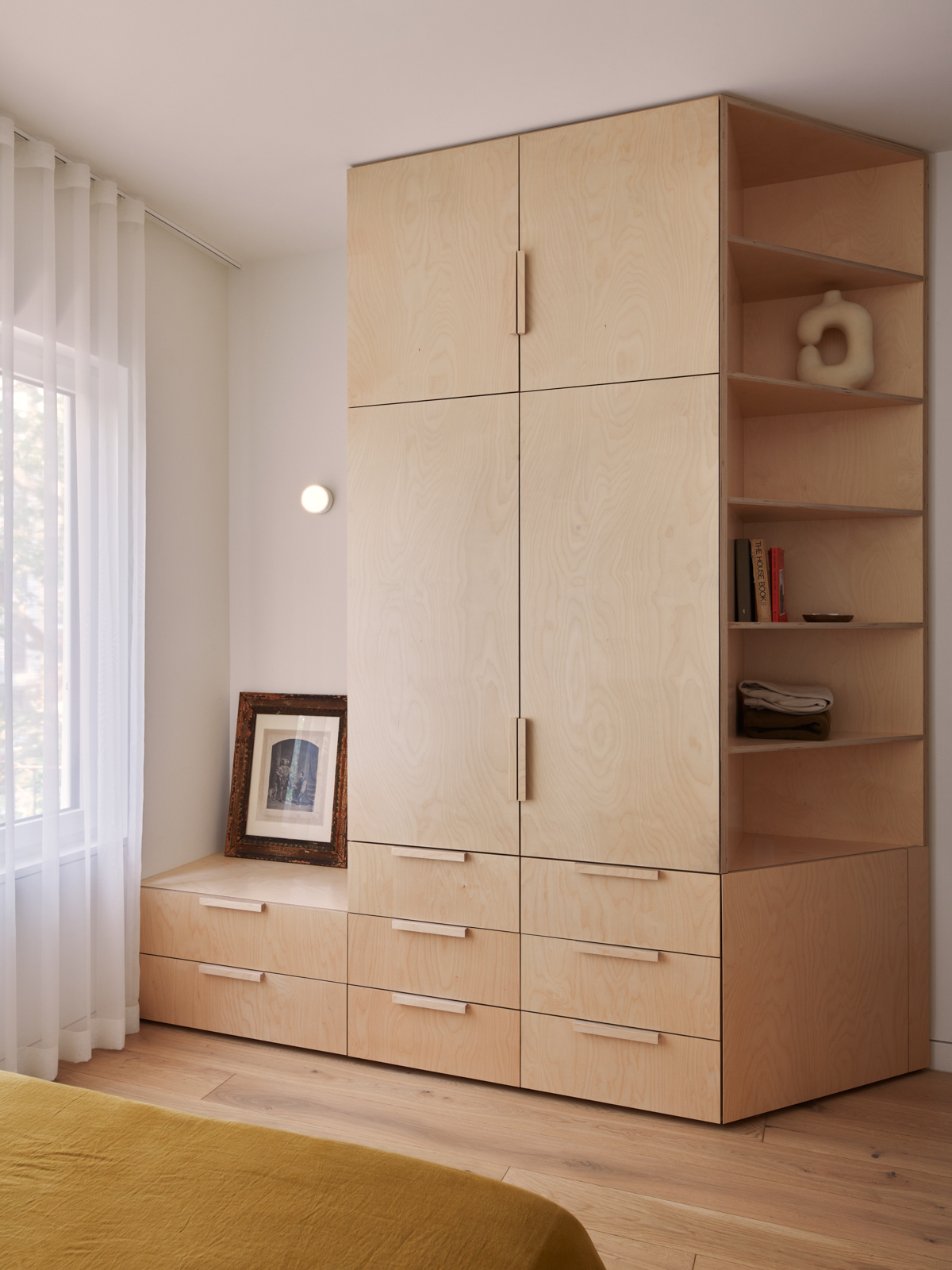
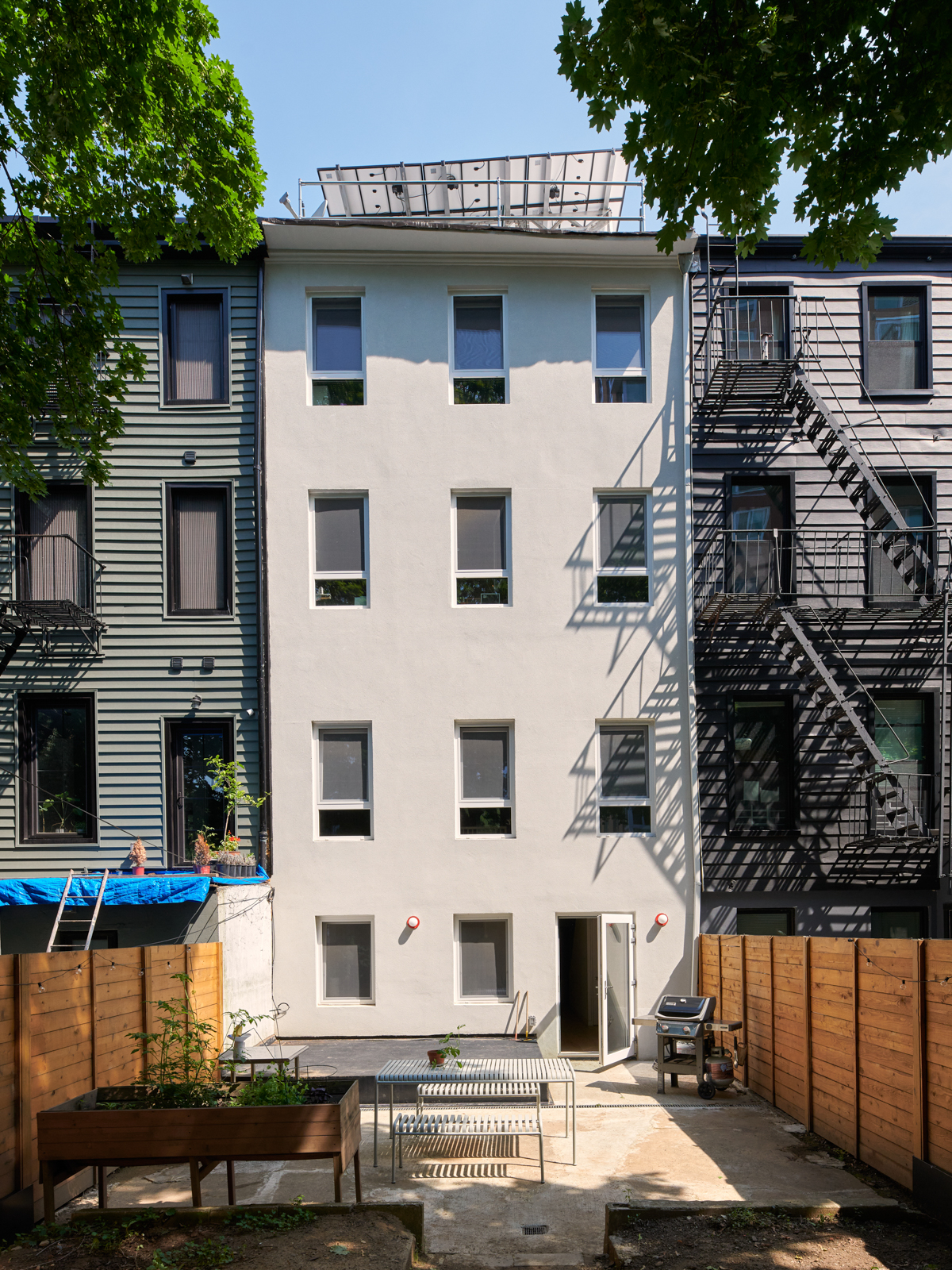
Both the first and second floors are united by a language of geometry, angles, wood, and plywood. “The owners wanted the architecture to be their environment. And for upstairs (the rental units), the architecture was meant to frame someone else’s life,” explained Kolb. Still, the client’s ideals of continuity extend beyond families, considering the home and its occupants’ relationship to the neighborhood. That’s why the team opted to keep the facade in-line with the original (though they did update the envelope’s performance), to better commune with neighboring houses. Since moving in, the clients and their tenants have created a “three-family, shared, cohabitated experience,” said Diamantopoulou, where “everybody shares childcare, and bops from one person’s apartment to another.”