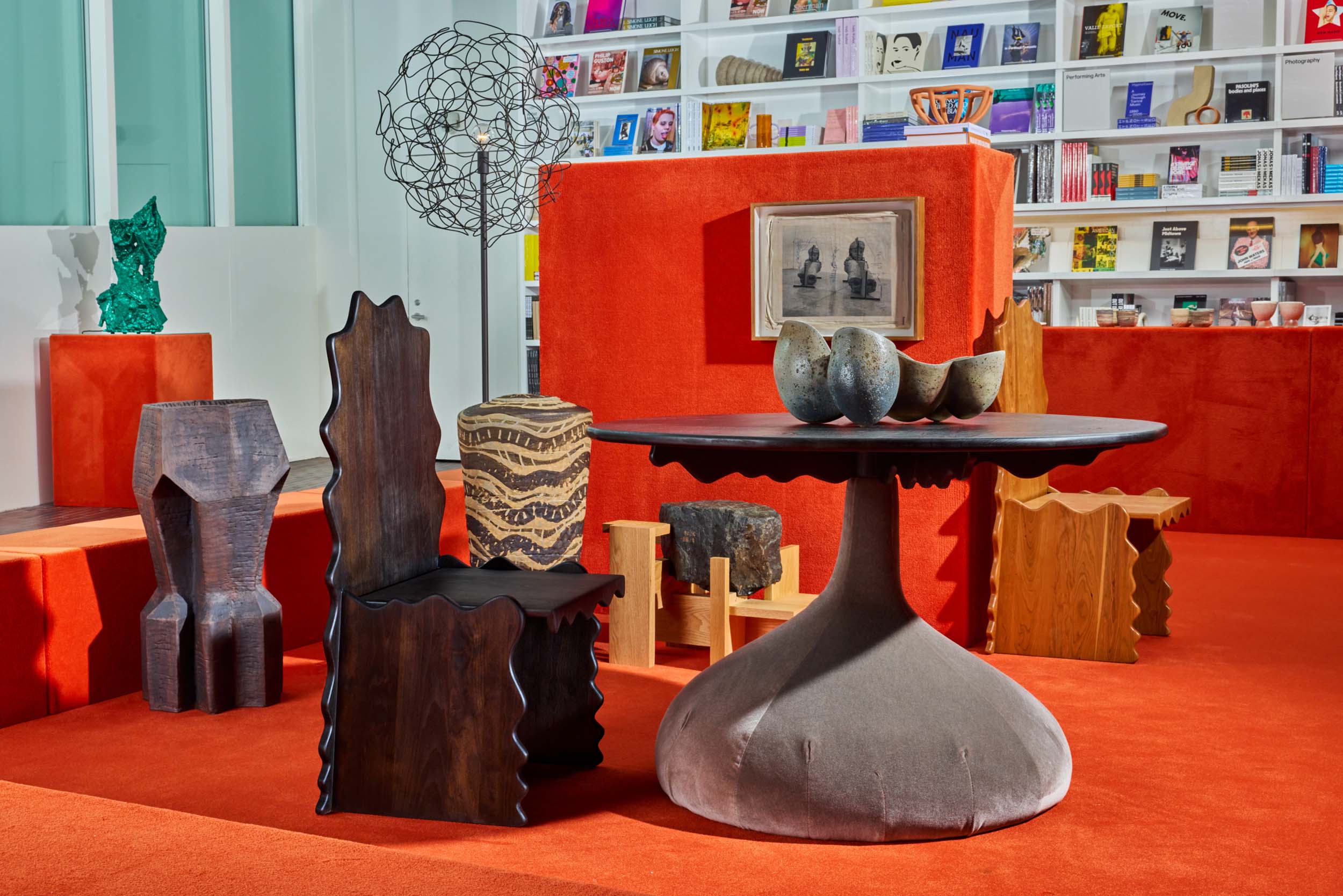
The Walker Art Center’s Design House 3 is now open, bringing handmade design and furnishings directly to the public. It is the only gallery/store in an American museum where visitors can touch one-of-a-kind chairs, lamps, tables, and fabrics—and have conversations with staff who share stories about their makers.
Idea House 3 is a bold retail innovation that recalls an early modernist vision for popular access to thoughtful design. The concept grew out of a cross-disciplinary partnership between Asli Altay, head of design, content, and communications at the Walker, and Felice Clark, the museum’s director of business development.
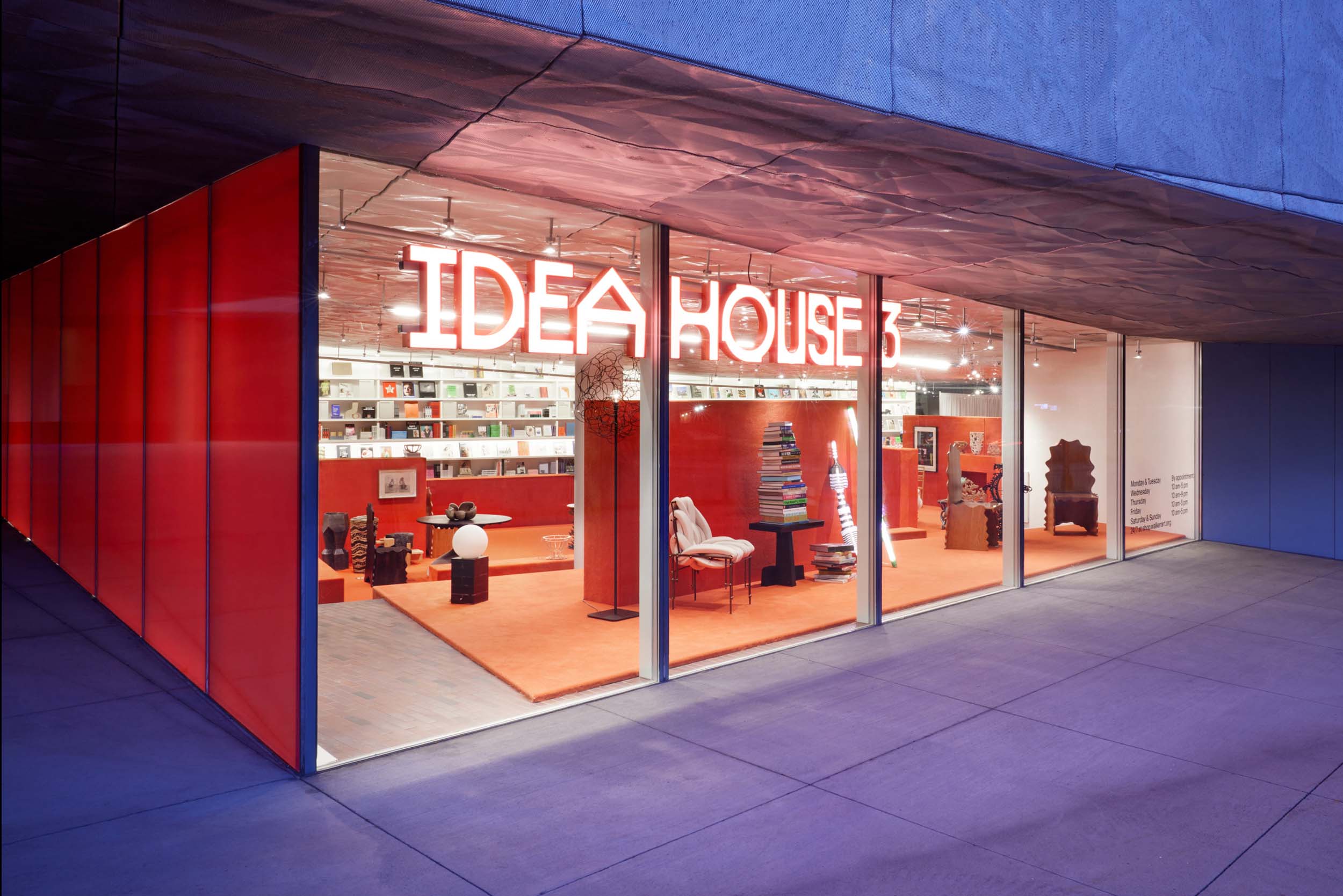
In the wake of COVID-19, they brainstormed new uses for the Walker’s street-facing bookstore, which had been closed for two years. If there was ever a time to rethink museum activities, visitor engagement, and relevant spatial programming, this was it.
The Walker already had a long and prominent history of popularizing modern design and crafts. In 1935, Franklin Roosevelt’s New Deal programs established hundreds of community “art centers” across the country. Working for the Federal Art Project, Daniel. S. Defenbacher organized over 70 of them—employing artists as teachers and makers of murals, sculptures and other “useful” arts.
The Walker (the largest of the art centers) invited Defenbacher to stay on as its first director in 1939. Knowing that many New Deal programs were soon to end, he saw a new role for the institution as a purveyor of modern design in everything from residential architecture to furniture, lighting, painting, and fabrics. So, Defenbacher founded the Everyday Art Gallery inside the museum to display modern, American-made home furnishings and products. Visitors could actually sit in an Eames chair next to a telephone and directly call the local department stores or vendors who sold a product in the gallery.
The Walker also launched the Everyday Art Quarterly to diffuse the idea of simple, quality design nationwide. Then the Walker started building. Idea House 3 gets its name from the two full-scale Idea Houses that the Walker constructed on the campus from 1941 to 1947. Everyday design infused the optimism of the postwar age. It’s no surprise that Case Study Houses, sponsored by Arts & Architecture, also arose at this time.
Reconnecting to Handmade Things
Curator Asli Altay feels that the time is ripe for reconnecting people to handmade, thoughtful environments and furnishings. “There’s a violence about cheap things and their effects on our lives, materials, laborers, and the global environment,” she said, referencing global retail channels such as Ikea and clothing manufacturers whose products last for a while but are ultimately thrown away.
Altay and Felice Clark looked to the original Idea Houses and the Everyday Art Gallery for inspiration and conceived a new “idea house” for artist-made design. Clark recalled that, about six months into the planning, “we got really excited when we realized that no other arts institution was doing this.” She added that “the creativity in our business model allowed us unusual flexibility in exhibit rotation and margins”—emphasizing that a major goal is to create attention and income for emerging artists.
During her years as a graphic designer in London, Altay encountered Zak Group—known for its masterful books and typography—when she designed a book for Zak Keys, the group’s founder and creative director. Fifteen years later, she reached out to Keys to create an identity and design for the Walker’s Idea House 3—the group’s first foray into retail design.
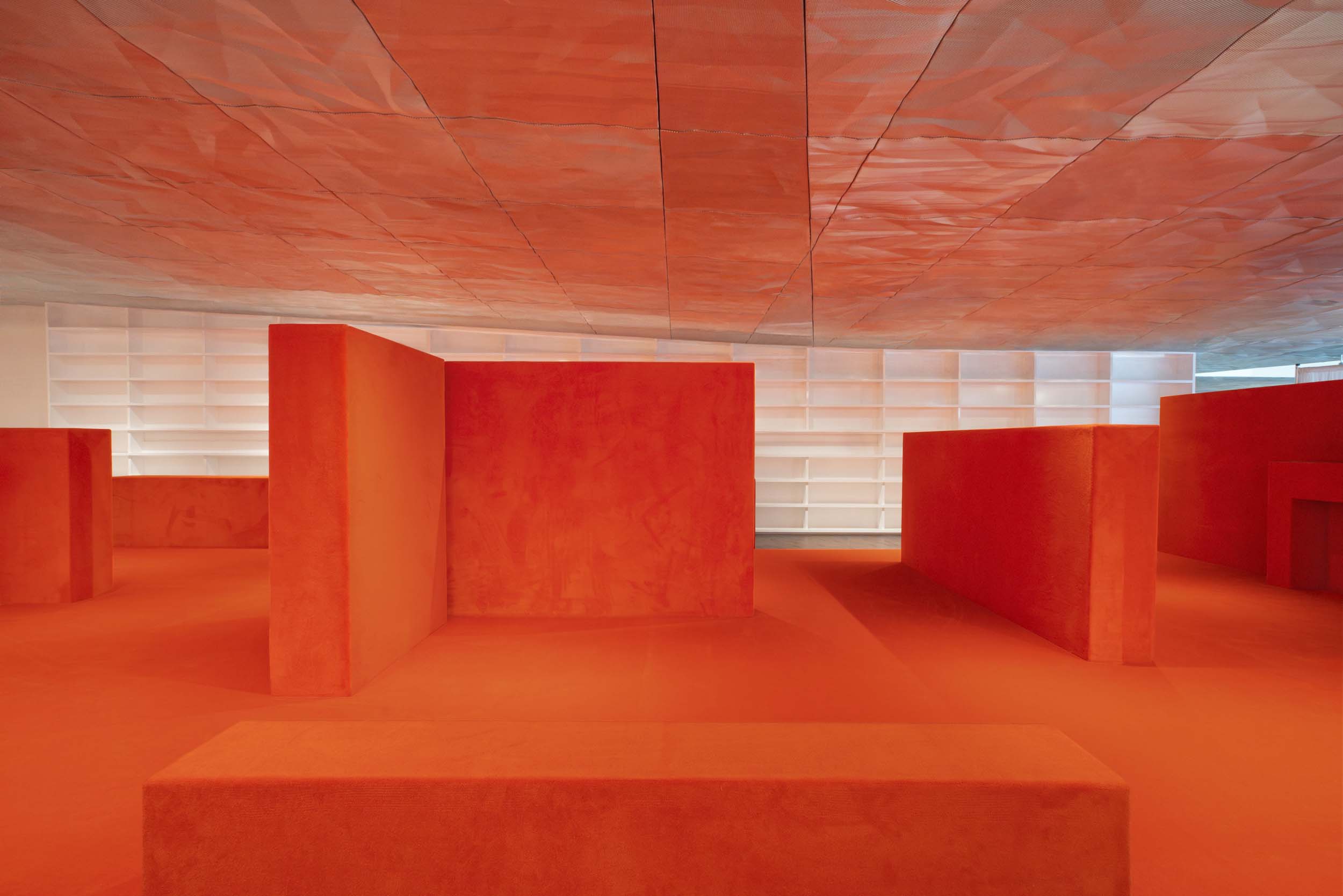
“We designed a house within the Walker and then blew the roof off,” Keys said. What’s left is a foundation and a series of moveable walls that create rooms. This house is a tool for the Walker curators to challenge ideas about how we live.”
Keys designed an Idea House 3 typeface that expresses the angles and floorplan geometry of the original Idea Houses. To organize the 1,500-square-foot space, they referenced the room types in the original houses to create a series of rooms reflecting daily life—relaxing, playing, working, hosting and reading with design-focused bookstore lining the back wall.
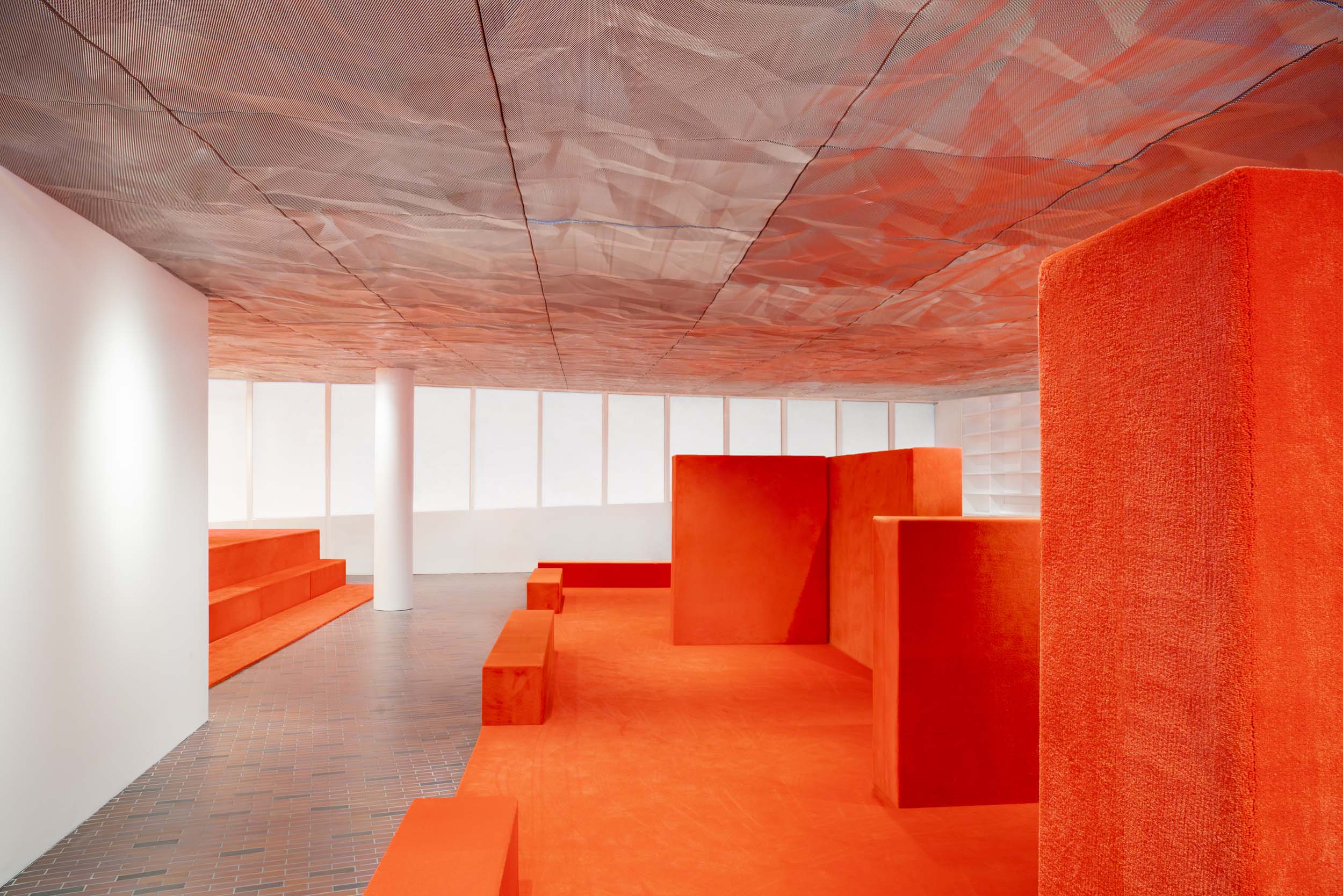
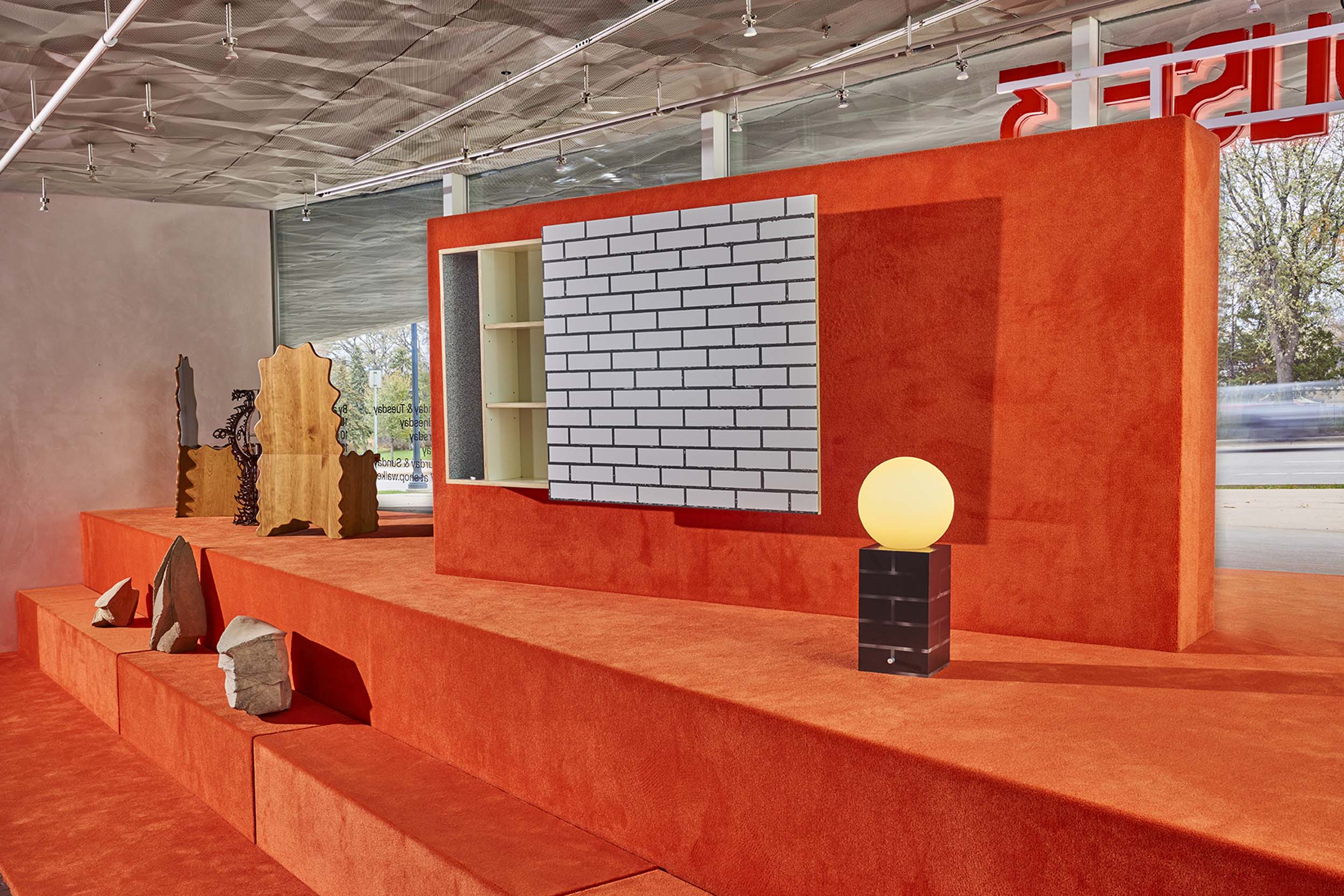
Framed by orange carpeted “walls” evoking DIY and construction stores in the U.S. and Europe, these spaces become distinctive zones that feel separate without being confining. You can look up to see Herzog & de Meuron’s folded metal mesh ceiling, which also wraps the entire exterior along with outward views to daylight and motion on the street.
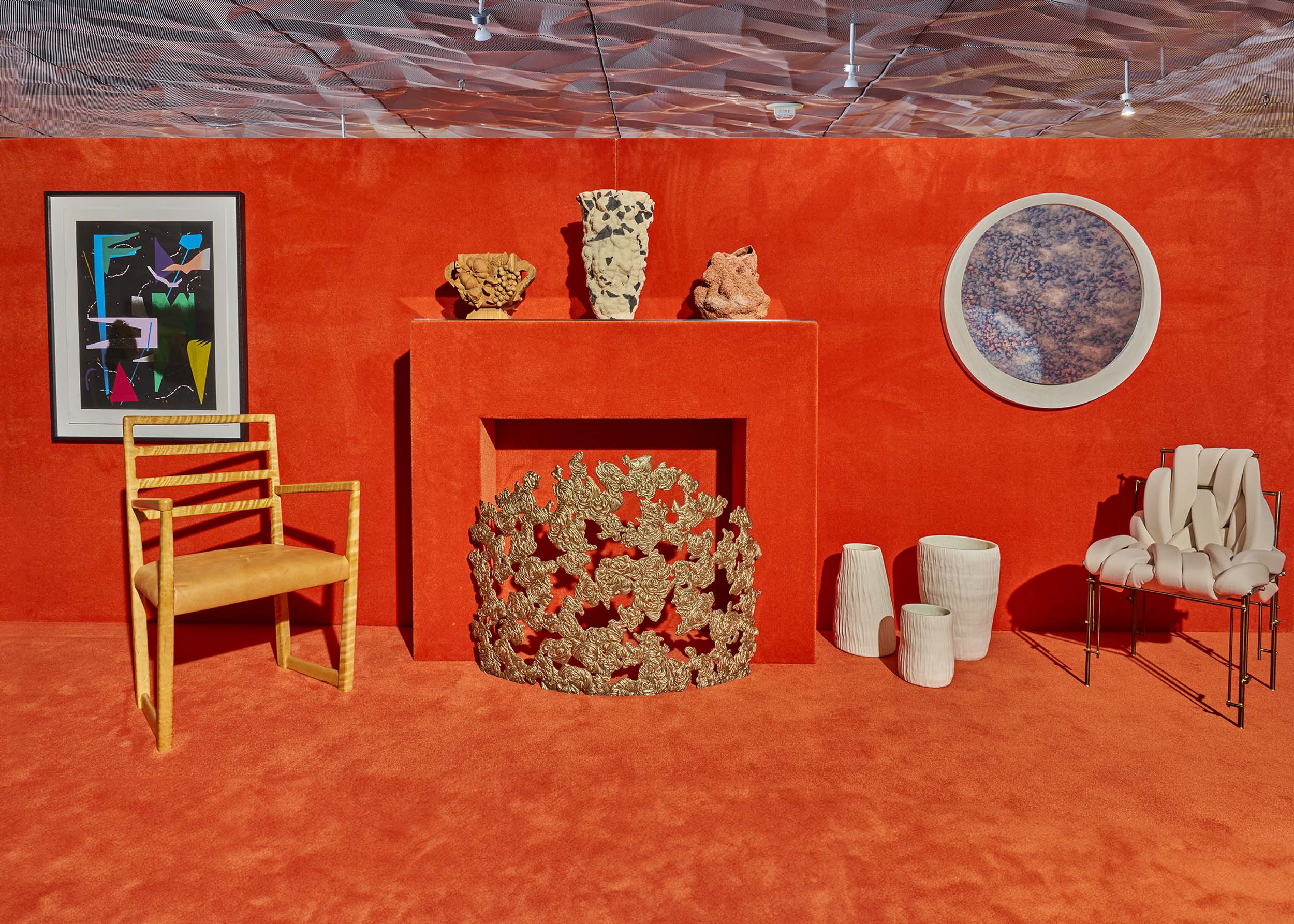
The Guest Room
The project team created a space called the “Guest Room” for temporary exhibits that rotate every six months. Focusing on Midwestern artists and makers early in their careers, the opening exhibit—Midwest Design Here & Now—was organized by the writer and curator Wava Carpenter, former director of Design Miami and cofounder of the incubator Anava Projects in Berlin.
On the Walker’s website, Carpenter wrote that modernism’s emphasis on functionality “helped entrench social inequities by erasing disparate personal, regional, and cultural expressions.” But she also noted that “progressive design thinking in the 21st century has revalued small-scale, sustainable production methods that predate the modernist era.” This commitment to sustainable production stems from the idea that one’s quality of life is not tied to a quantity of space. Instead, investments of time and money can be refocused inward on quality items that last a lifetime. Purchasing such design objects directly benefits the artists—and at Idea House 3, customers have the opportunity to build relationships with them.
Slowing Down
Beyond design, Idea House 3 also offers lessons in how we consider time and value. Today’s global supply chains allow nearly instant access to mass-produced furnishings and objects while severing any sense of connection to their makers or even the sources of materials. Speed of acquisition trumps worry over environmental impacts like the loss of old growth forests or labor conditions.
Initiatives like Idea House 3 encourage us to slow down. This is not a story of instant gratification but of reassessing what we mean by value. Like the experience of slow food, it pays to take the time to savor things.