
For the largest outpost of the acclaimed Taiwanese restaurant Din Tai Fung, Rockwell Group differentiated the new New York eatery in dramatic fashion. The interior is aptly informed by the restaurant’s proximity to the city’s Theater District. Paired alongside Din Tai Fung’s own branding and visual identity, the new restaurant becomes a series of stage sets that are choreographed together to create an unfolding saga of the brand throughout the 25,000-square-foot space.
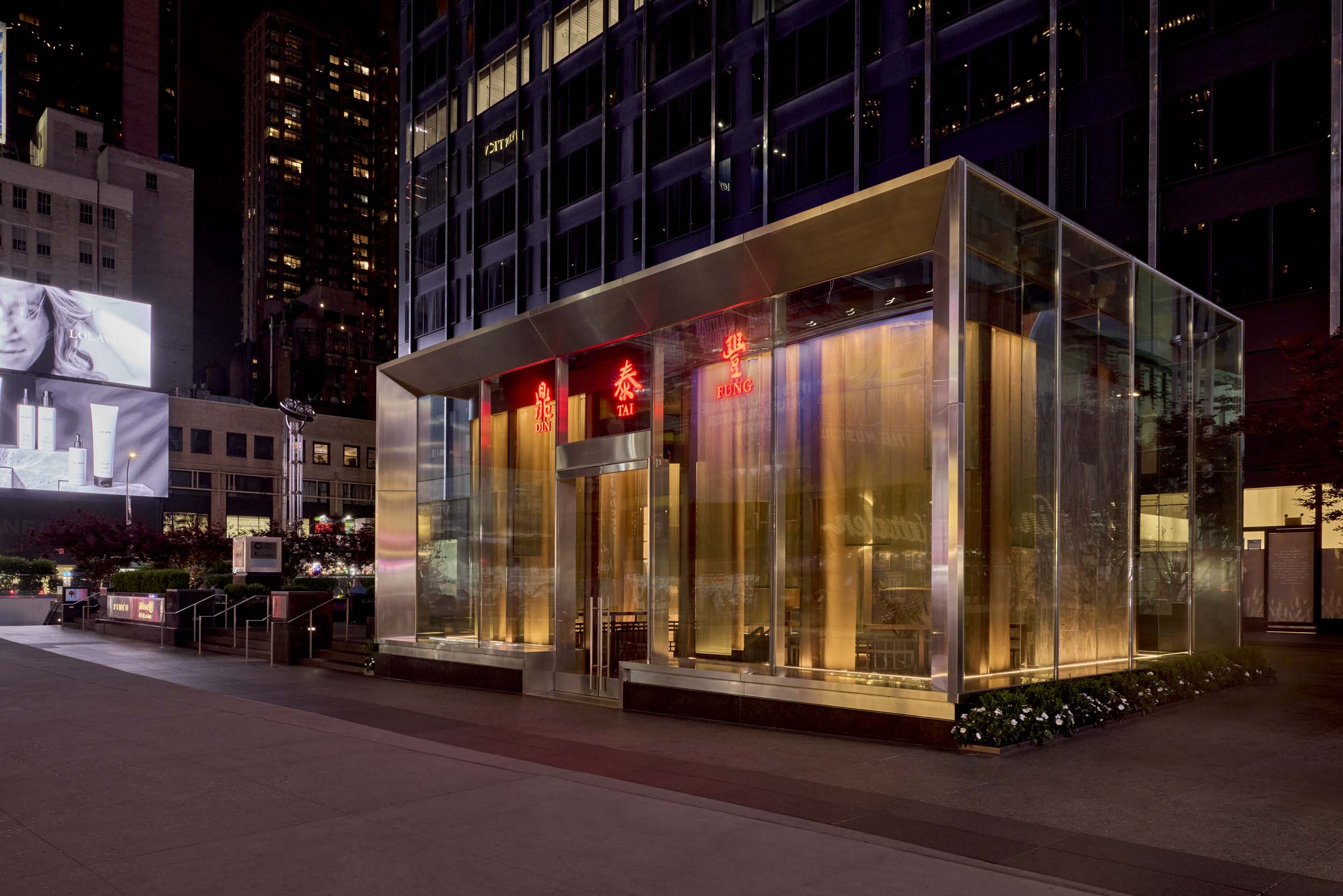
The restaurant’s sense of theatricality begins outside. Rather than a black box theater, the eatery is housed a cube of steel and glass. The architects worked with the previously existing structure, making it softer with layered curtains, a staircase lined with wooden rails mirrored after Chinese wooden screens, and a curtain ring made from wood and metal that falls down the winding staircase toward the two-story chandelier at its center.
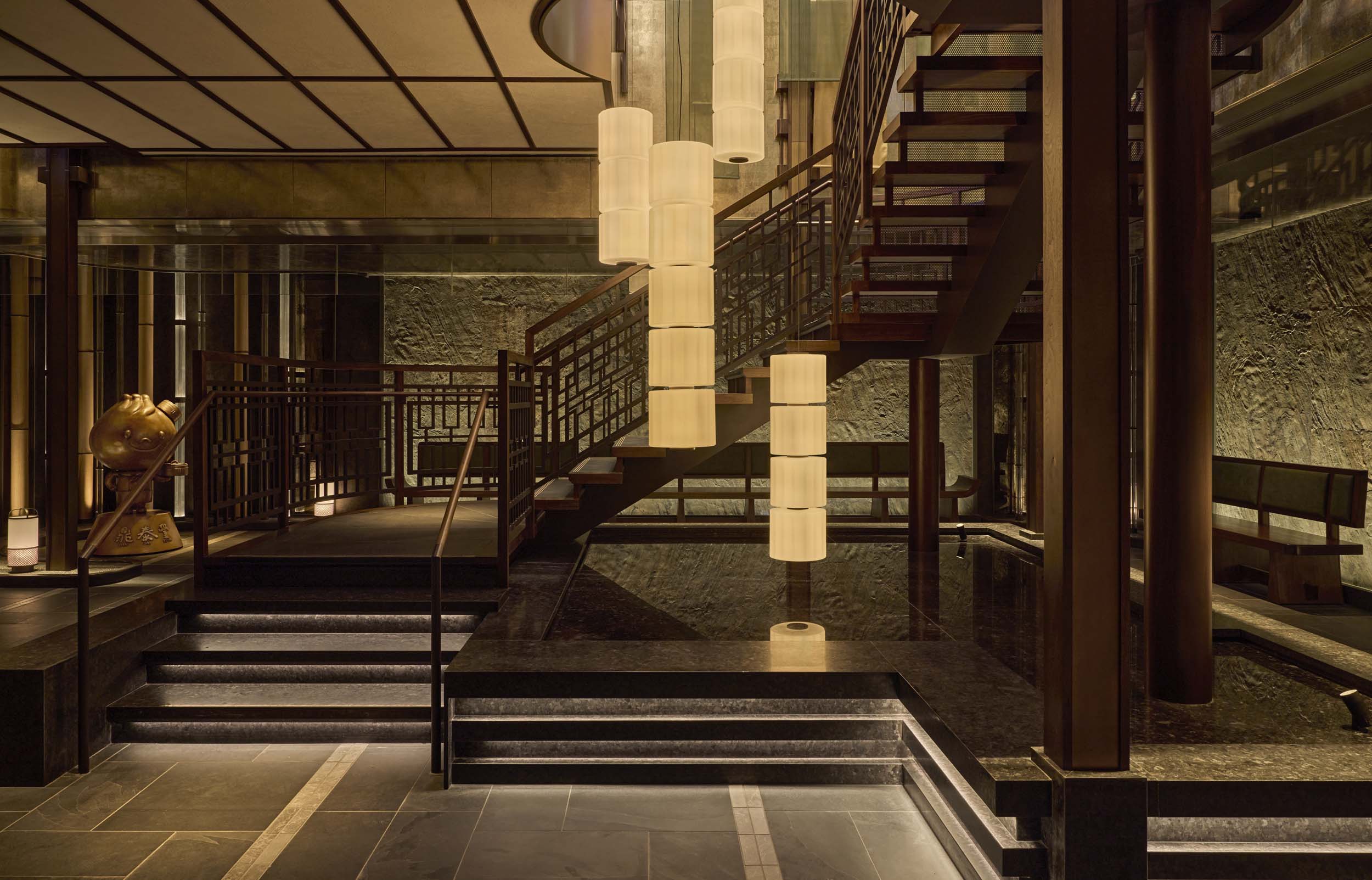
From there, a curvy passageway lined with tubes of glass, metal, and lanterns act like the garden path leading to the restaurant, whose layout takes after a welcome home that unfolds into the courtyard.

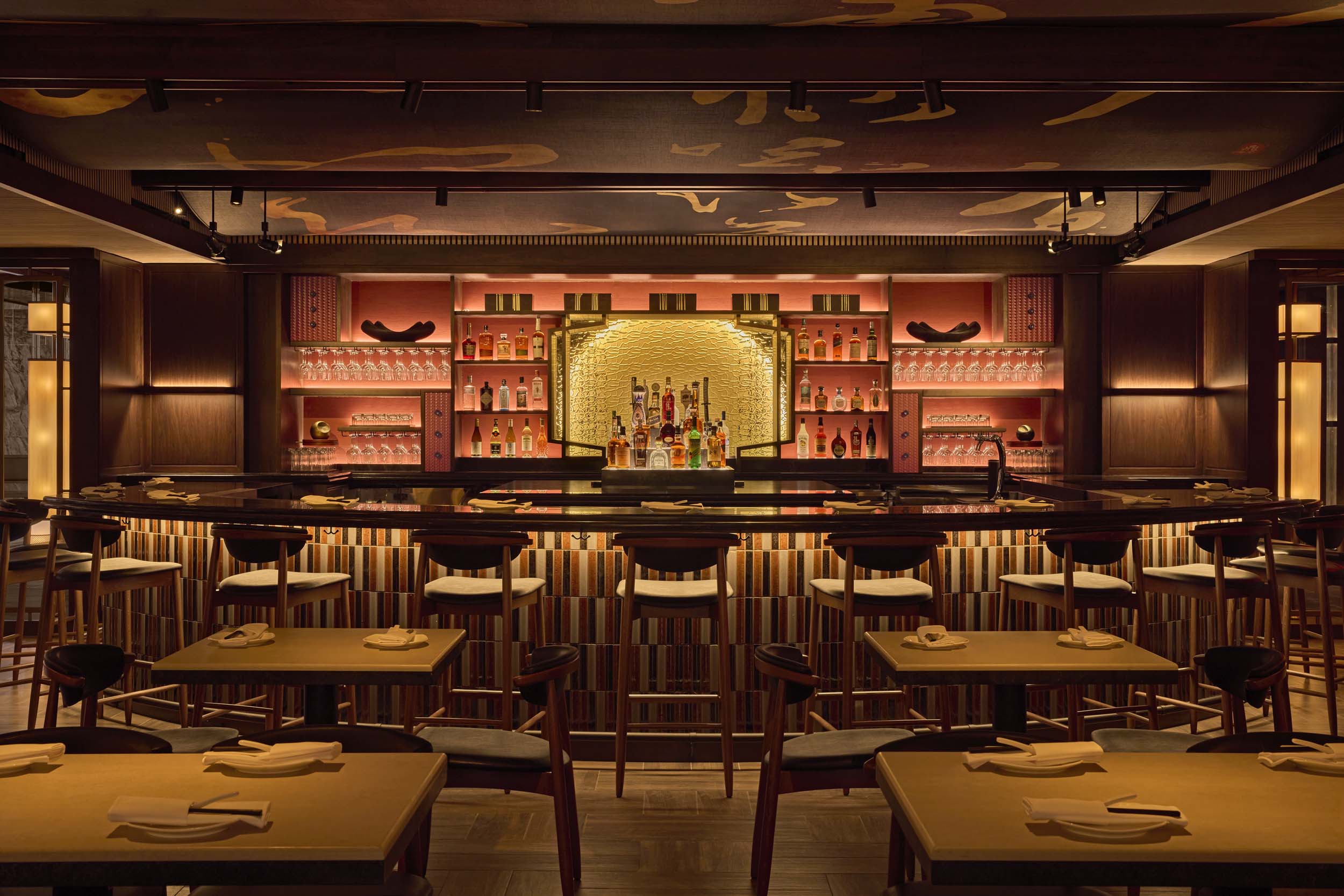
At the main bar area, the space is sandwiched between the bar on one end and the dumpling kitchen on the other. The dumpling kitchen is a centerpiece of every Din Tai Fung location. Rockwell chose to place it within the dining room so its transparent kitchen, seen through glass frosted from the waist down, was at center stage for diners. It glows from one end, while the bar’s pink-hued backsplash glows in the other direction. The two distinct ends are united by the ceiling. It features a series of curves, wrapped in custom wallpaper, and separated by beams to appear like tapestry hanging down.

The dining rooms extend to either side of the bar with each offering its own color scheme. The rooms—one red and one green—mirror each other while being inspired by Taiwanese and Chinese courtyards. The seating areas are marked with light colored flooring, perimetered with flooring in darker washes to evoke the feeling of stepping into a garden. Also along the perimeter are nooks in semicircular booths and screens. The same wooden pattern along the staircase rails appears here and throughout the interior in the traditional-inflected patterns. They add yet another layer of texture and warmth to the design, whiling tying the drama of the space to the restaurant’s own cultural heritage.