
The concrete, industrial box that houses Toronto’s Hay Sushi Spring Garden location may seem like an odd pairing for a restaurant serving raw, light Japanese fare, but local firm Odami’s ongoing practice of merging dichotomies finds the softness in the building’s strong foundations. Located in the ground-floor podium of a 1990s residential tower, the restaurant’s interior takes its cues from the menu’s focus on impactful offerings that aren’t overly decorative. As such, Odami balances the location’s industrial nature with contrasting tones to cohere the client identity with the site.
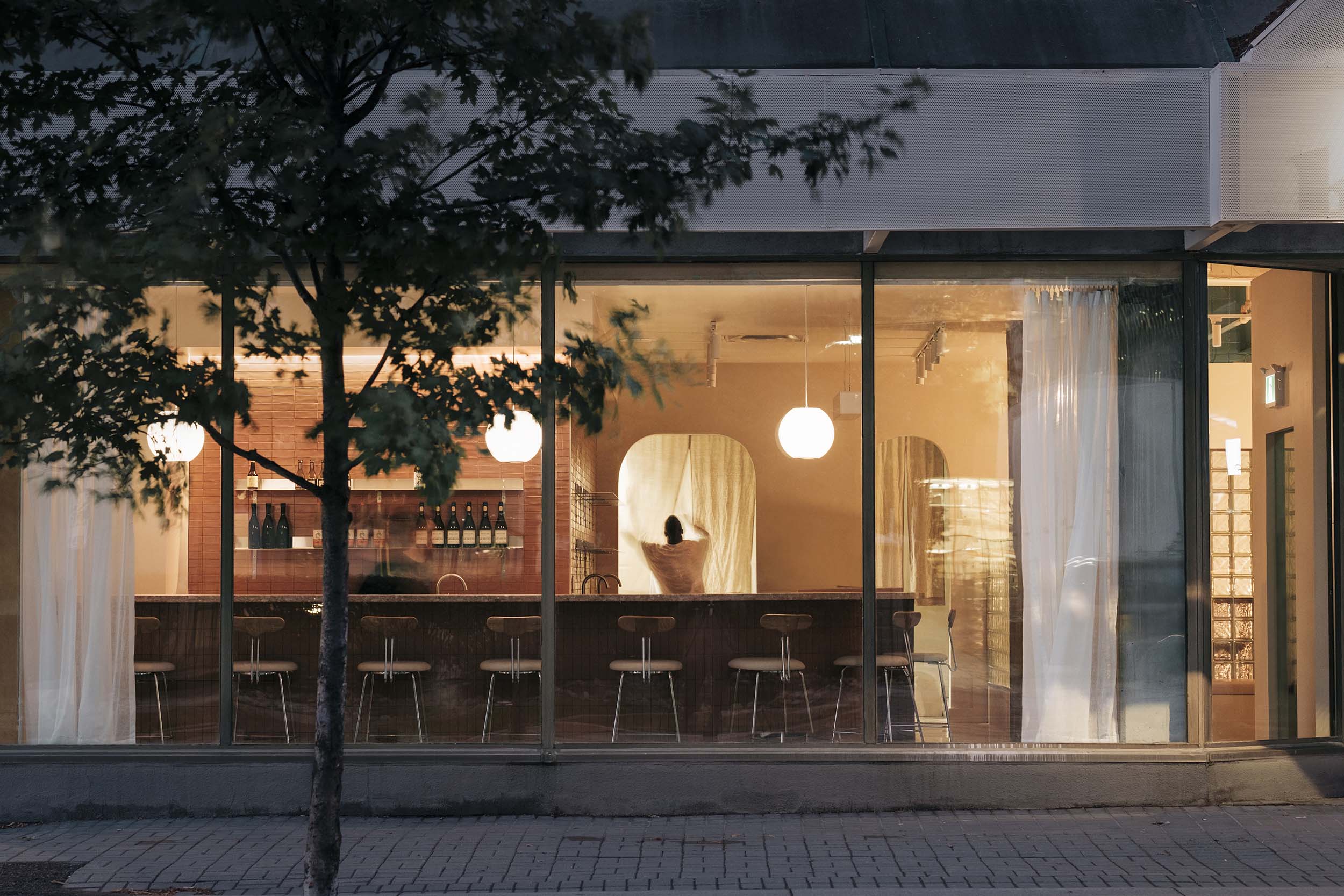
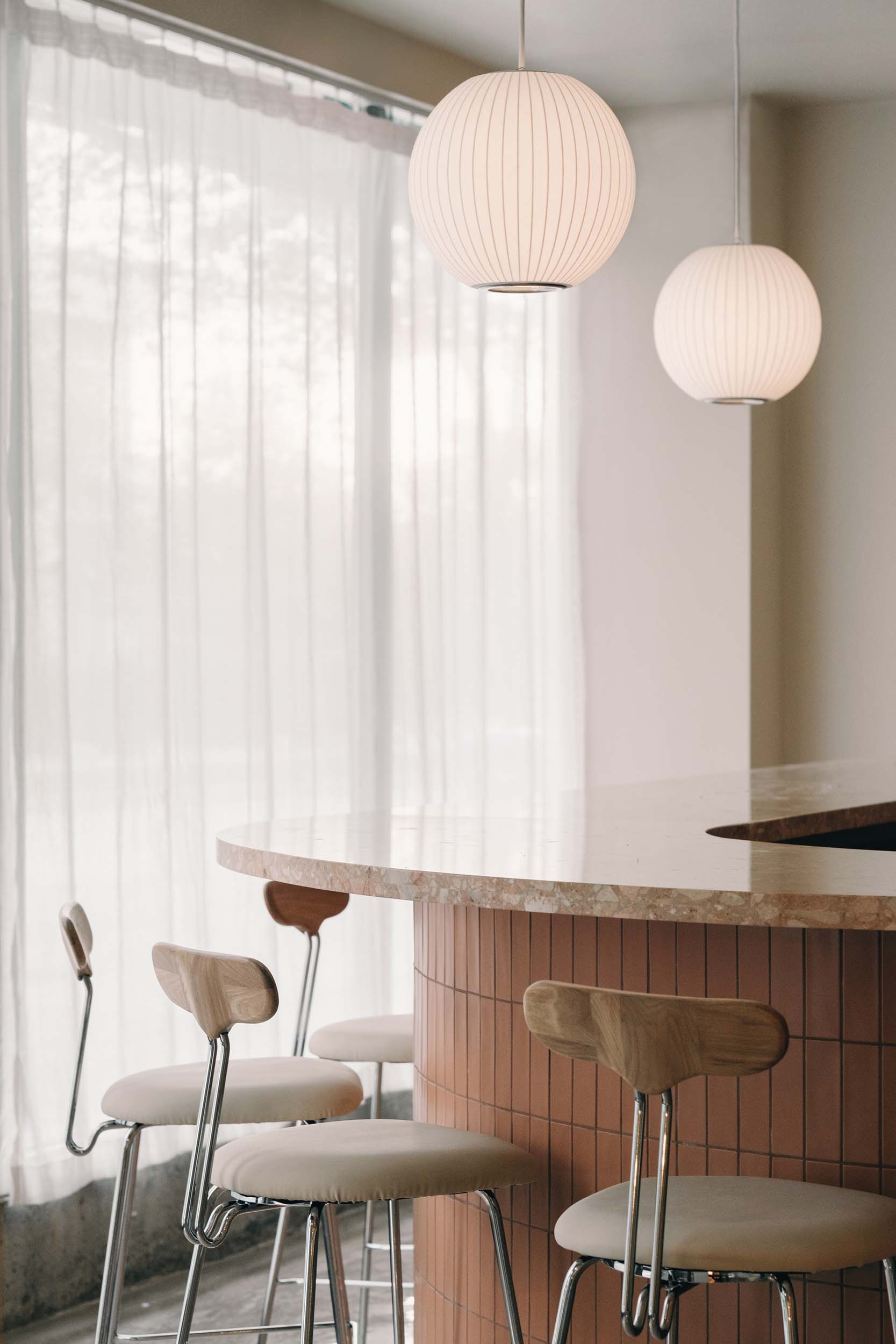
The building had formerly undergone years of disparate renovations that lessened its street presence and spatial quality. The architects stripped back the 2,500-square-foot space, choosing to reveal and revel in the location’s industrial nature. They restored the concrete floors and walls, and floor-to-ceiling windows. This introduced a heavy geometry to the space given the structural columns and beams now exposed. To lighten these elements, Odami incorporated opposing geometry: circular apertures, arched doorways, curved cocktail bar, and spherical pendants for lighting.
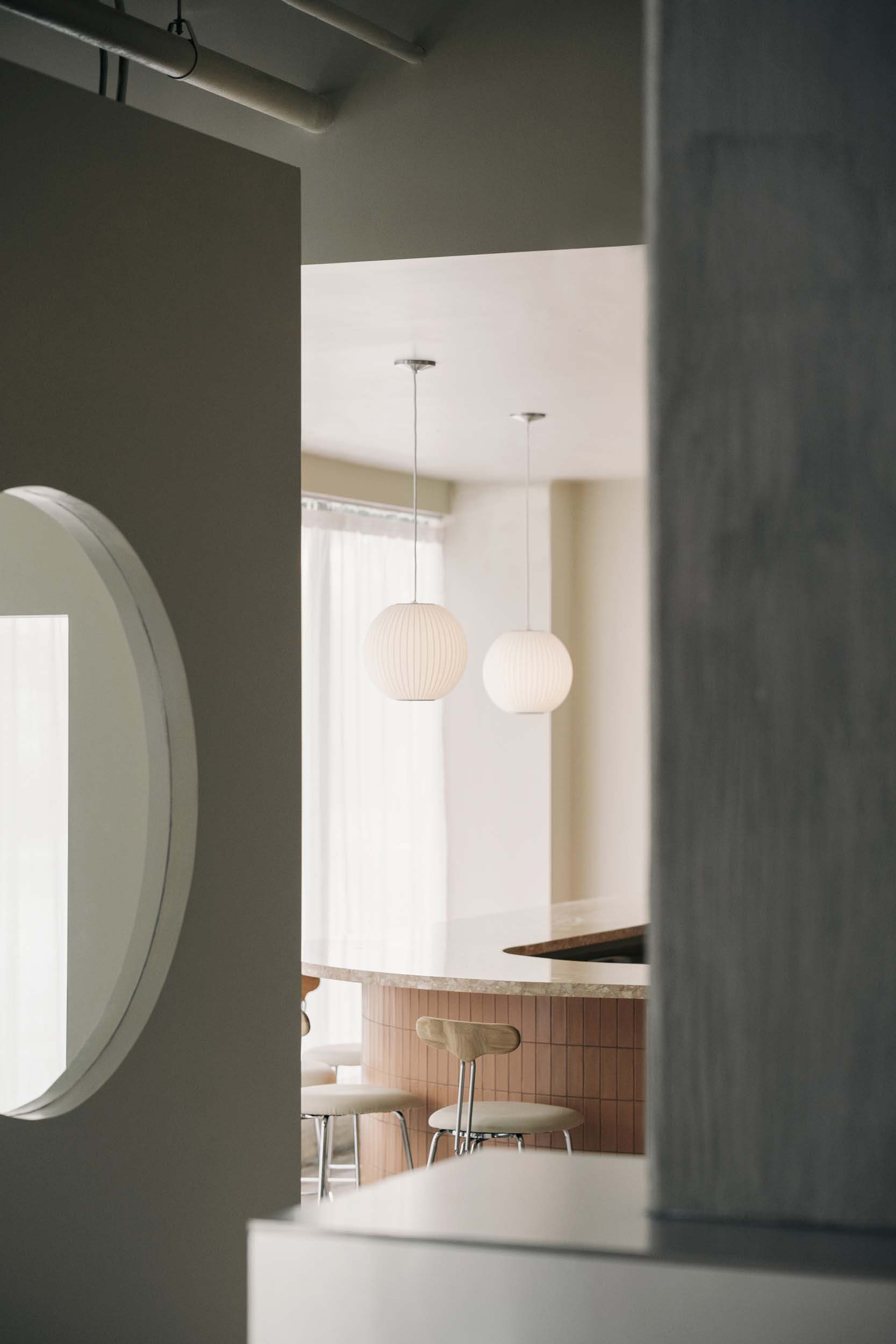
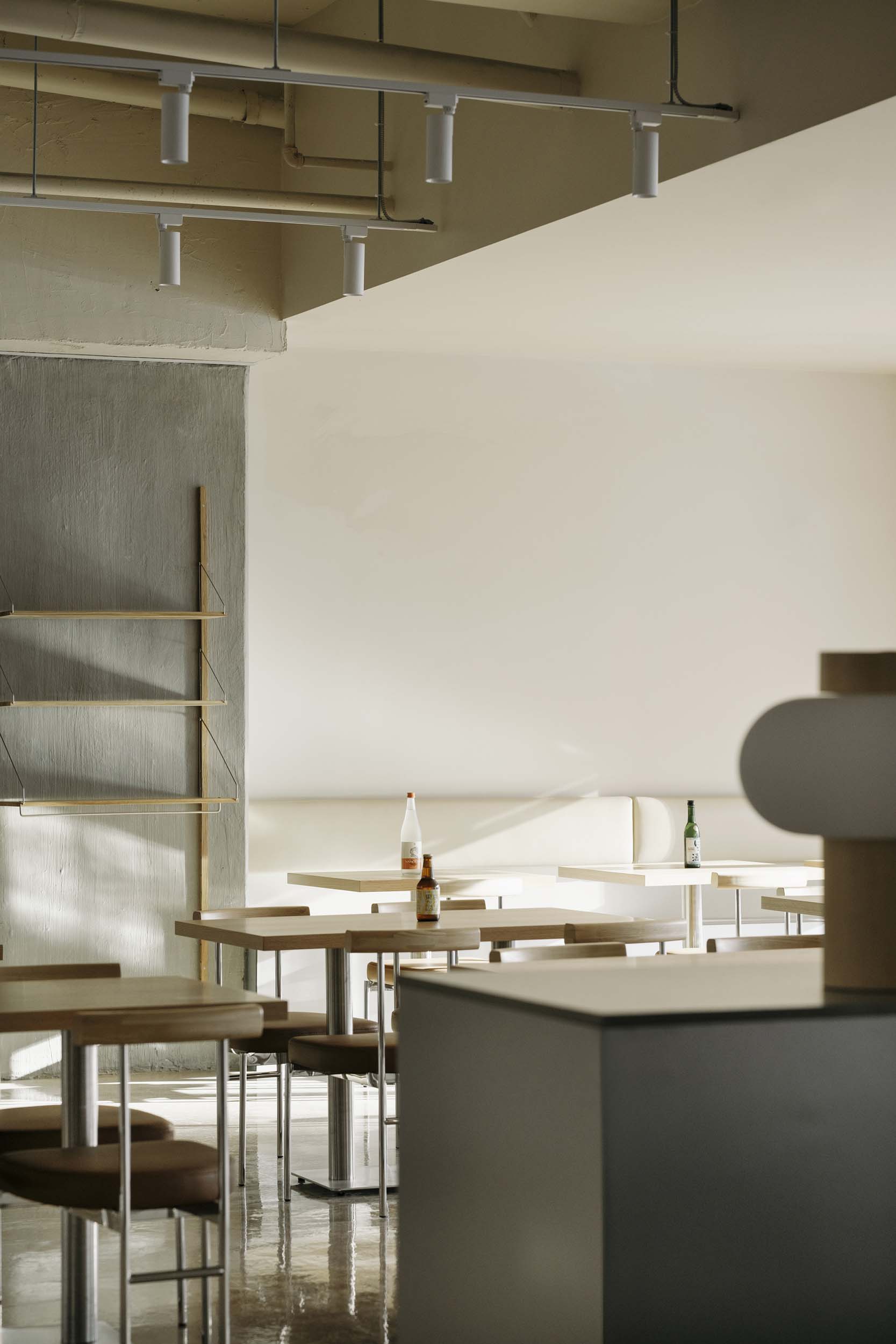
Similarly, the material palette of the project blends both cool and warm elements. Concrete and stainless steel is paired with terra-cotta tiles, sand-toned leather, airy white curtains, and white oak furnishings. But the true pièce de résistance is the glass block that helps divvy the space. The glass incorporates transparent moments that assuage the dense industrialism while incorporating more light.
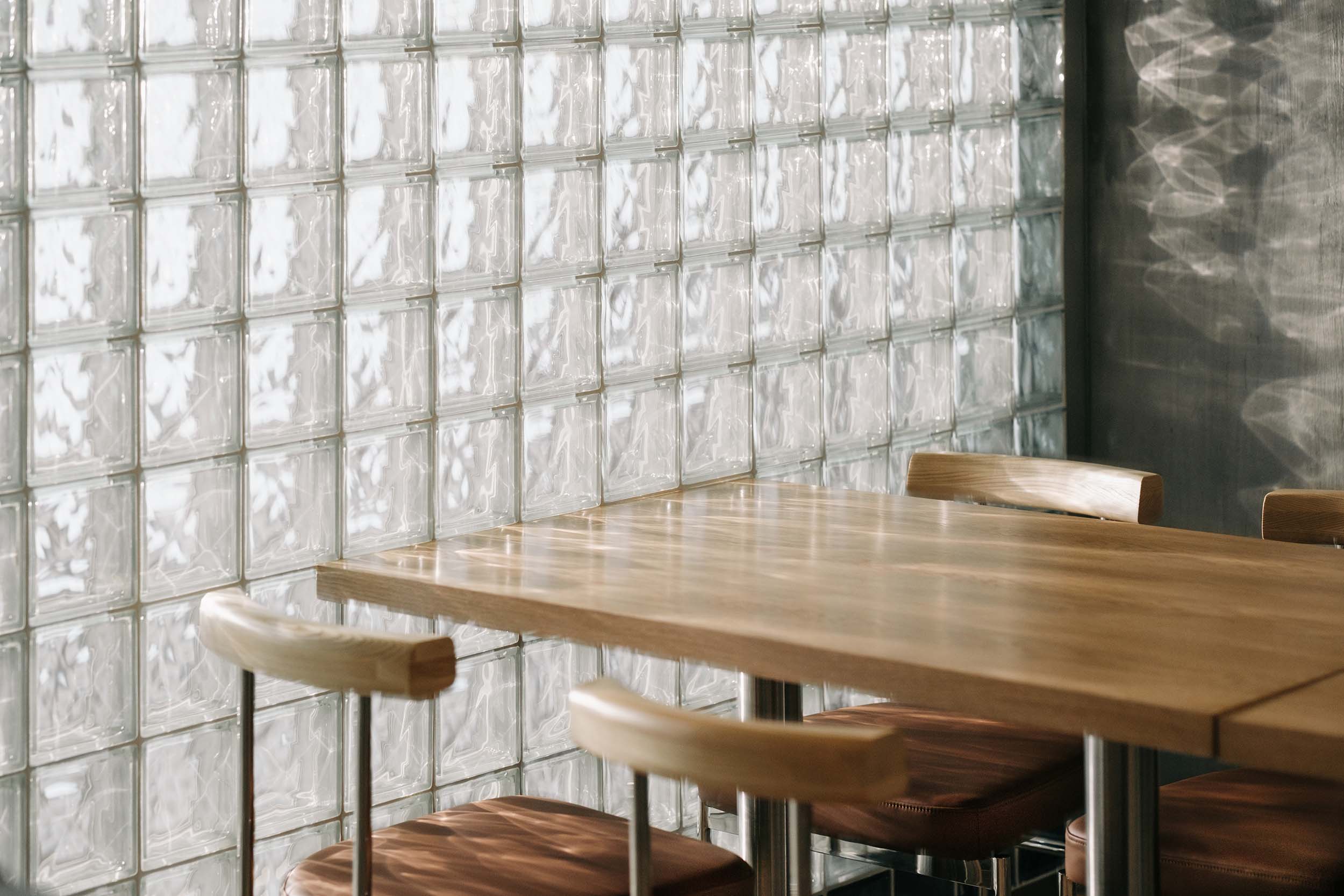
This lighting cleverly communes with the industrial elements, allowing them to further reflect light throughout the space and create intriguing shadows. As light comes in from the restored windows, it reflects off the waved glass, the high-epoxy resin finish on the concrete floors, and the brushed metal.
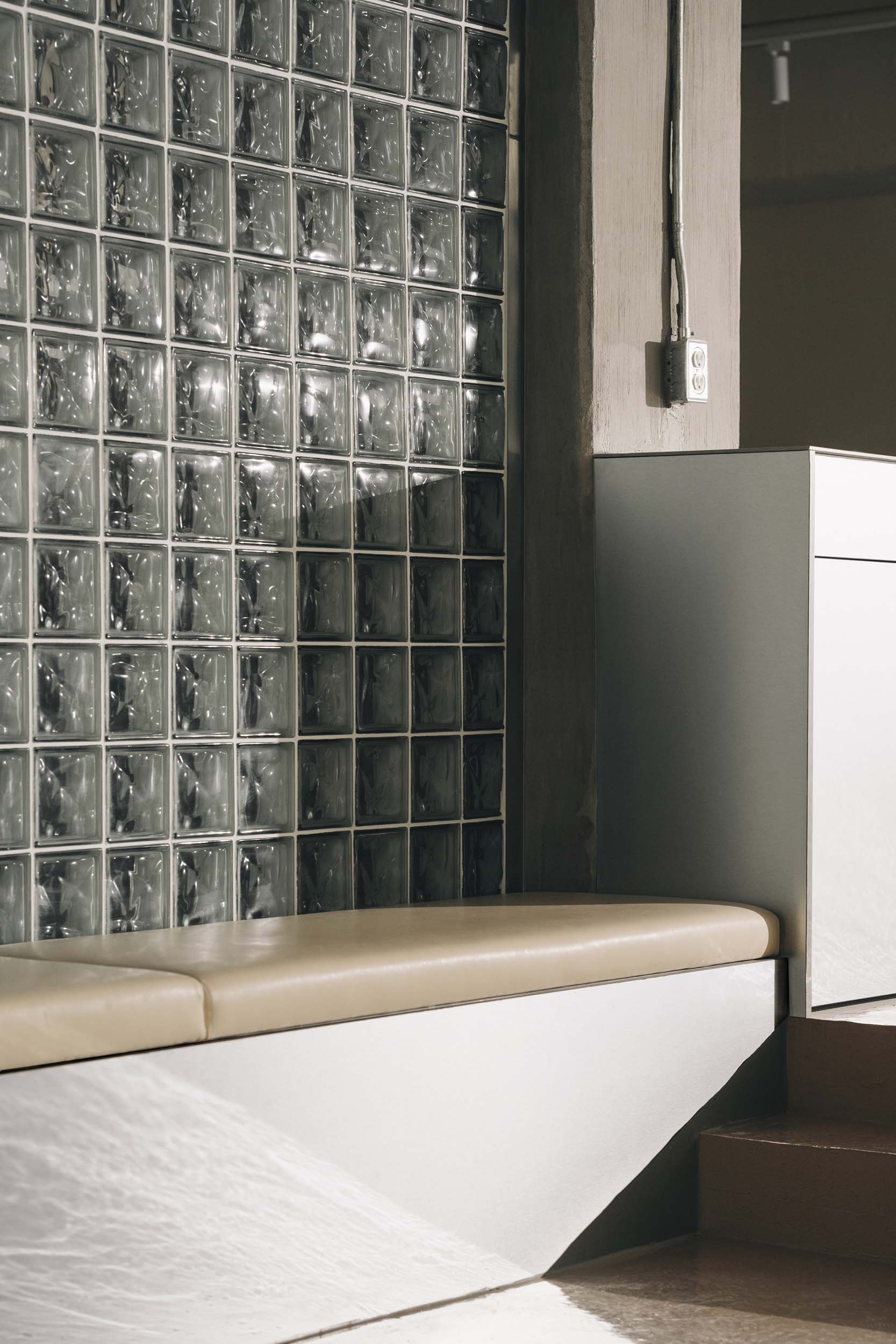
Glass block also helps navigate the flow and choreography of the space. The main dining room is raised under an exposed ceiling to create a distinct zone that still feels open and expansive. However, the architects play with scale in the other zones, lowering the canopy over the bar to enhance the building’s spatial qualities. The glass block makes up two partitions, surrounded by white banquettes, in the center of this space, crucially creating a pathway for traffic while obscuring the busy corridor into the kitchen. This also helps set up moments of reveal and exposure for the entryway vestibule as this waiting area both hides moments of the interior to create a sense of arrival, while a circular opening hints at what’s inside.
The delicate collage of dichotomy, from material to geometry, finds a cohesive whole at Hay Sushi. As Odami noted in the project description, “Sometimes, the quieter the interventions, the more they stand out.”