
The Perrin family began making wine in the early 1900s when they arrived at Chateau du Beaucastel in France’s Côtes du Rhône. For five generations, the family has cultivated the land to refine its bio-dynamic wine process. To expand the property to accommodate the growing family and production, the Perrins tapped Studio Mumbai and Studio Méditerranée to renovate and add onto the existing structure which is itself from 1687. Honoring not just the family’s craft and the history of the site, the duo updated the estate by sticking predominantly to its terroir.

The land that lends the unique, coveted taste to the family’s wine is also responsible for the new construction. The ground holds pebbles mixed with clay from the Quaternary terrace period, along with sand and pebbles from the Miocene era. The design team excavated 39 feet (12 meters) down to gather materials for rammed earth which provides the volume for the new cellar space, new house, and surrounding walls.

For the other structures and bases of the walls, the architects used more of the mixture of pebbles and sand from the Miocene period. They mixed it with concrete from former dismantled buildings. Added with lime or more concrete, the composition forms a site-specific concrete.
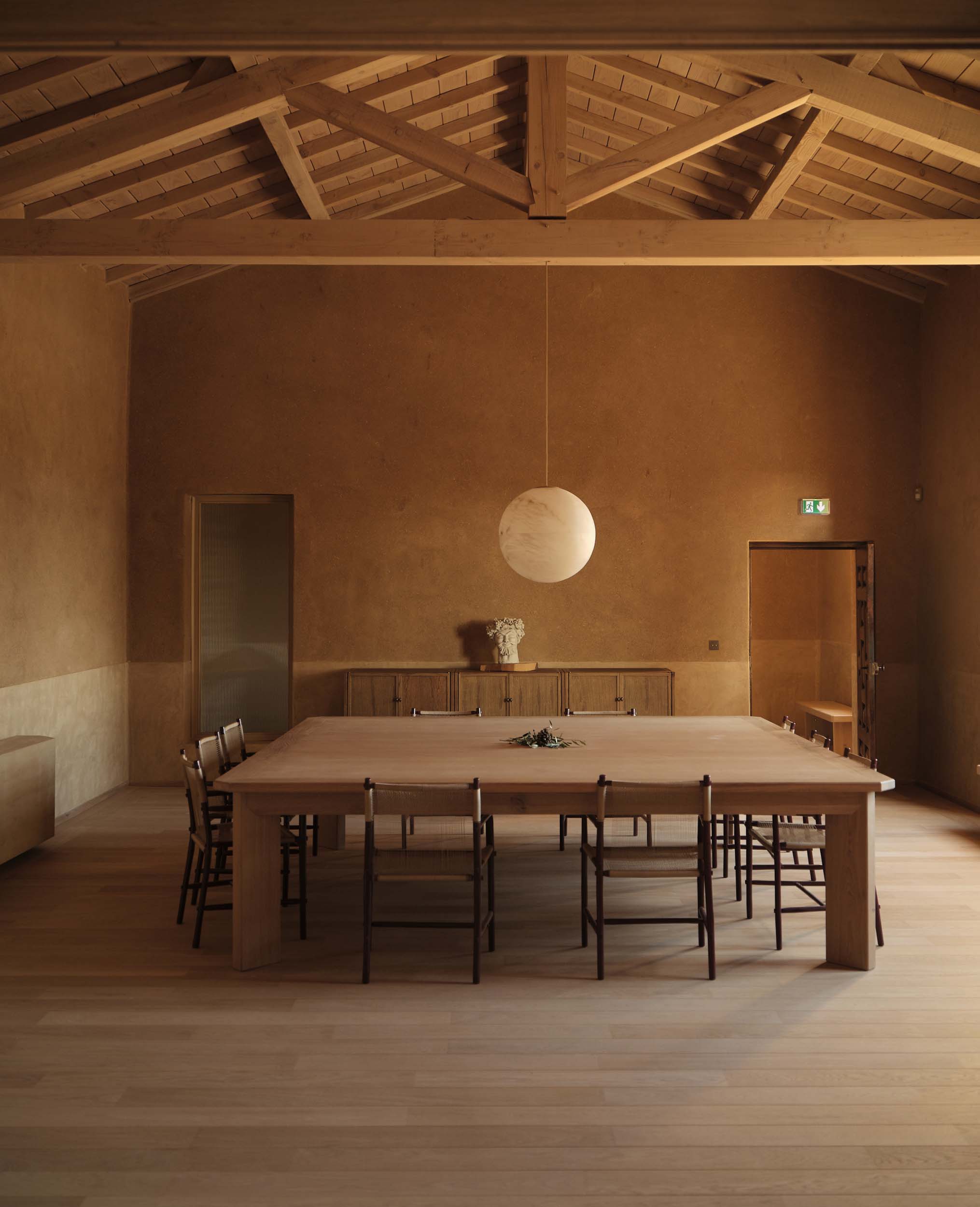
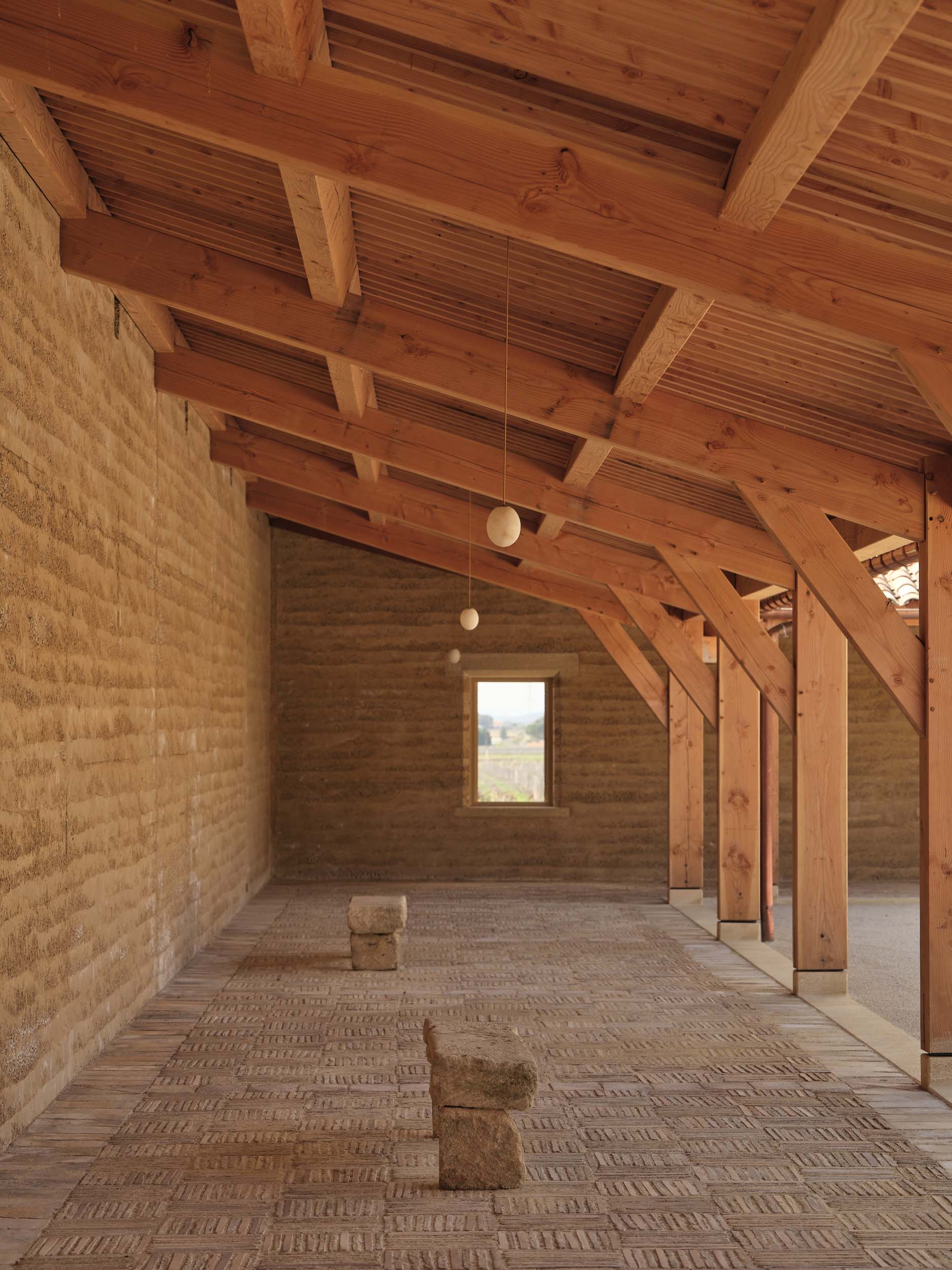
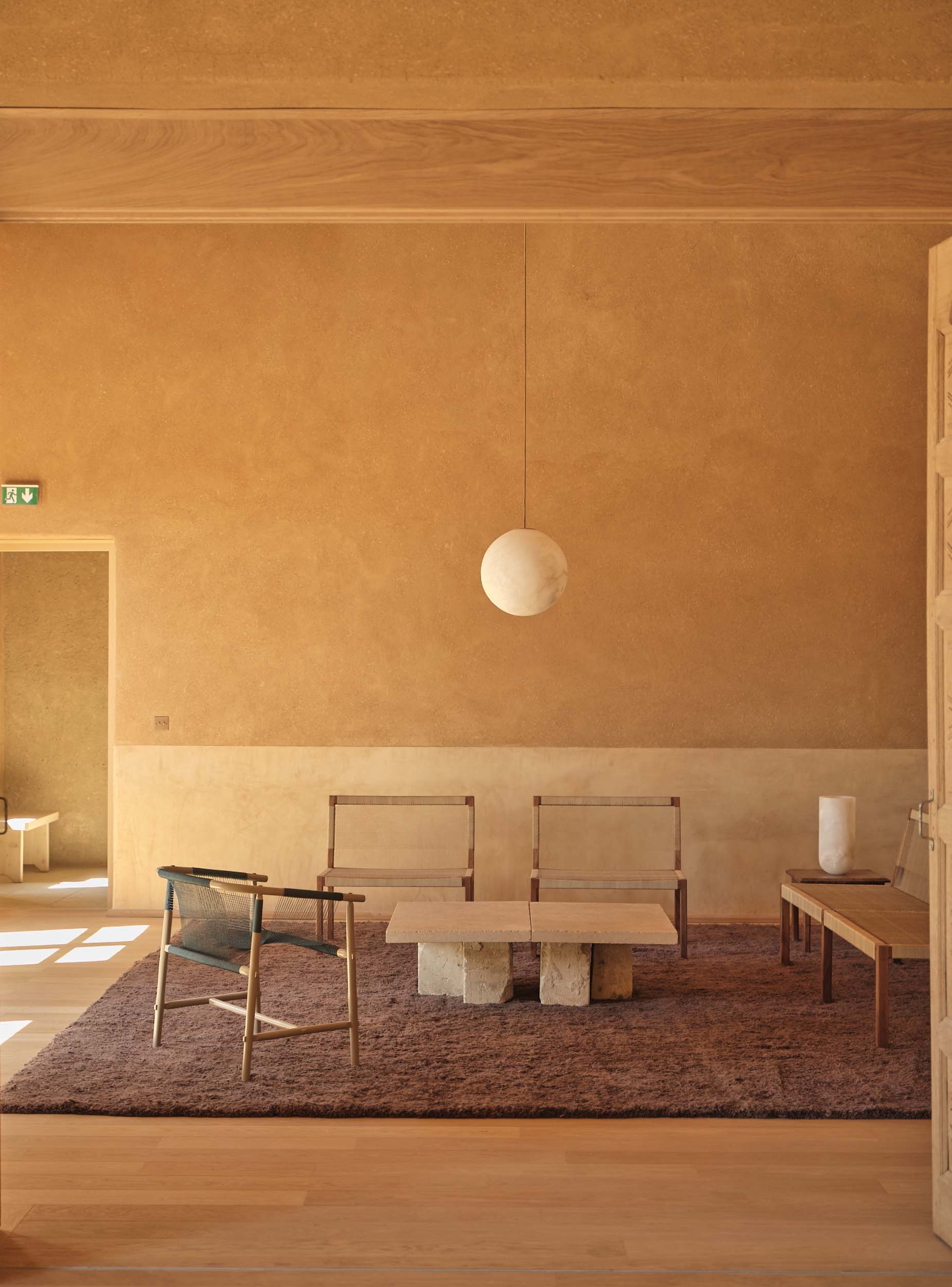
The material-savvy approach creates earthen vaults, made without the need for reinforcement, whose structural design lends a sense of presence. The subterranean vibe is warmed by brick and quiet furnishings in the lounge areas. The design team continued the use of the sand and earth on-hand, specifically lime, earth, and hemp, to create finishing mortars and paints that clad the walls with the land’s own hues.
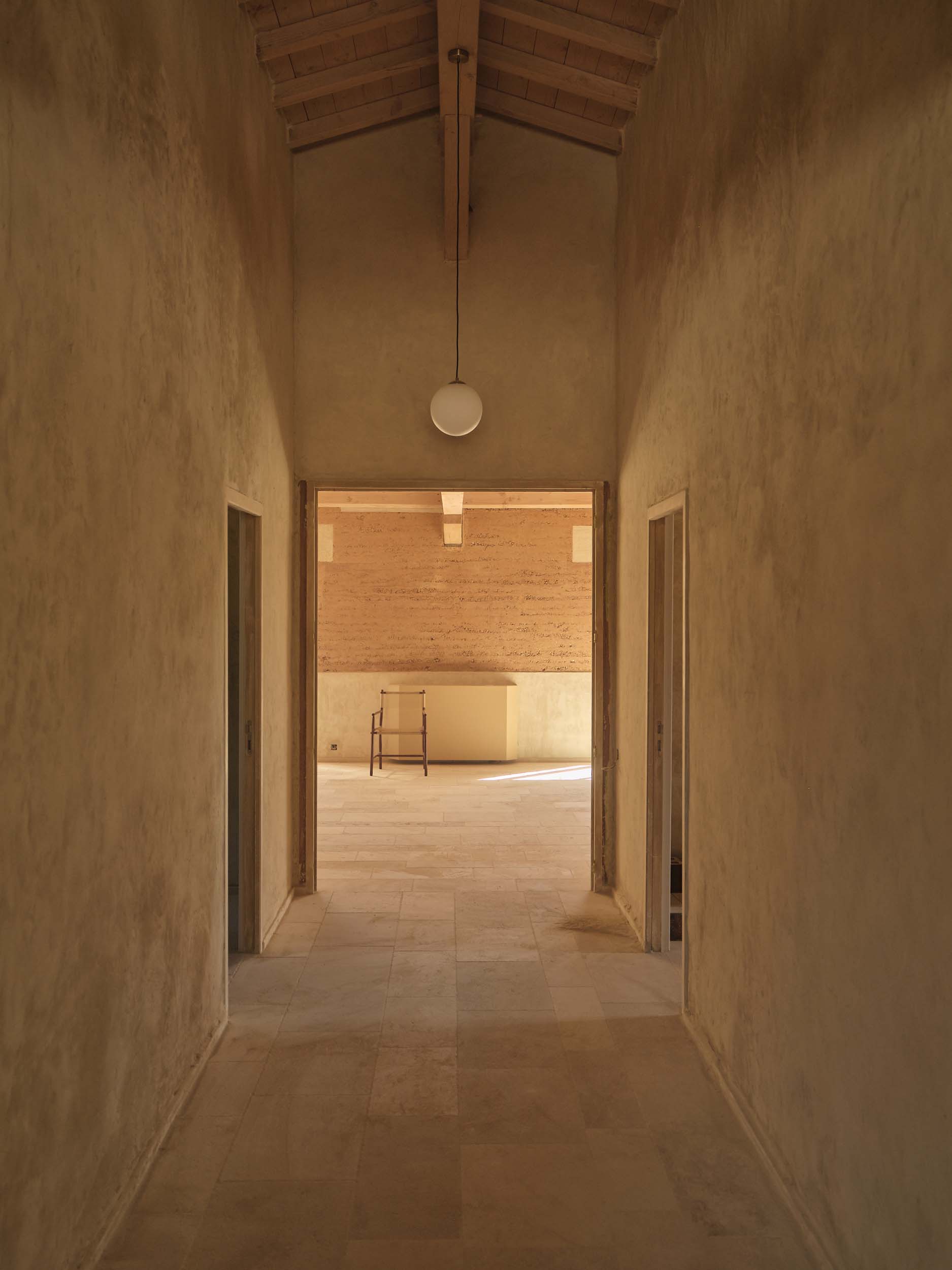
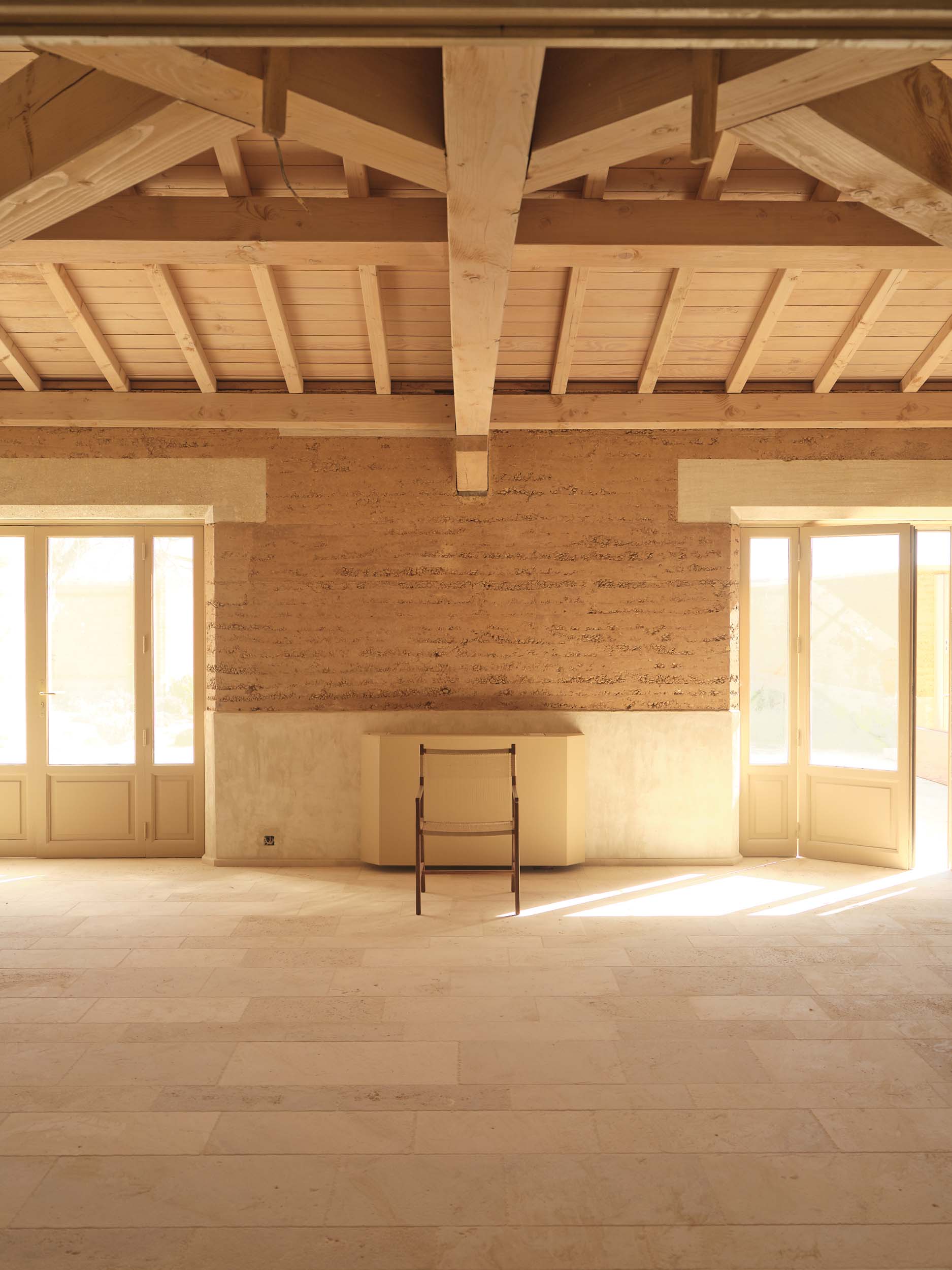
Throughout the interior, stones from the site are also hammered and cut into furnishings: benches, side tables, and coffee tables. Alongside wooden furnishings and moon-like pendants, the respect for the land continues into the residences. Decorations are pointedly absent, allowing exposed structural elements, wooden beams, and textured finishes to be the central focus.
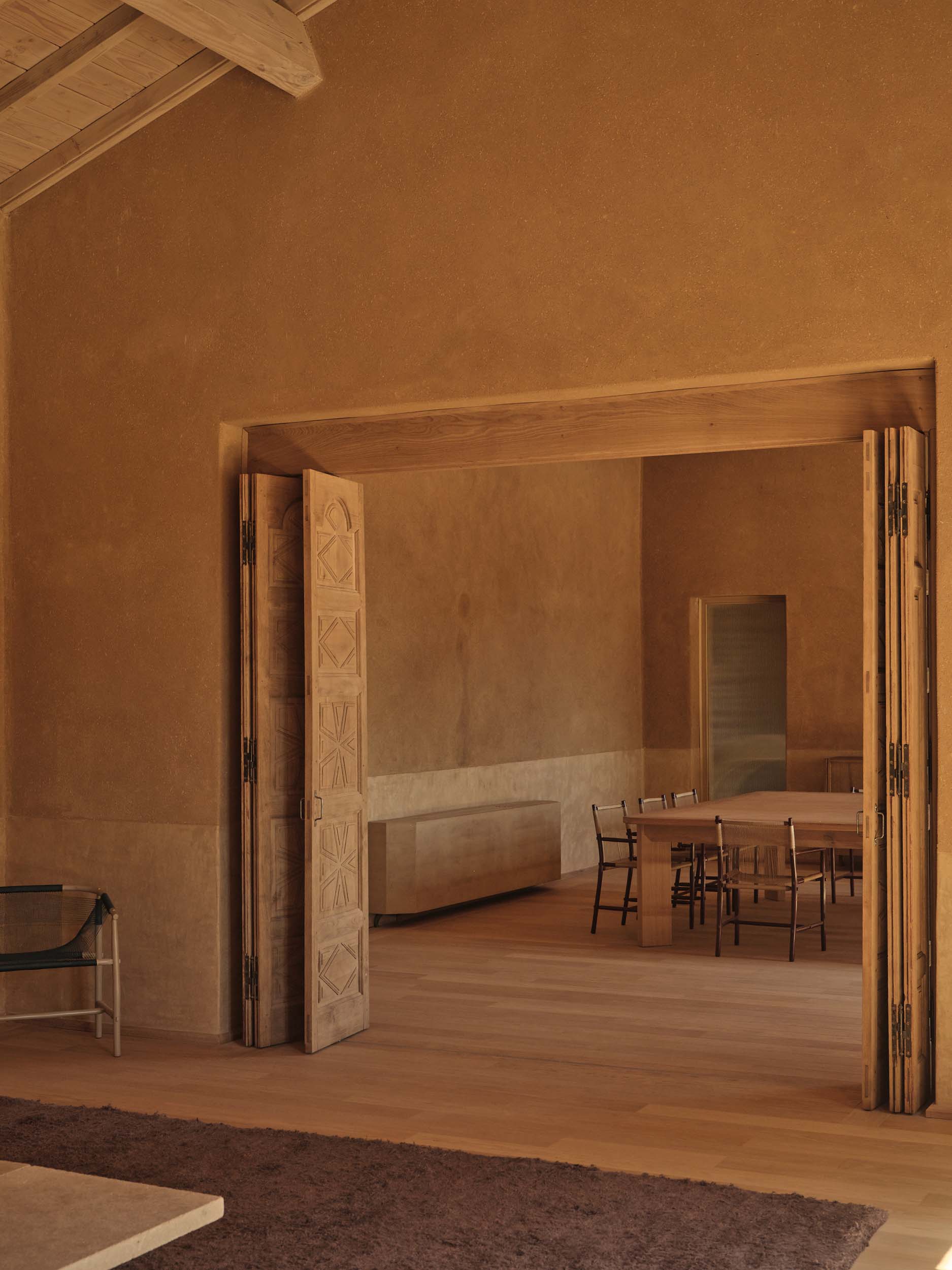
Functionally, the project is built to run on nature’s elements, too. To naturally cool the chateau, the design team devised a system involving wind towers or wind catchers whose open slats along the walls help bring the cooler air inside. Mistral winds frequent the area.
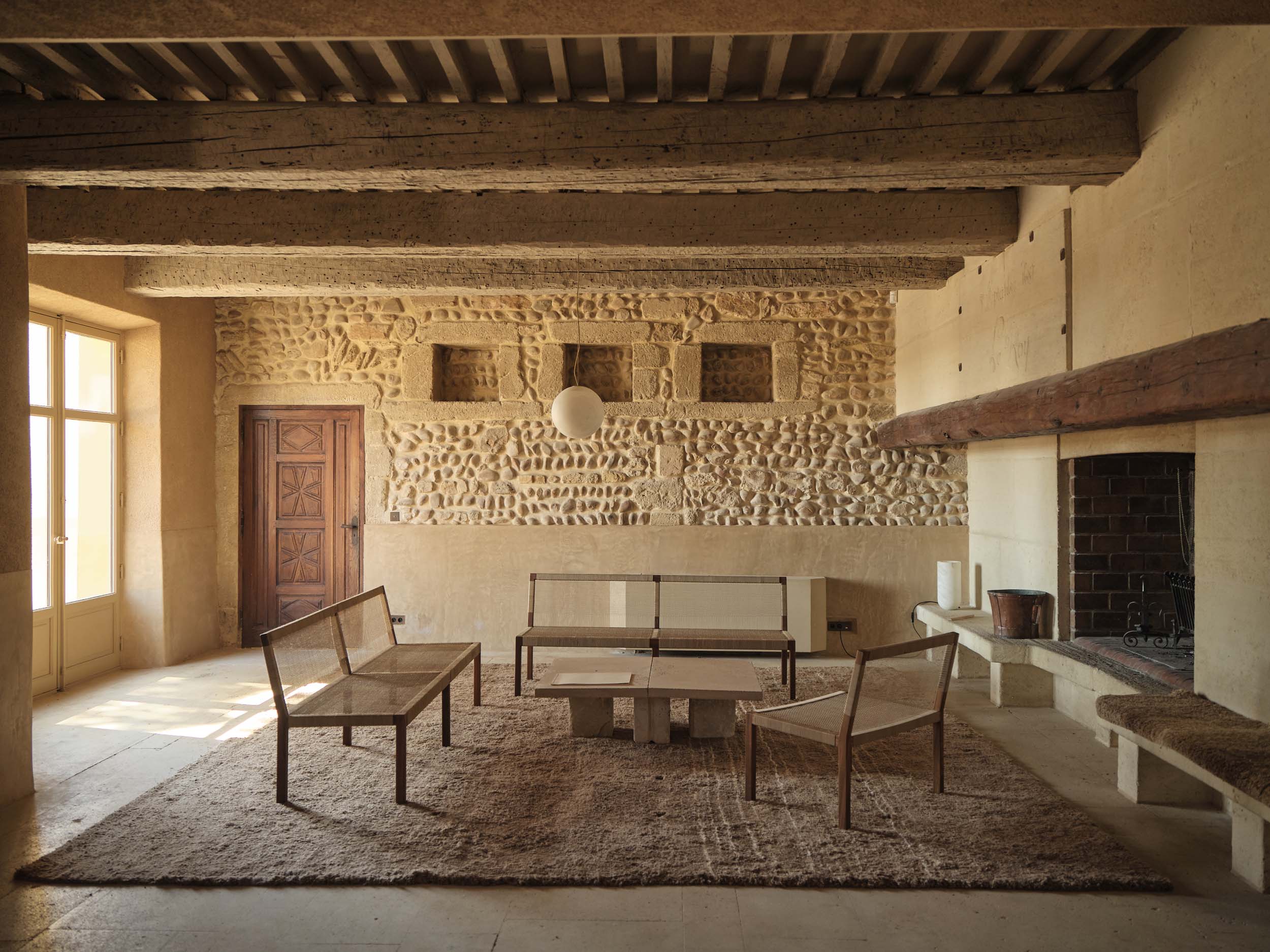
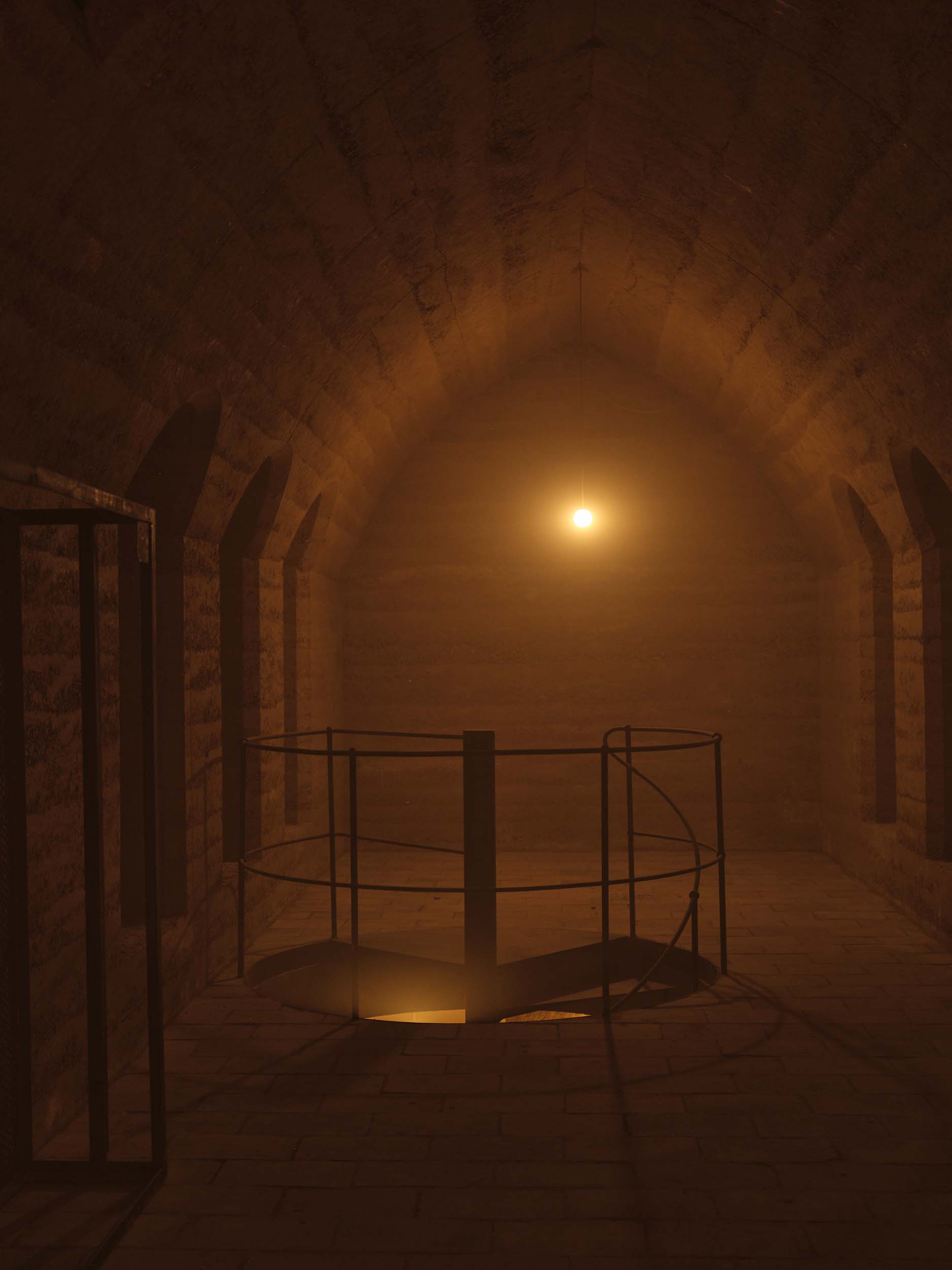
Air is further cooled with the integration of a water cistern below the cellar, modulating the wind to circulate throughout the interior. The cistern helps collect water from the rain, used as a reservoir for making wine.
Local earth, water, and rain establish the optimal recipe for the Perrins—both for making wine and for living among locally crafted luxury that is Chateau du Beaucastel.