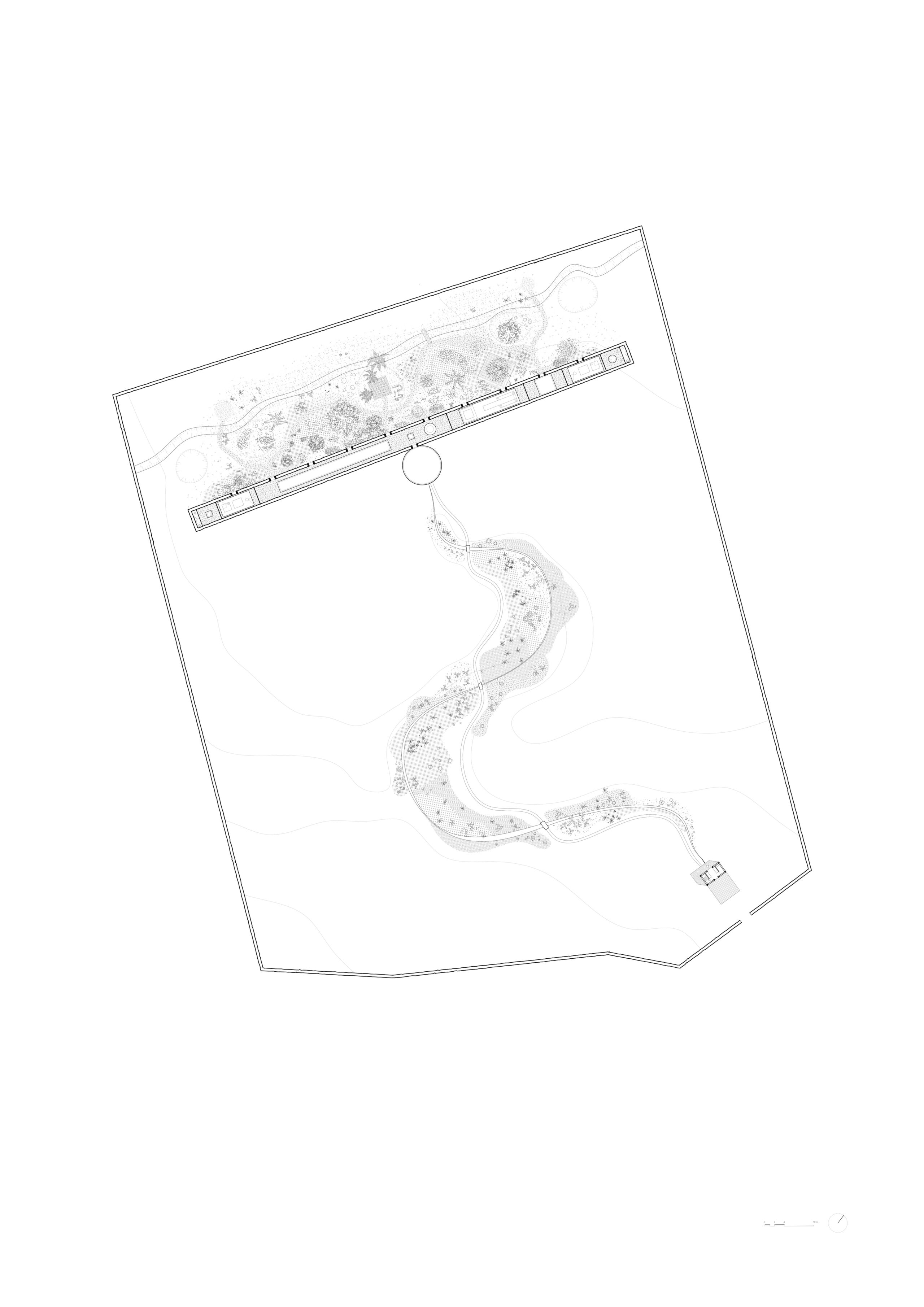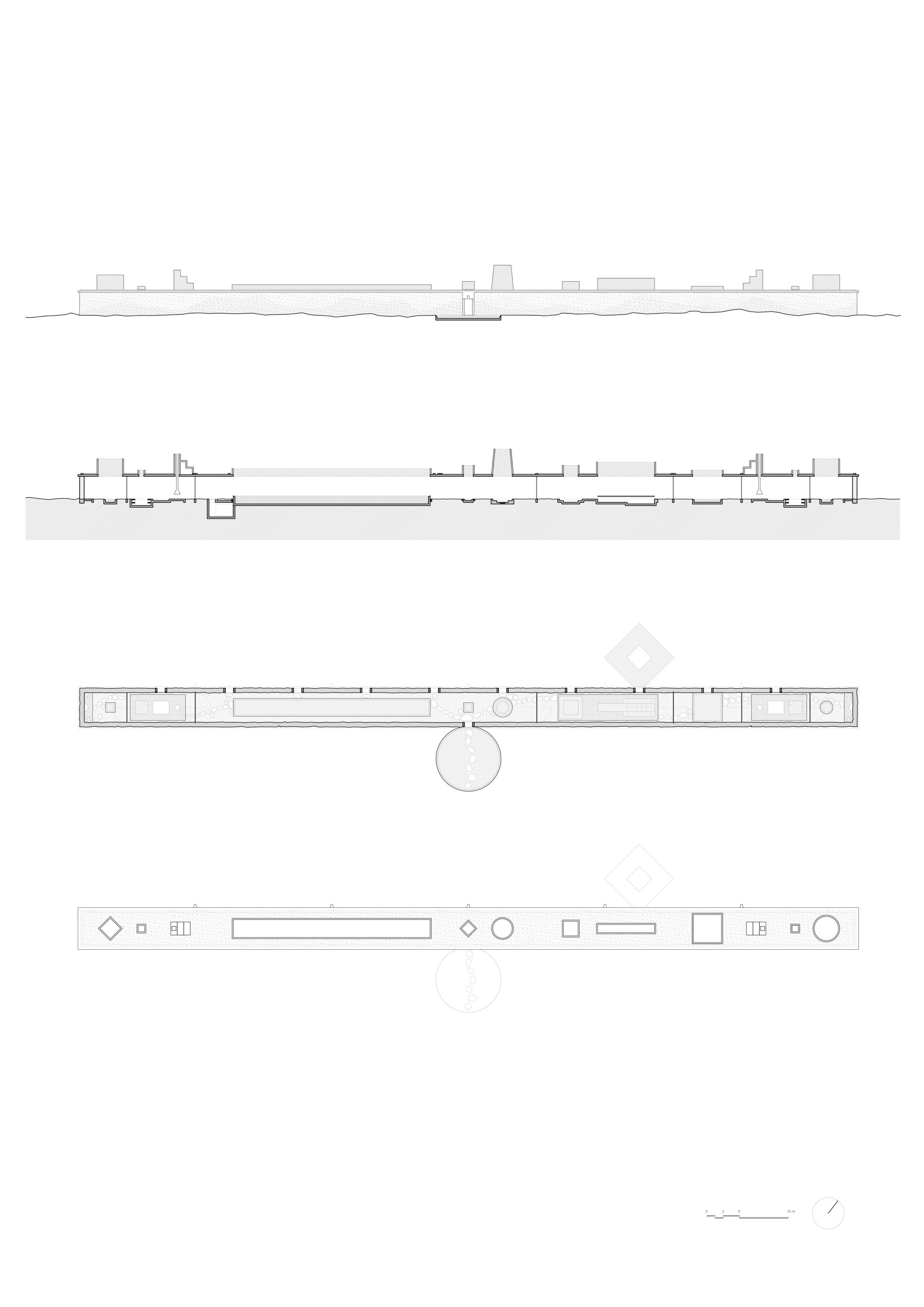
From afar, Dar El Farina practically blends into the flat, desert-like plateaus of Al Haouz, a province in the central part of Morocco. Its linear volume and rammed earth walls blend into the textures of the beige landscape. If it weren’t for the various structures on its roof—stepped, circular, and rectilinear volumes perched atop the residence like its own city skyline—the house would be easily missed at a distance. Leopold Banchini Architects and local architect Sana Nabaha designed Dar El Farina as an off-grid house that is part of the land physically and aesthetically while standing out against it.
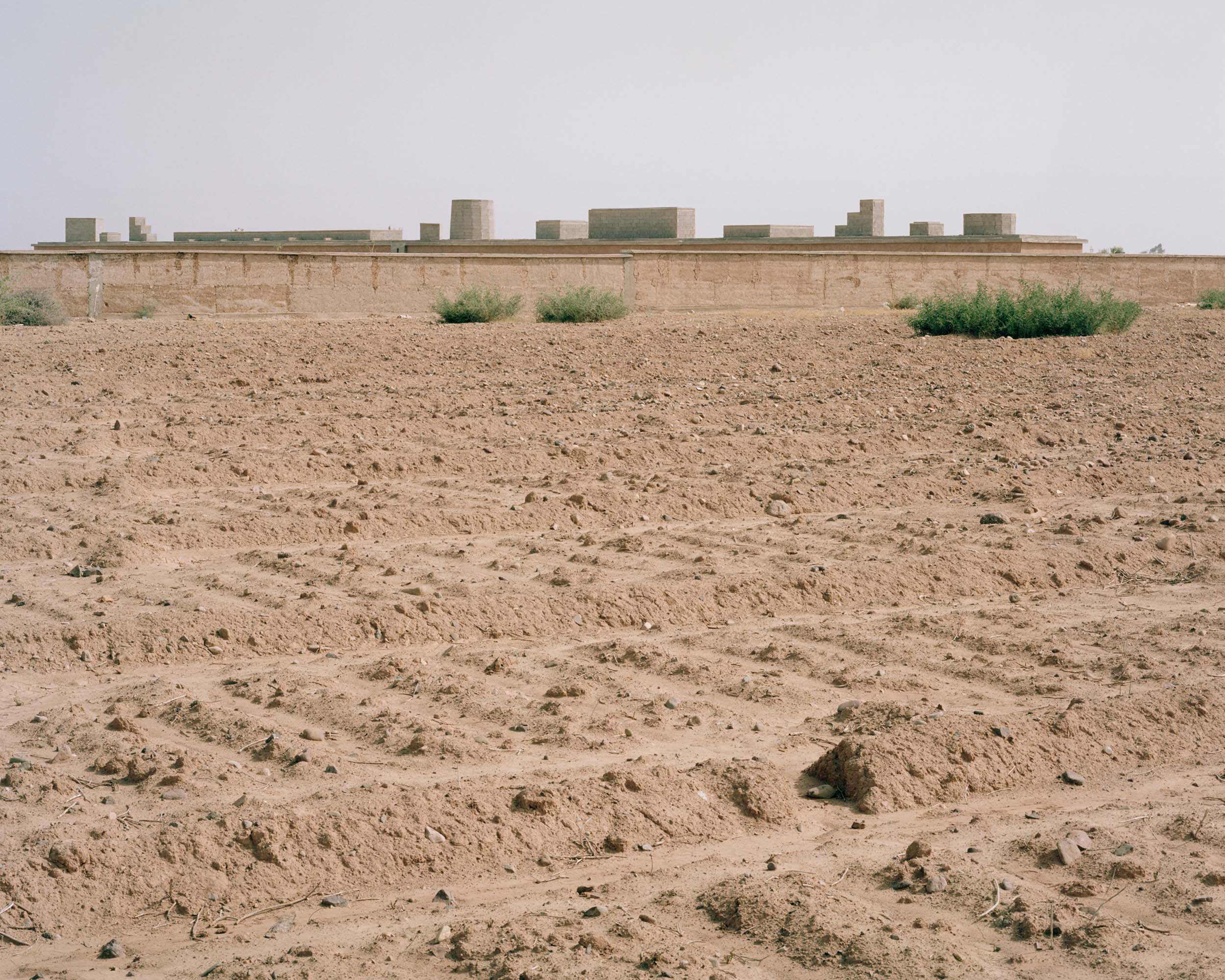
The rural home is situated parallel to Al Haouz’s main infrastructure: a mesref or small water channel filled a few times per year for agriculture, and a khetara or an underground draining gallery built to bring water to Markesh from distant groundwater. Like a line drawn in the sand, Dar El Farina divides the space in two. On one side of the home, the desert land is preserved and remains scarce. On the other side of the residence, a lush garden stretches the length of the structure, filled with plants native to the area and alive thanks to the site’s water infrastructure.
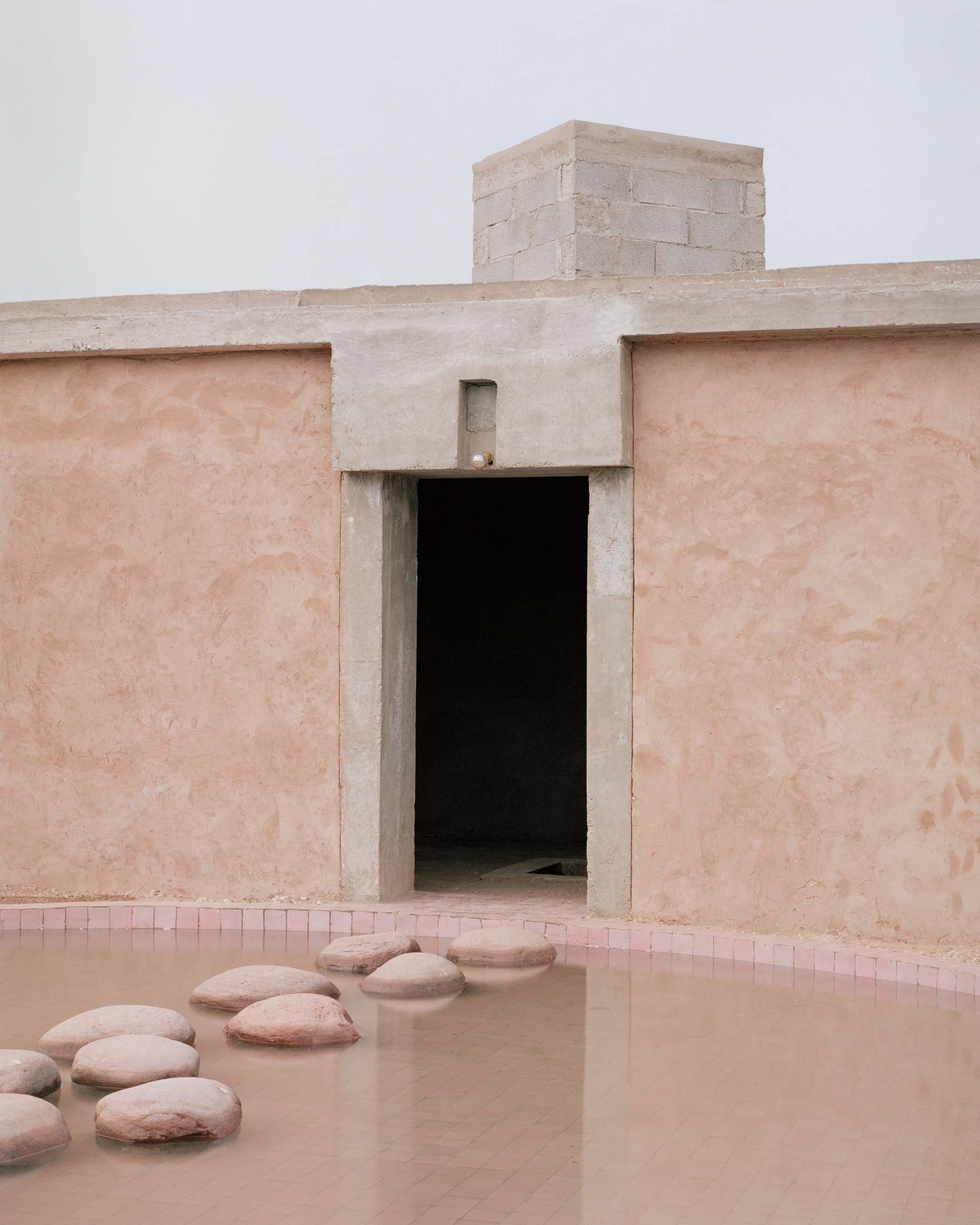
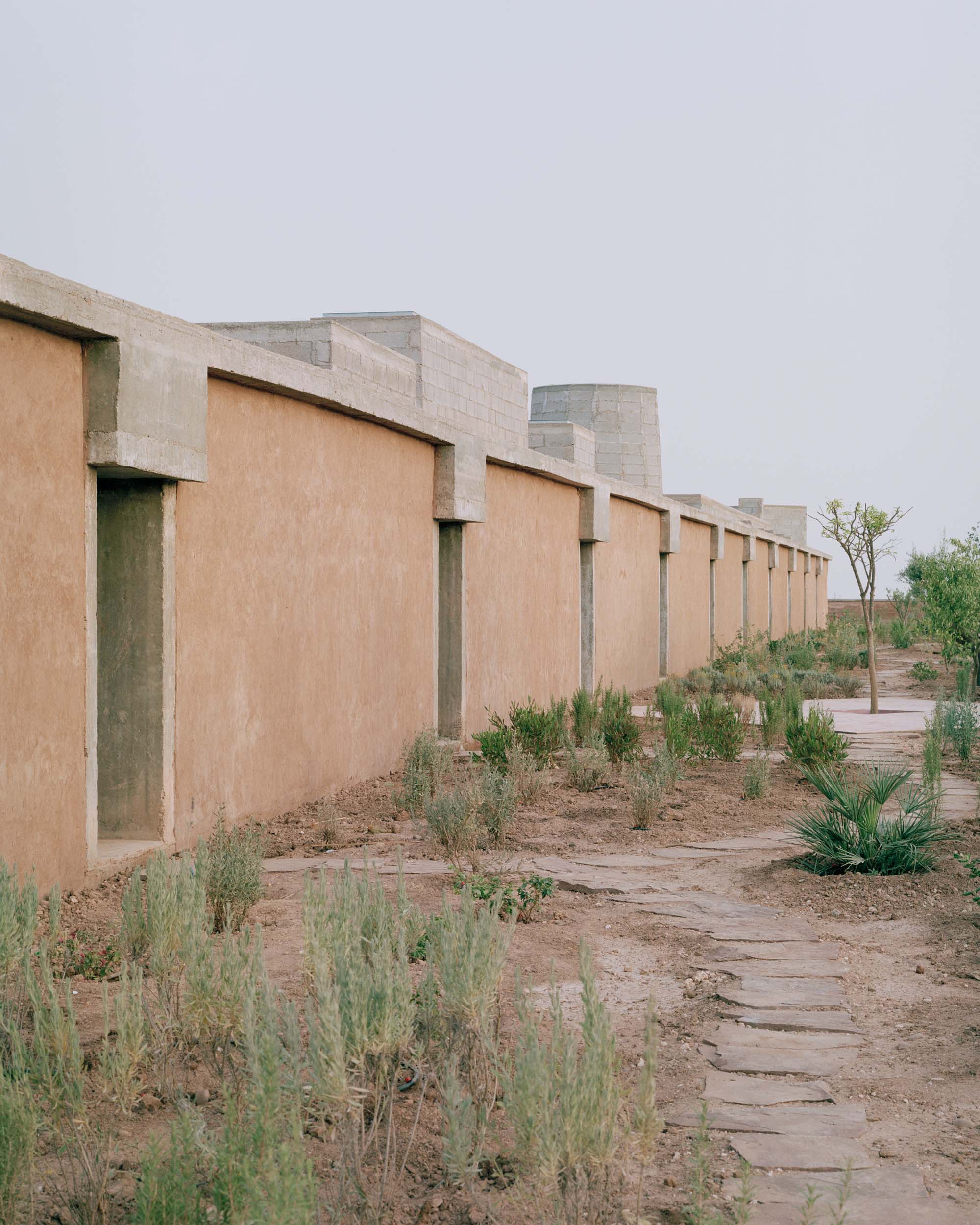
Local materials largely make up the structure. Compressed soil is used to make up the walls and floors. Openings, thresholds, and intimate areas are largely clad in zellige tiles, made in a nearby village.
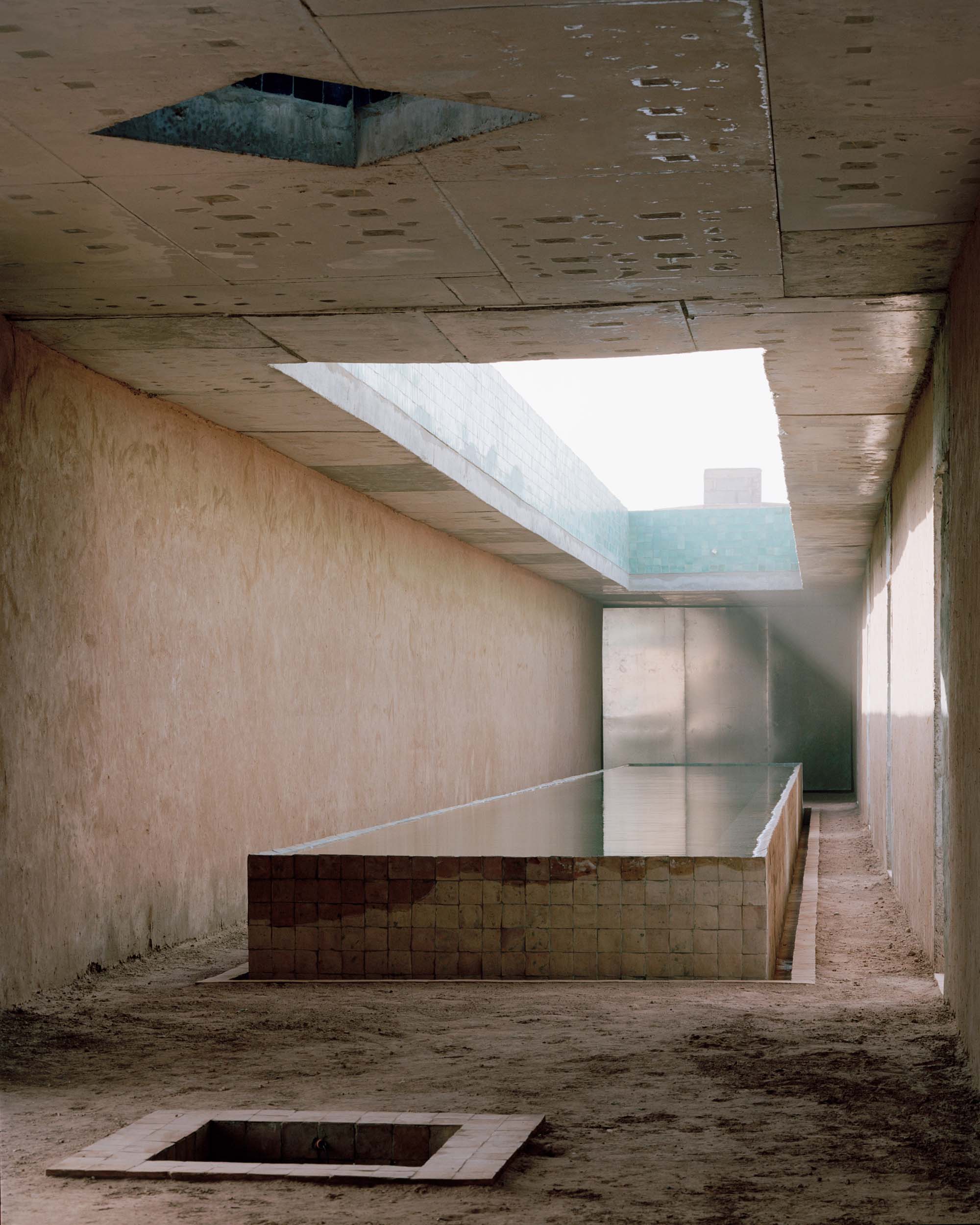
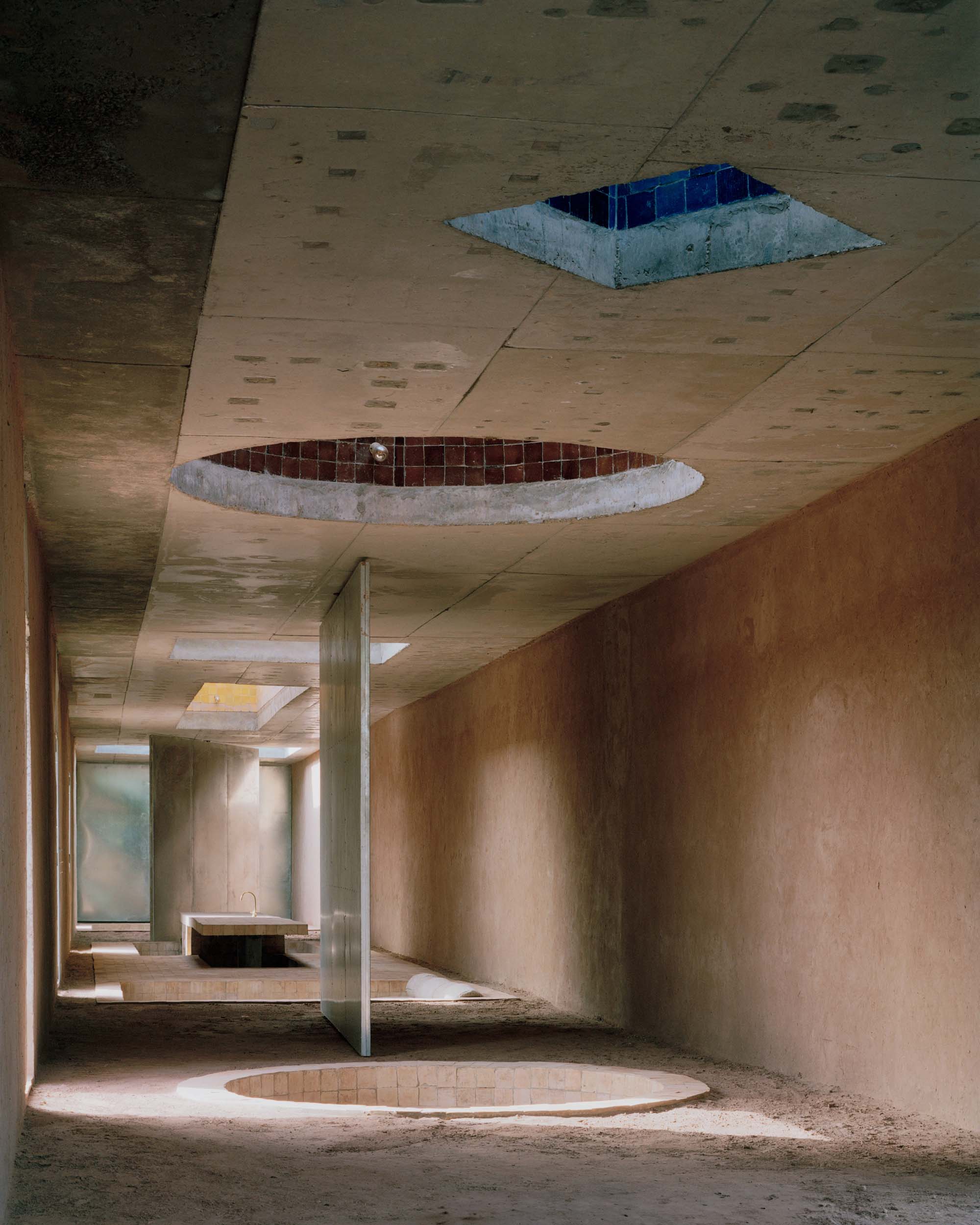
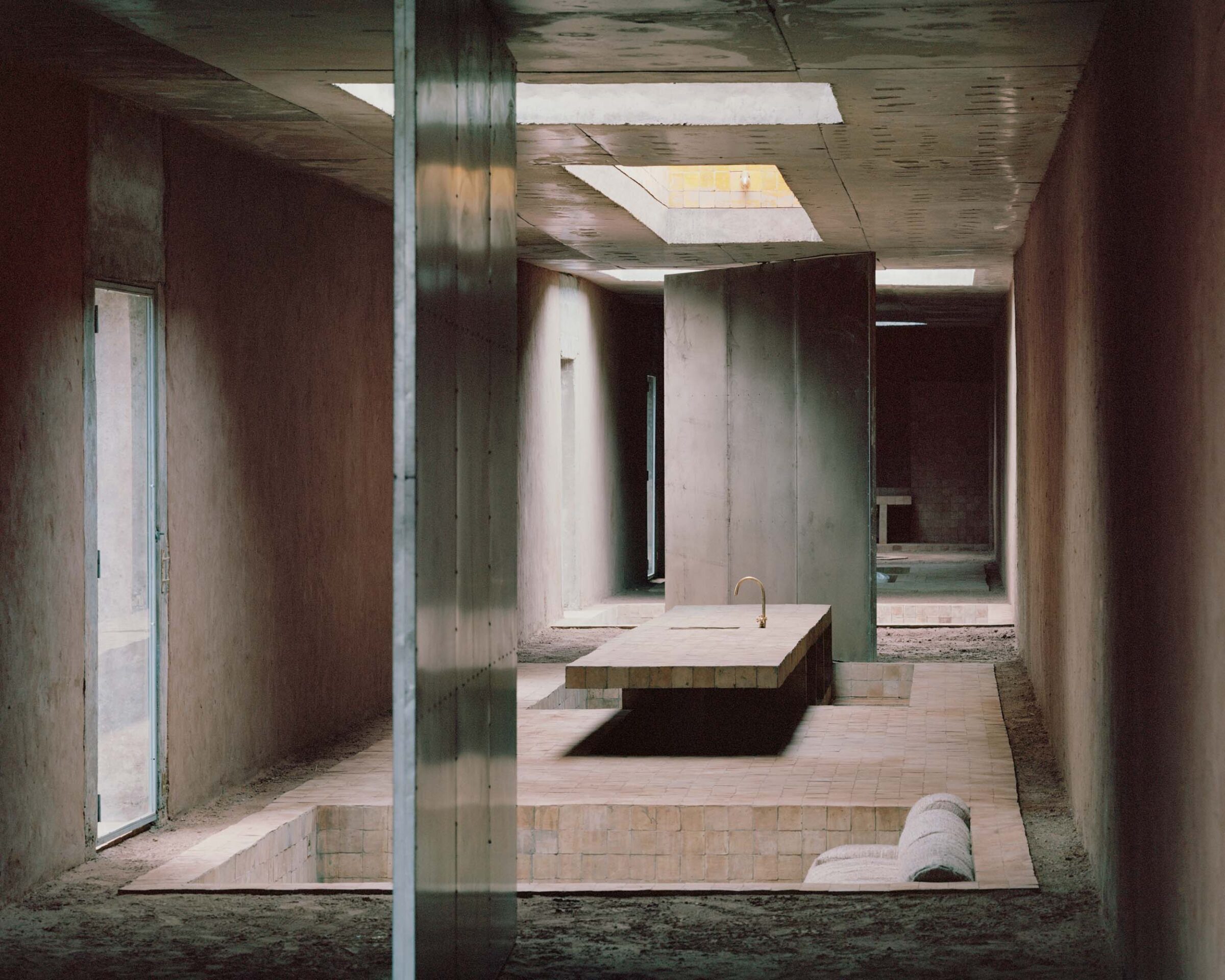
Together the materials make up a warm, earth-toned color palette that contributes to the interior’s continuous and intriguing atmosphere. In fact, the materials make up the interior completely. There’s no furniture, light fixtures, or even windows.
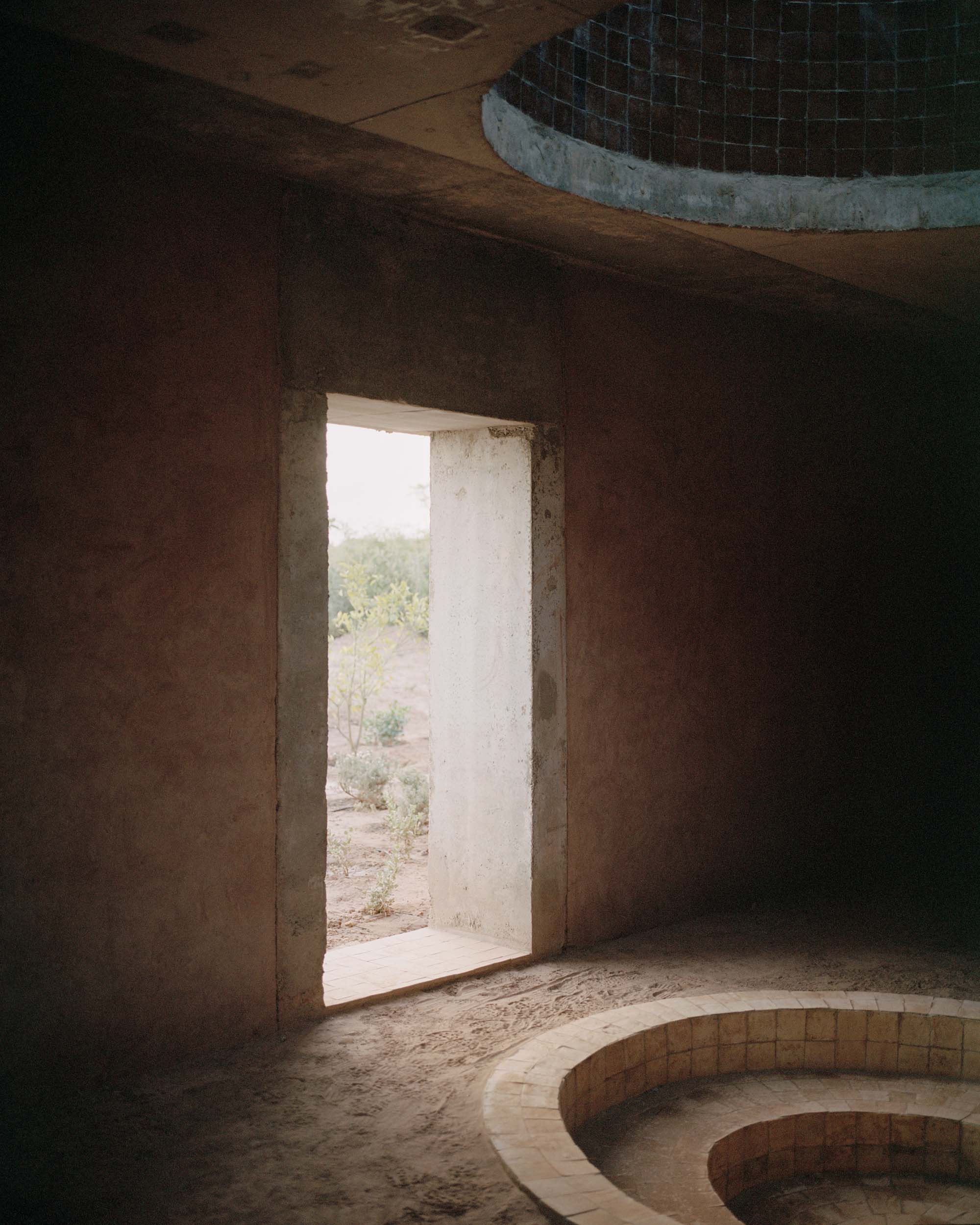
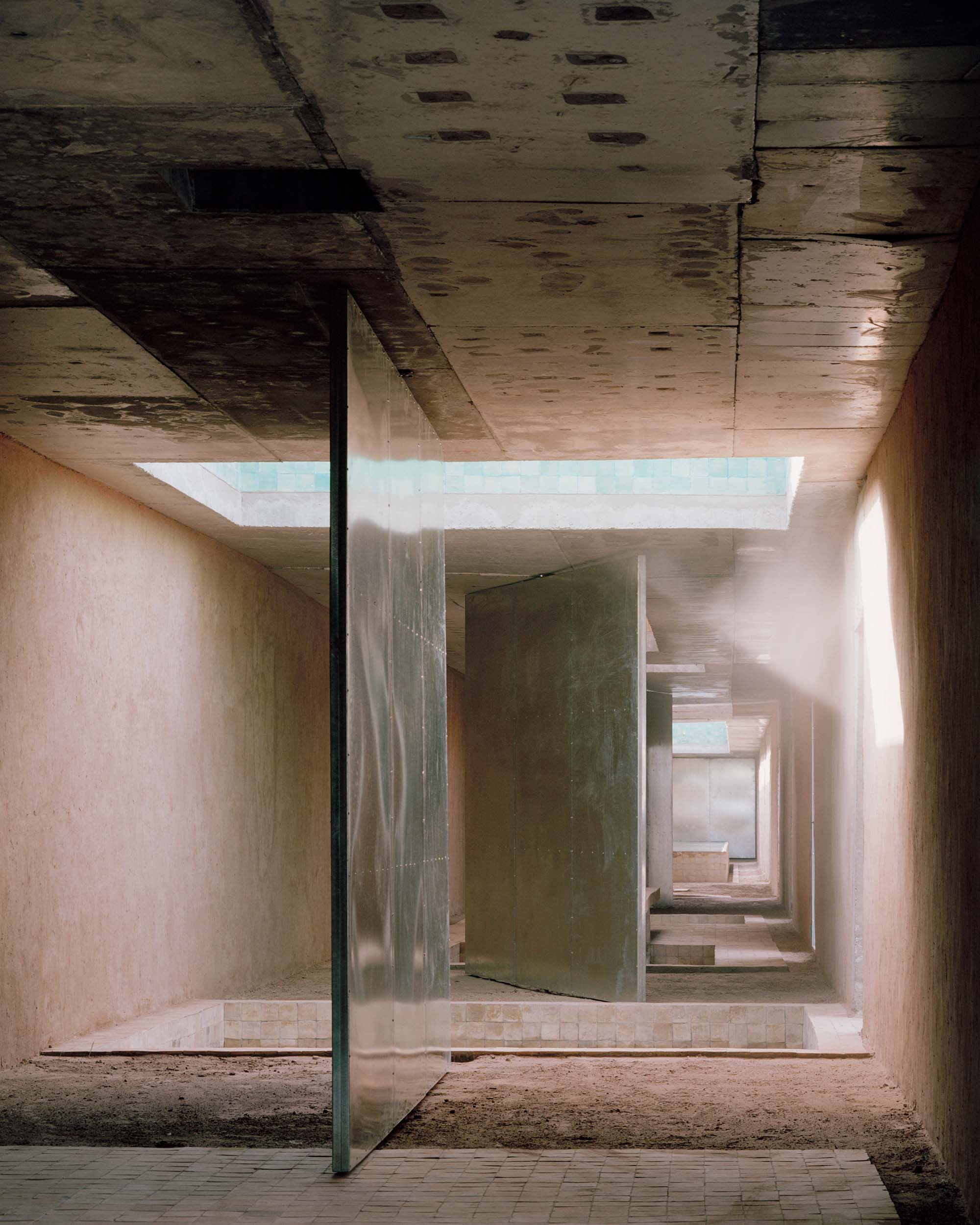
But there is lots of light. A series of skylights and doors take advantage of the warm climate. The traditional glazing on the tiles, placed around the openings and below, further reflect the light. To counter the heat, Dar El Farina’s water features, thick mud walls, and vegetation create shade and a cool microclimate. The home thus relies on sun, soil, and water to sustain itself.
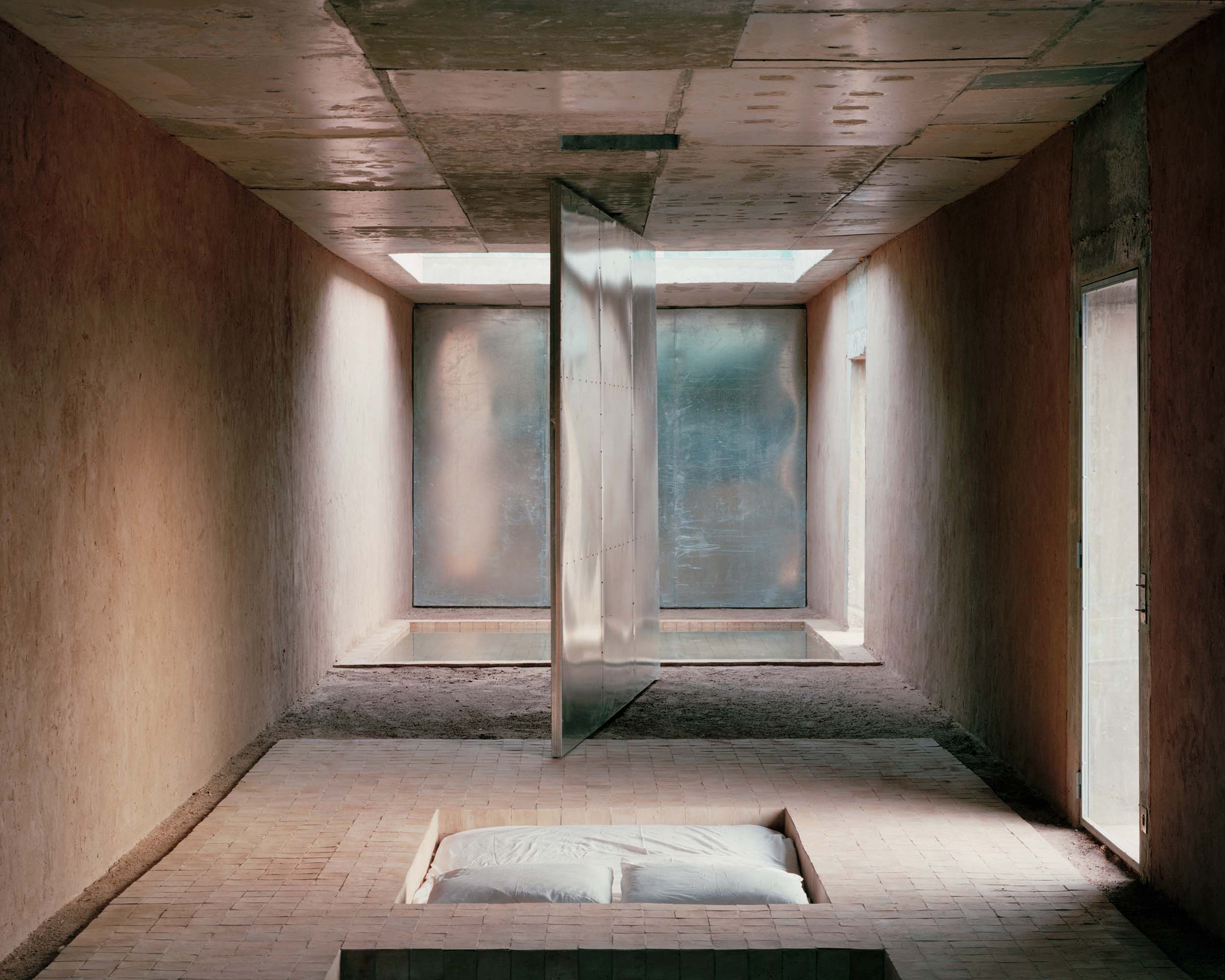
The sparse interior reflects Al Haouz, and like the plateaued landscape itself, the structure feels long and continuous. This is felt in the layout, a series of enfilades divided by large pivot doors. A metallic wall bookends each side of the home, further playing with the residence’s ample lighting. The material makes a striking contrast to the soil and mud that surrounds it. Combined with seating recessed into the ground, the effect is at once striking and contemplative. It only took a few common materials to create something almost otherworldly.