
A time capsule was recently uncovered in Ridgewood, Queens. Abandoned for nearly two decades below the elevated Seneca Avenue station for the M train, the remains of a linear bar and lounge presented a canvas of old-school flourishes ripe for refreshment. The derelict cavern required a polish from bicoastal architecture studio Cordero Pardee (COPA). “Every space in this building smelled like an ashtray. Everything had this layer of nicotine tar on it,” COPA principal Galen Pardee remembered. “As soon as we saw that, it made for a very easy next step.” The space has now been reborn as Mr. Nancy’s, a sleek neighborhood dive bar.
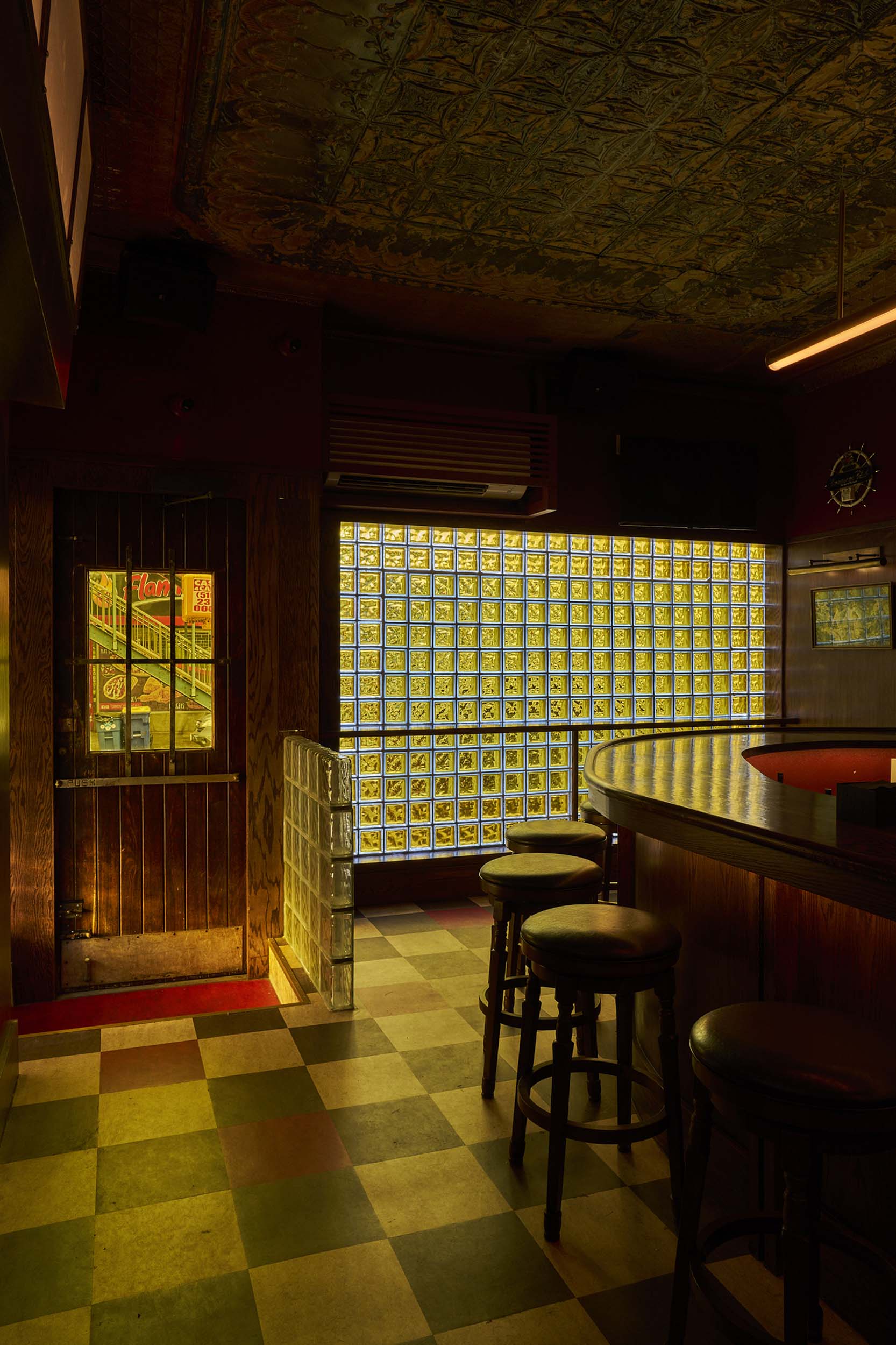
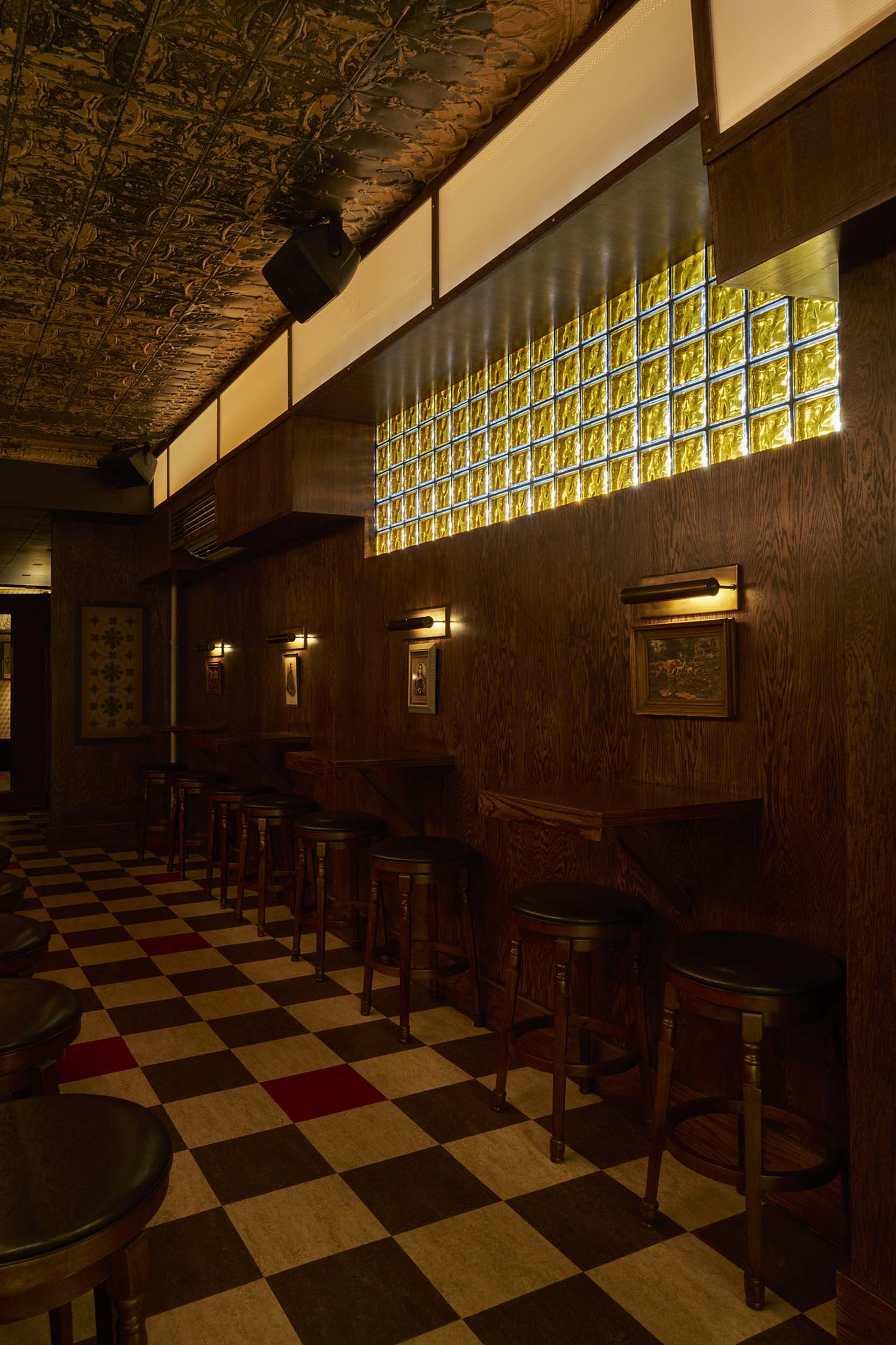
Pardee and fellow principal Manuel Cordero assembled a palette of sustainable alternatives—dubbed low-carbon “twins,” in their vocabulary—to mirror the original 1950s materiality. Recycled clay tiles replace asbestos floors, beadboard walls are traded in for cork, and fiberglass soffits are swapped out for polycarbonate sheeting. Linoleum floors and wallcoverings were installed for uniformity and eco-friendly properties as well. “We really started an obsession with linoleum,” said Pardee. “It’s not a true biomaterial in the same way that mycelium is, but it is biodegradable. It is actually made of industrial reuse in a way already, so it has a fascinating ecological lineage.”

Original glass block windows, some of which were previously covered up inside, are now echoed with new glass accents above. This move enhances daylighting and facilitates a more dramatic engagement with outside streetlights. “We spent a lot of time matching the spirit of the old bar up front,” Cordero added. “There was a sense of maintaining the vibe of the original bar but also trying to just bring it a little bit more futuristic, a little bit sexier.”
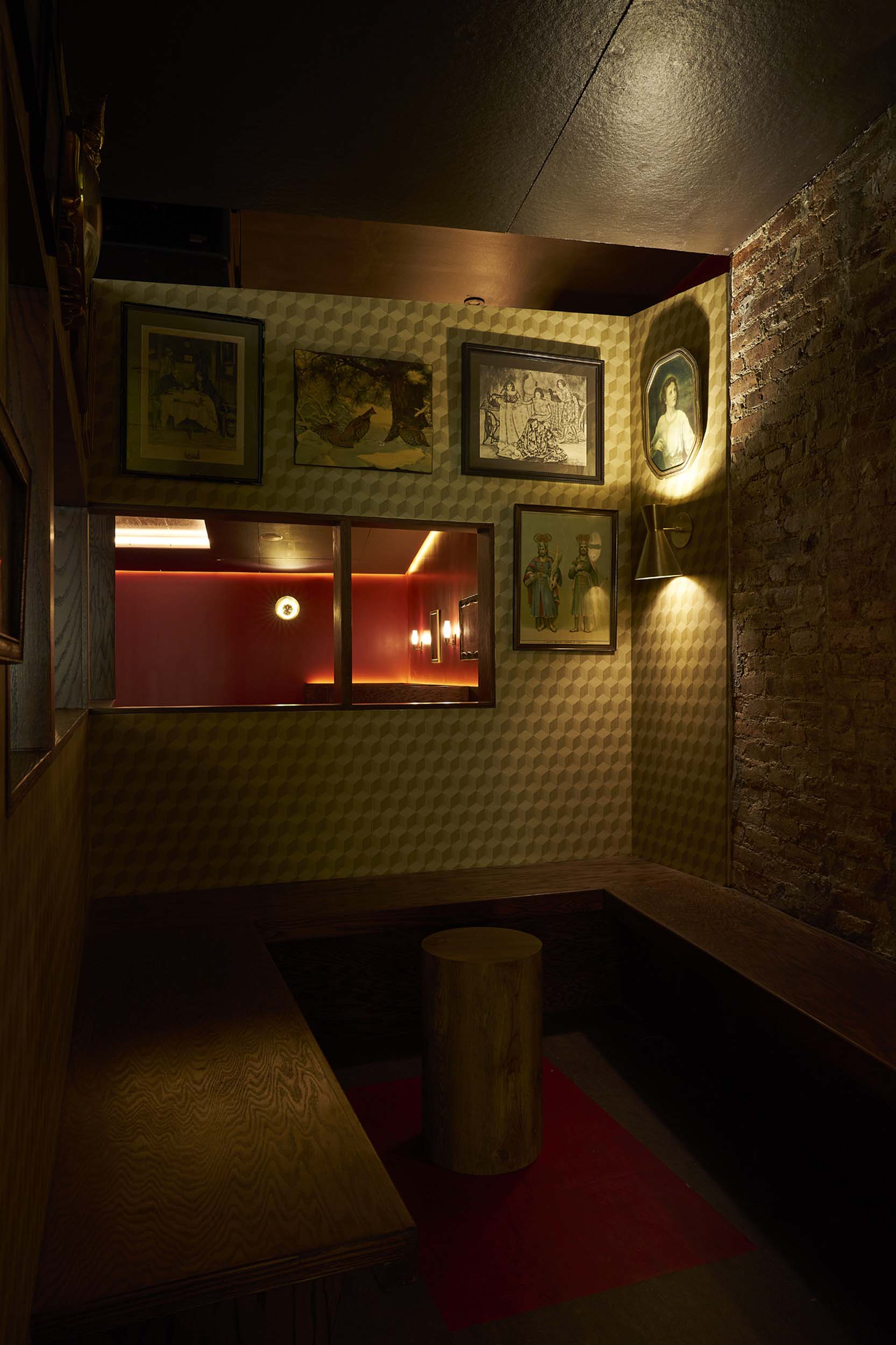
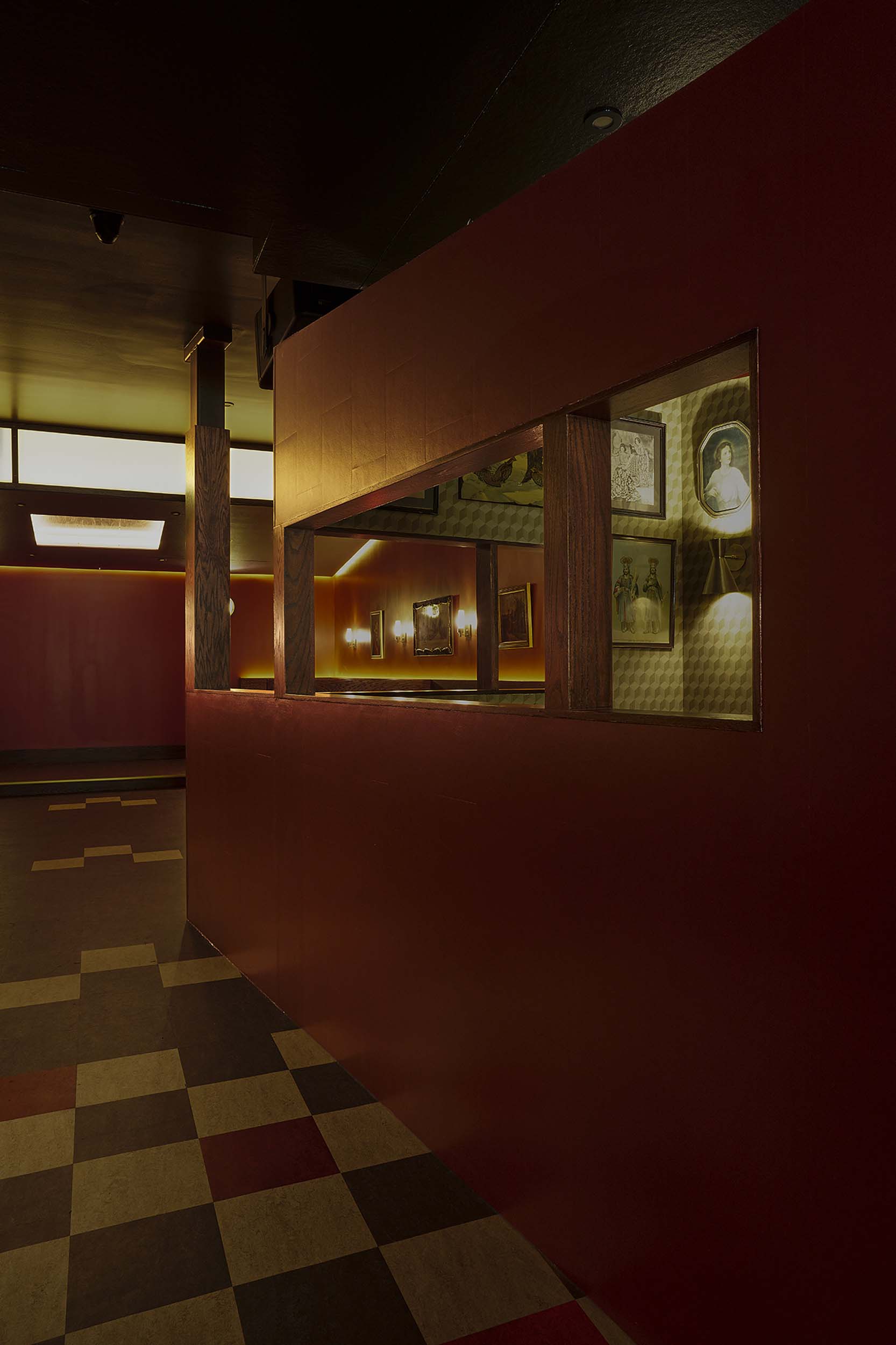
A sagging roof and an awkward, liminal hallway necessitated a more architectural overhaul in the rear lounge. To revitalize the windowless back area, COPA thought outside the walls. “We just called it the backyard,” Pardee said. “It helped us define the middle spaces.”

The reconstructed roof now sports a polycarbonate and Homasote shroud aimed at the subway tracks overhead. The enlarged hallway is activated with a pair of original 1950s phone booths combined to offer intimate accommodations for two, while gabled ceilings perpetuate the alfresco influence along with a stand-alone gazebo clad with linoleum. Anchored by an elevated stage, the space earns its nickname as the “Red Room” thanks to sconces and track lighting that gently cast its aubergine walls in a crimson glow. The effect punctuates the design’s overall effort, creating an homage that’s “more in keeping with the old school midcentury bar vibe,” Pardee said. At once expressive and restrained, the update revives a bygone functionality that’s both sustainable and sexy—with hearty cocktails to match.