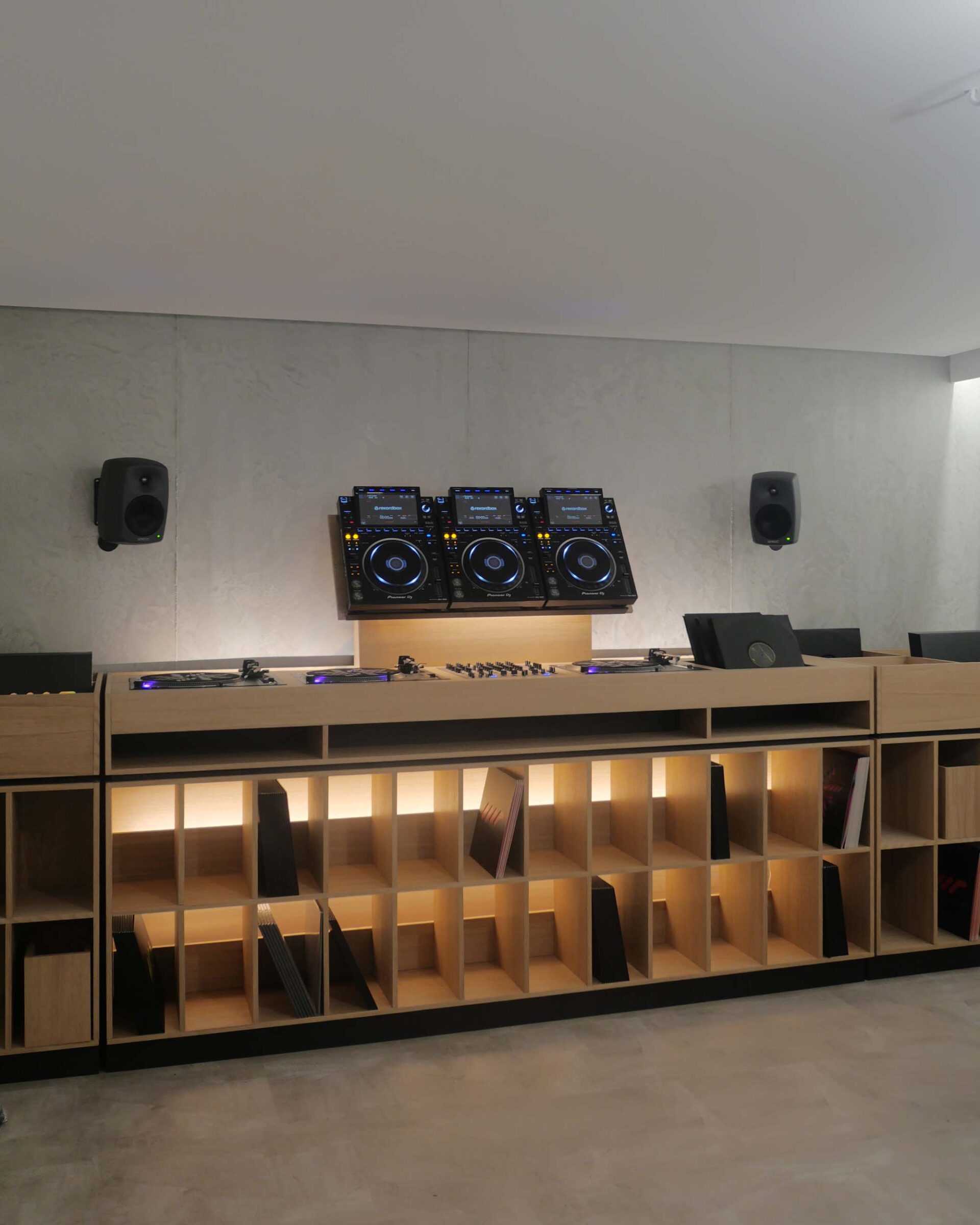
When the designer JJ Boooth was first honing his mixing skills, he did it the way almost every DJ does: endless practice over turntables and a mixer perched atop the classic IKEA Expedit. “It was just a nightmare to play bent over the turntable for hours,” he told AN Interior. He mounted the setup on legs, then recessed the turntables to further improve his DJ posture. “That led to adding crates on the sides of the turntables to hold records, making them easily accessible,” he explained. “Later, I included lighting for playing at night.”

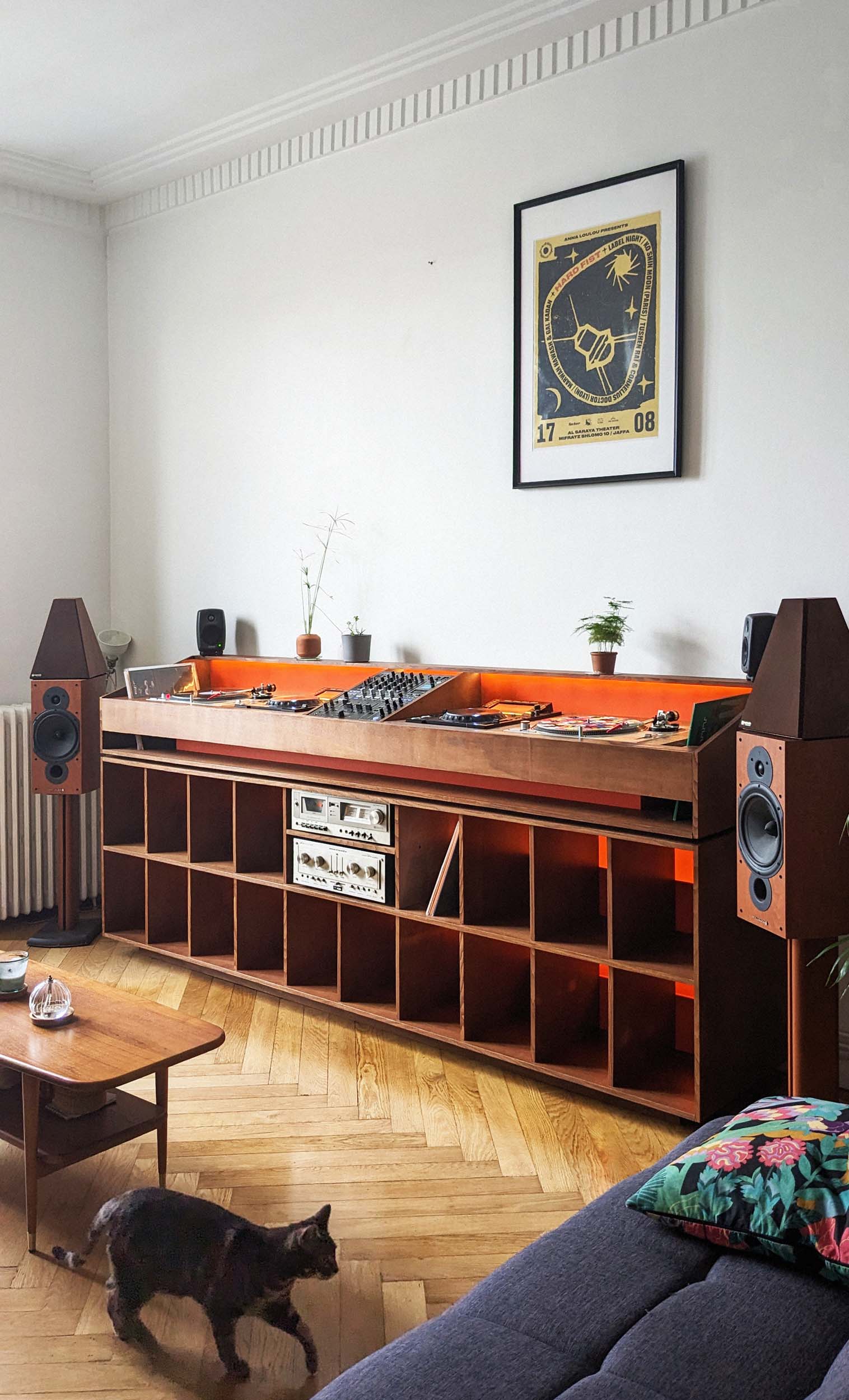
Boooth dug into his own training for this early demo: a 2015 graduate of ENSA Paris-Belleville, he’d worked for years in various architecture studios and real estate developers. “Having been good at making models, transitioning to furniture design felt like just a larger-scale project.” By 2019, he’d segued into his own eponymous firm, crafting cabinets like his Unit 010, an elegant yet functional monolith. The piece integrated wells for a pair of Techniques 1200s, a kind of rhomboid pitch for a Rodex mixer, as well as voids for records and below-deck storage.

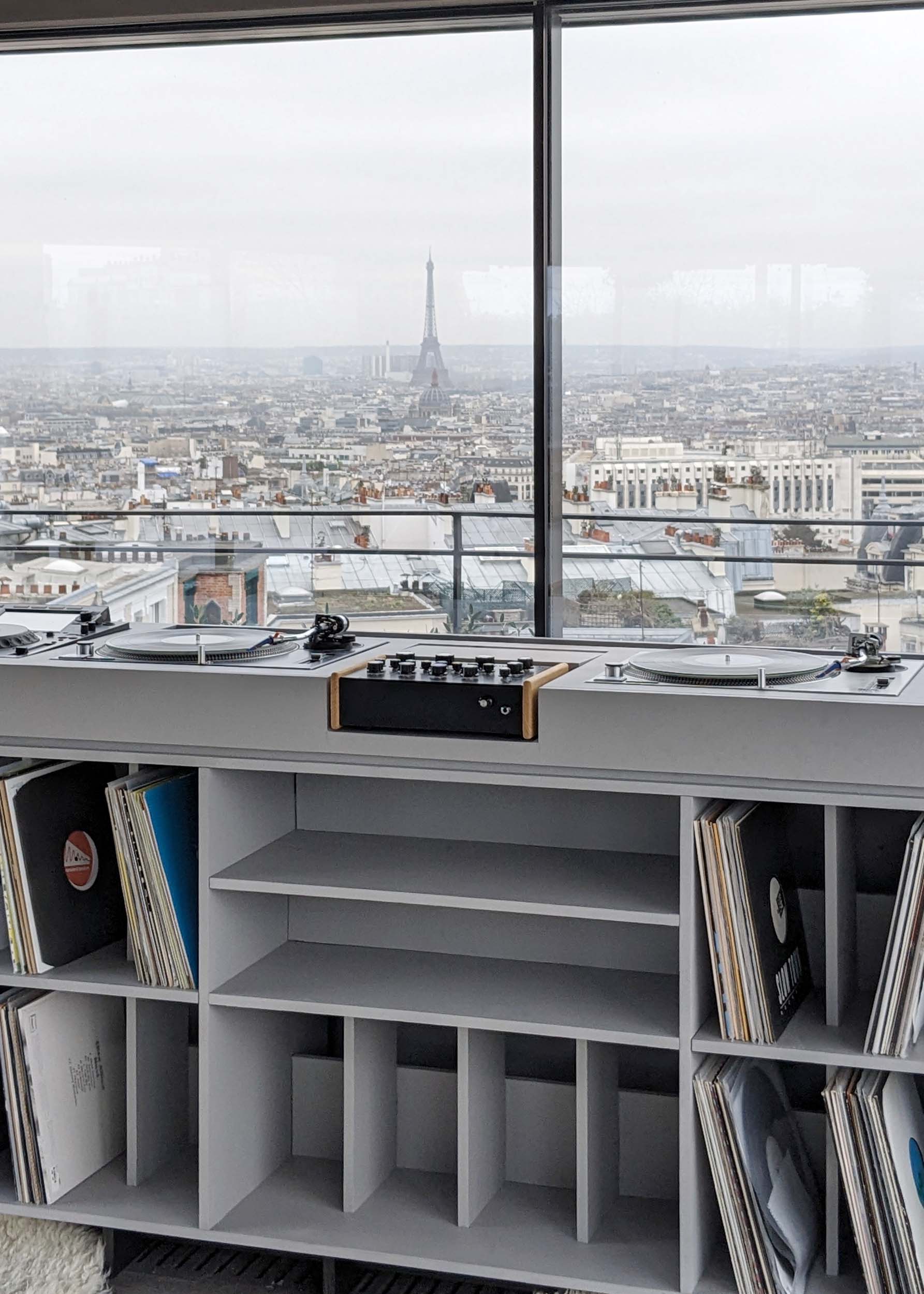
Now based between Paris and Berlin, he’s mixing standard materials like birch or poplar plywood with new favorites like oak, walnut, and mahogany veneer for modular cabinets housing CDJs, synths, speakers, and any other equipment a DJ might desire. “A critical aspect is the depth of the crates and the rhythm of the vertical divisions. Reaching for a record should be easy, not clumsy,” Boooth said. “Discrete but precise lighting is also essential for tasks like seeing vinyl grooves clearly.” His own form-follows-function style is easy to see in the ten or so bespoke booths he’s currently completing for private homes. His largest one is for a club in Paris, and his lighter-than-air speakers are a collaboration with New Fidelity. “They should be pleasing to look at not but not overshadow the main attraction—the music,” he said. “The booth should complement the experience without stealing the show.”