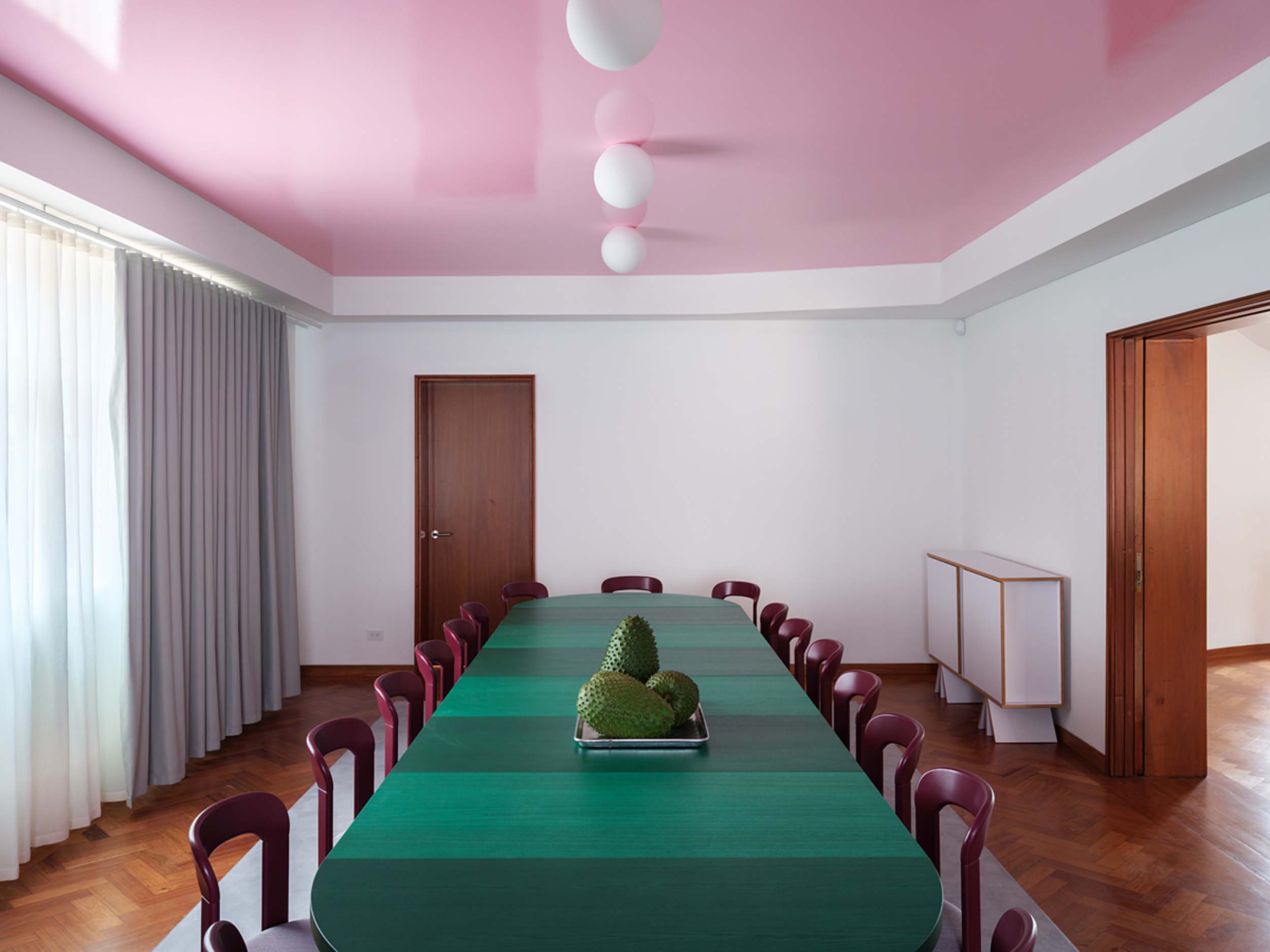
From 2017 to 2024, Zurich-based architecture practice Lütjens Padmanabhan completed three projects for Swiss representations abroad: a new residence for the Swiss ambassador to Algiers; the Swiss consulate in Stuttgart, Germany; and most recently, a concise and colorful renovation of the Swiss ambassador’s residence in Bogotá, Colombia.

The Bogotá residence, Lütjens Padmanabahn’s first project in the Americas, is a 2,550-square-foot reimagination of an existing villa that started with the need to meet earthquake resistance standards. To disguise the new reinforcements, the designers got creative: colorful geometric ceiling mirrors were installed in all main rooms.


But the villa was also updated in other ways that reflect a contemporary sensibility. For example, the existing service kitchen transitioned into a new family hub, seamlessly connecting to the garden. There, a new glass-roofed space was also debuted for receptions. The first floor’s interventions dissolve the rigid separation between ambassadorial and staff areas and underline an egalitarian way of living and working. Unique, character-filled furniture pieces inhabit the representative rooms, which can be composed easily according to daily needs, embracing the mobility that’s intrinsic to the life of a diplomat.


Each room has its own shape and color. On the ground-floor level, the almost symmetrical floorplan is carefully but consciously broken. The main rooms provide space for every possible scenario, from small intimate conversations to larger gatherings with big delegations. The color scheme on the ground level is bright and energetic, bringing in the colors from the garden—and from around Colombia. In contrast, the colors chosen for the ceilings on the upper floor are kept quiet, resembling the tones of twilight and nightfall to generate a purposefully calm environment.

Lütjens Padmanabhan’s commission also included the furniture. The architects not only designed the built-ins but also several freestanding tables, consoles, dressers, and lamps. Together with select Trix and Robert Haussmann furniture, they bring with them a very particular flavor of Swiss design culture. The contrast between the classical appearance of the existing villa and the almost flashy additions creates a tension that feels unconventional and at the same time typical for the work of the architects.


The garden follows suit. The architects’ own bright yellow Uhu lamps that inhabit the garden add to the overall beauty of the local vegetation, and derive from a joyful catalog of other objects Lütjens Padmanabhan has created over the years. The objects include cat mailboxes and doorbells (“they even purr when the door opens”), several tables with lively small feet, and a series of bird-themed lamps. All bear the architects’ recognizable signature, which indicates their interest in postmodern design. For example, the Uhu lamps reference John Hejduk’s Masks and Ettore Sottsass’s Twenty-Seven table lamp.

In the southeast corner of the garden, the architects added a new glass roof, creating a seating area in the green that protects from the daily rains, which are common to the tropical climate of Colombia. The track of light bulbs beneath evokes the feeling of being in the public realm, which is a rare condition in a place like an embassy with high-security standards. But here in the garden and throughout the entire space, the architects’ joyful interventions manage to recede into the background as life and work unfolds uninterrupted.