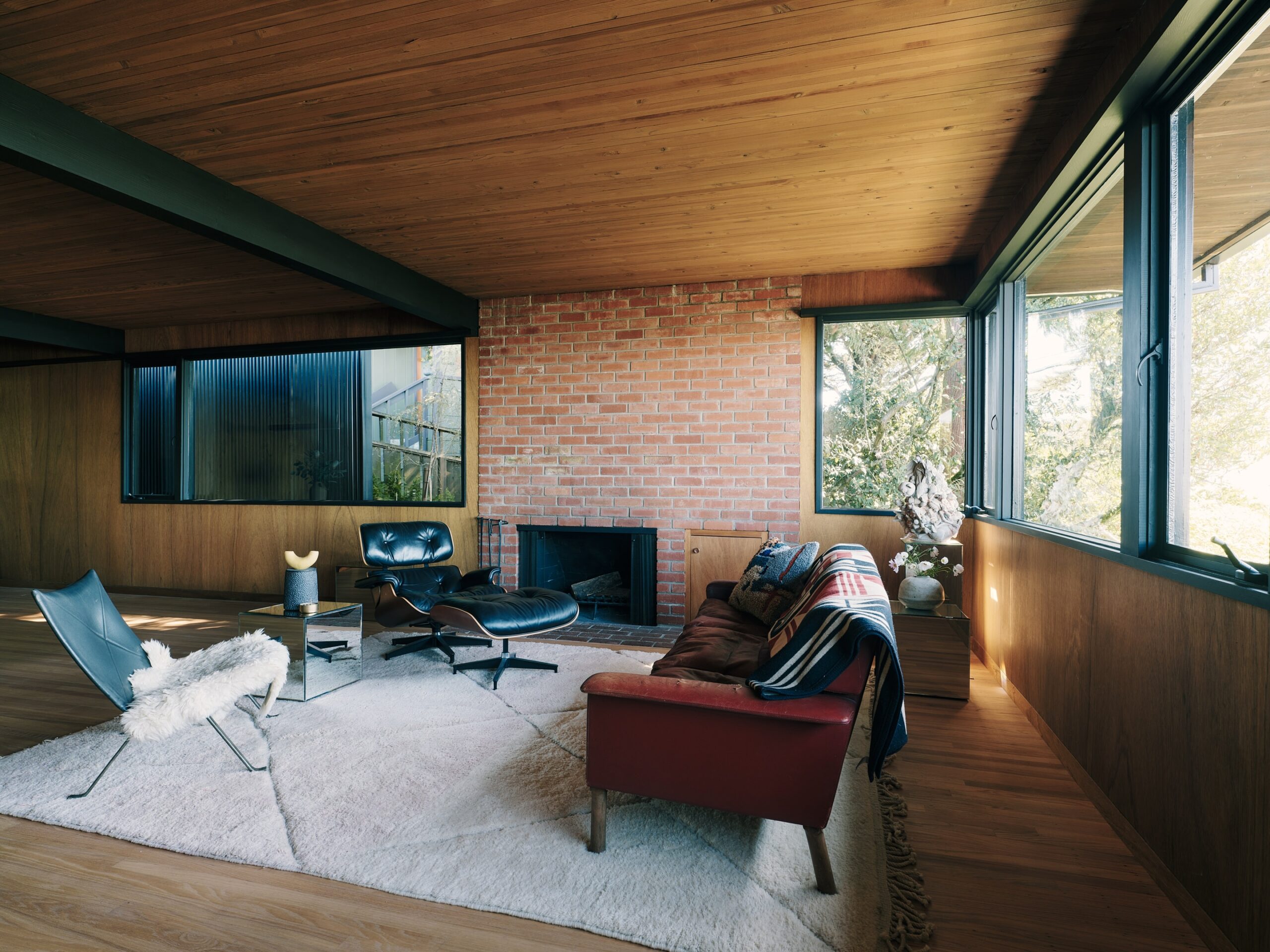
Designed in 1956, Creston House by architect Roger Lee was designed to be unpretentious. Like most of Lee’s designs, the Berkeley Hills, California, residence was geared toward the middle class, showing that with minimalist design high-quality homes can be affordable. His no-frills approach draws attention to rich materiality and Bay Area craftsmanship. Mork-Ulnes Architects was tapped for a light renovation of the home. The architects approached the project by opposing an additive mindset, retaining 99 percent of the original building and adding only subtle tweaks to safeguard Lee’s work.
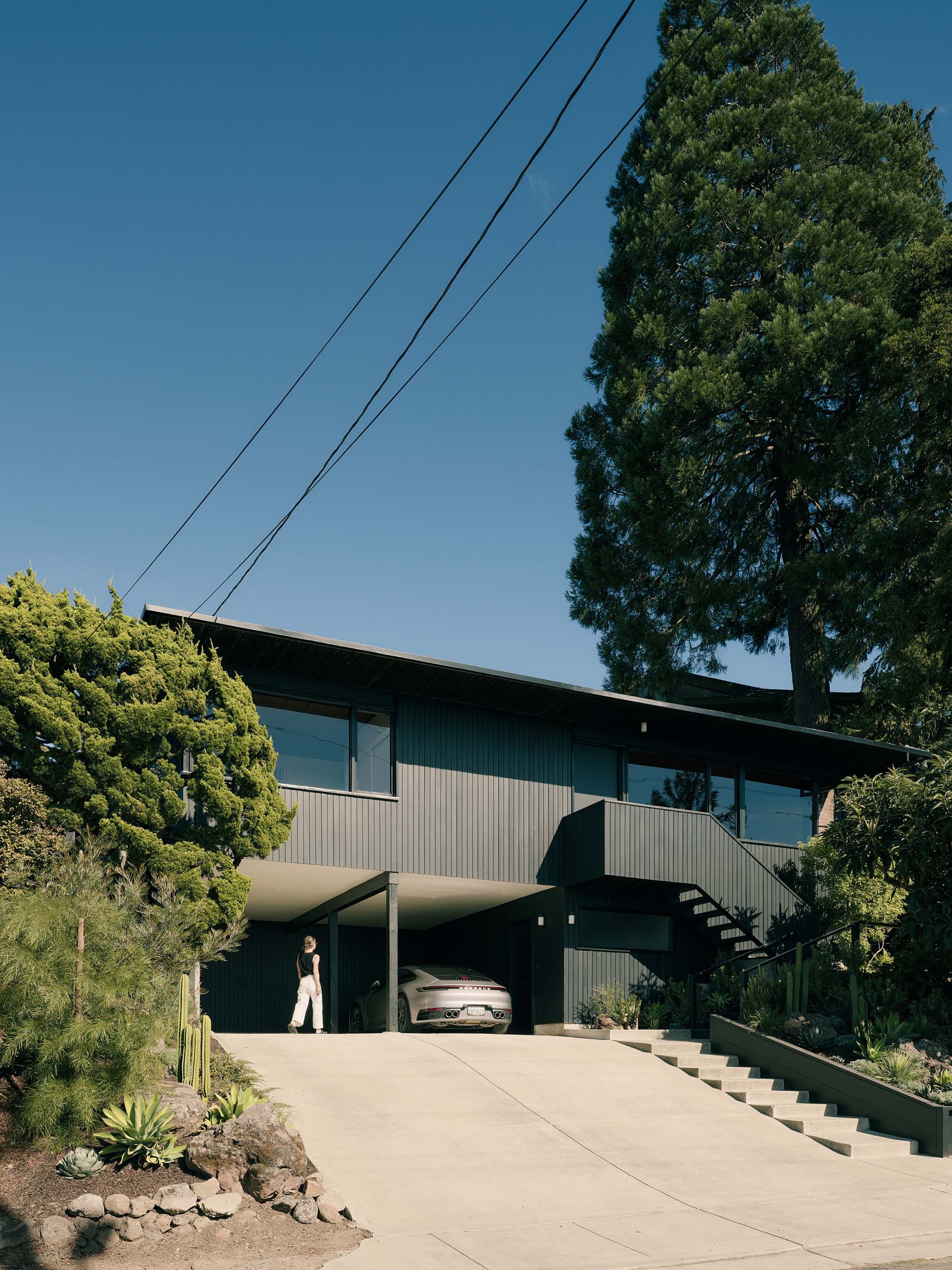
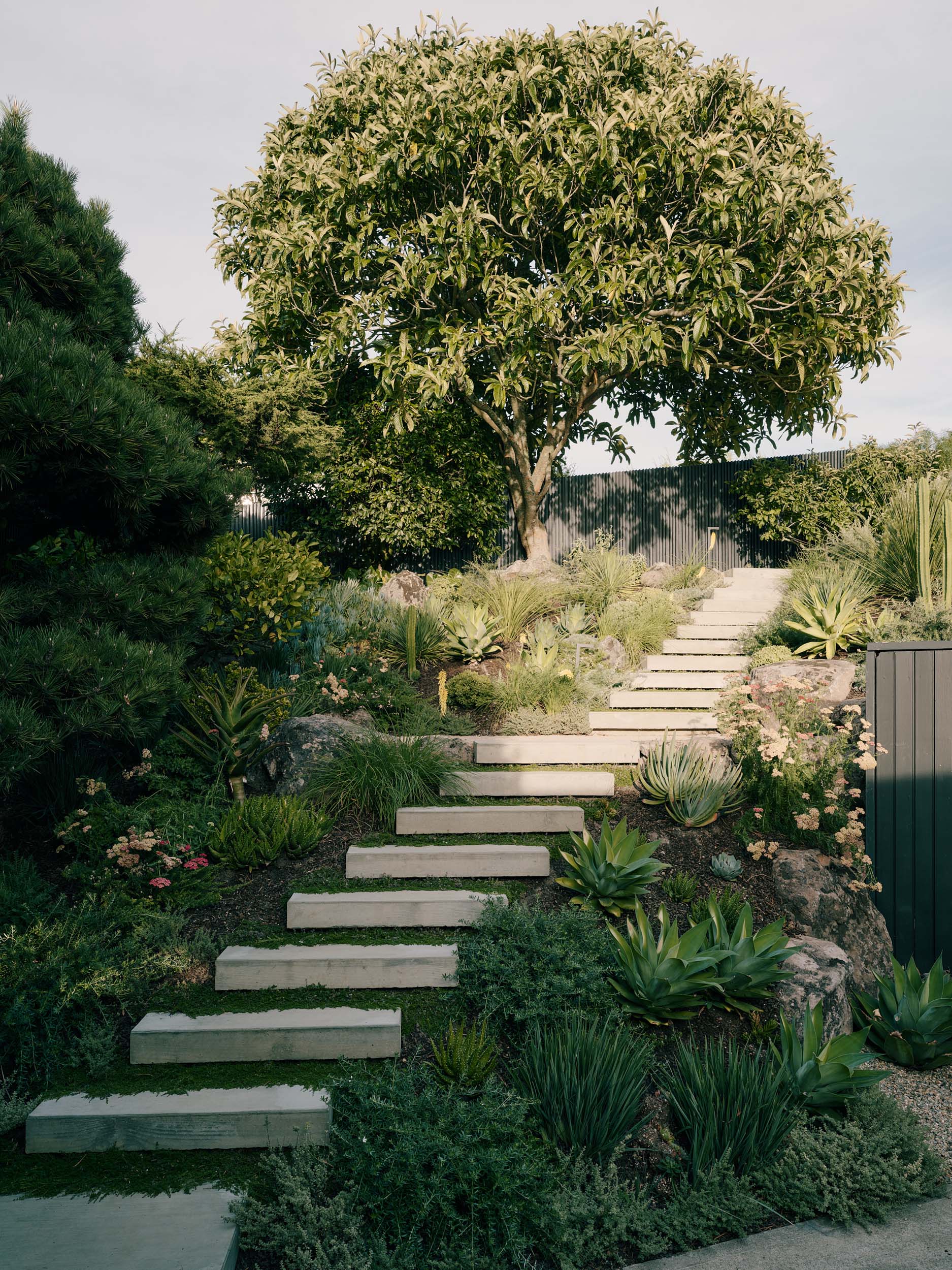
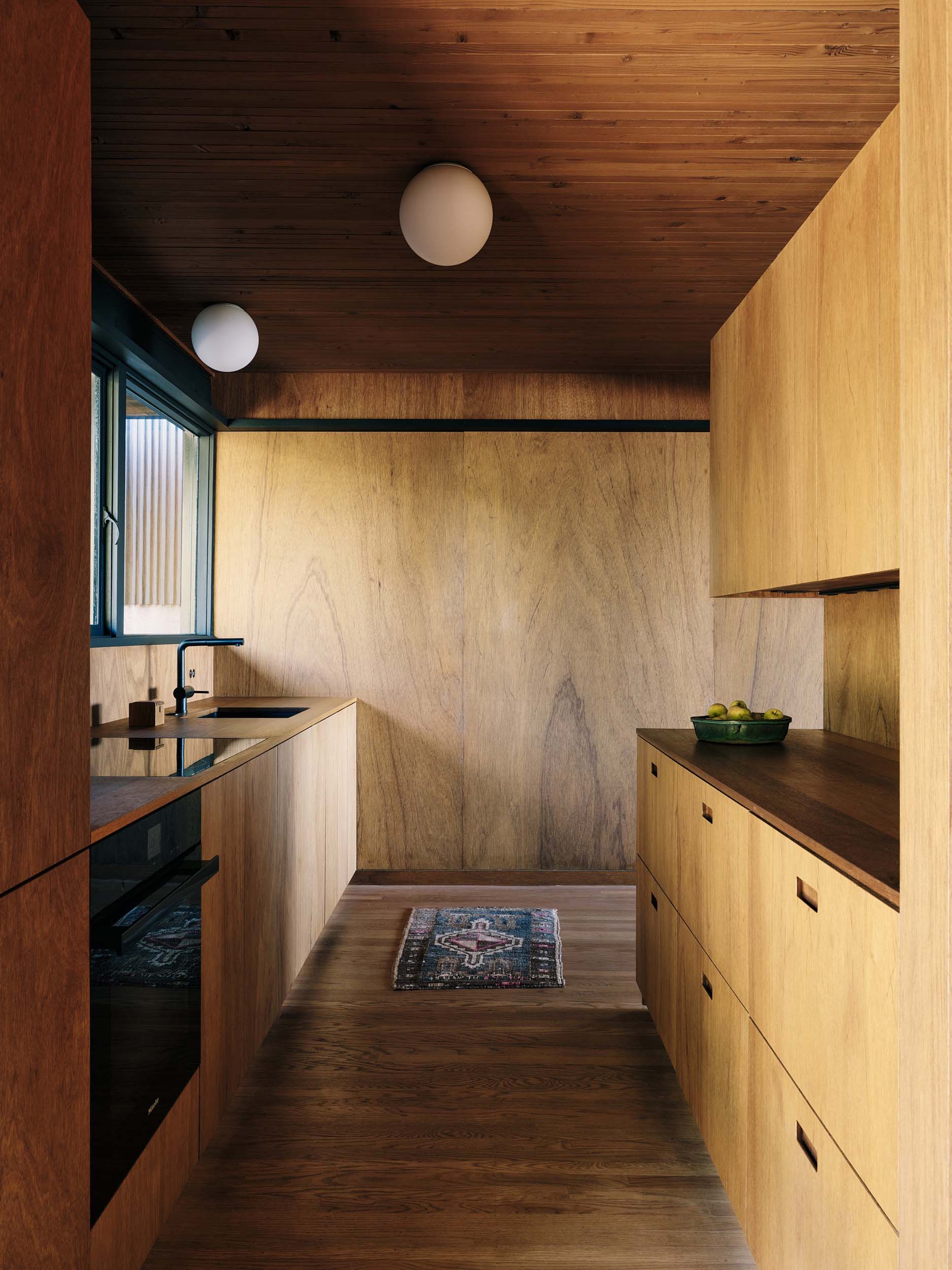
A black-paneled exterior and ribbon windows make Creston House discreet. The original, nail-laminated timber roof was preserved, honoring the historical construction technique. Inside, various wood treatments are applied. Looking up, the ceiling is covered with original, laminated 2-by-6-inch boards, accented by exposed black beams. The walls feature a rich mahogany and the wooden language continues with red oak flooring and in the updated kitchen, where new appliances are slotted into wooden masses that conceal them.
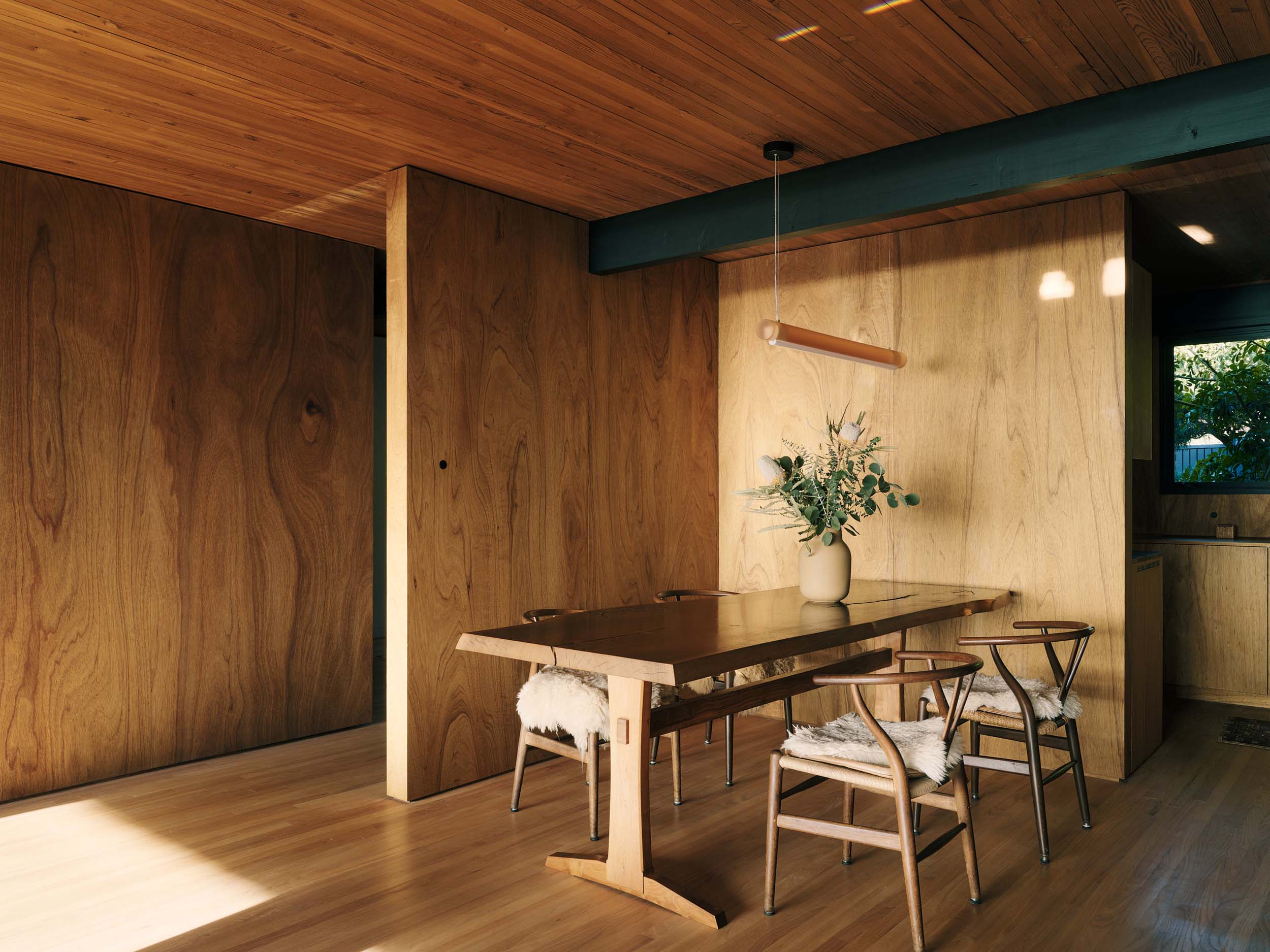
The project was more so a refinement rather than a full blown renovation. Interventions made prioritized deepening the home’s connection to nature, natural light, and spatial flow. The main intervention: Mork-Ulnes Architects removed small sections of walls separating the main living area and kitchen. This change allows for a better transition between spaces and for the kitchen and lounge areas to reach out toward the outdoors.
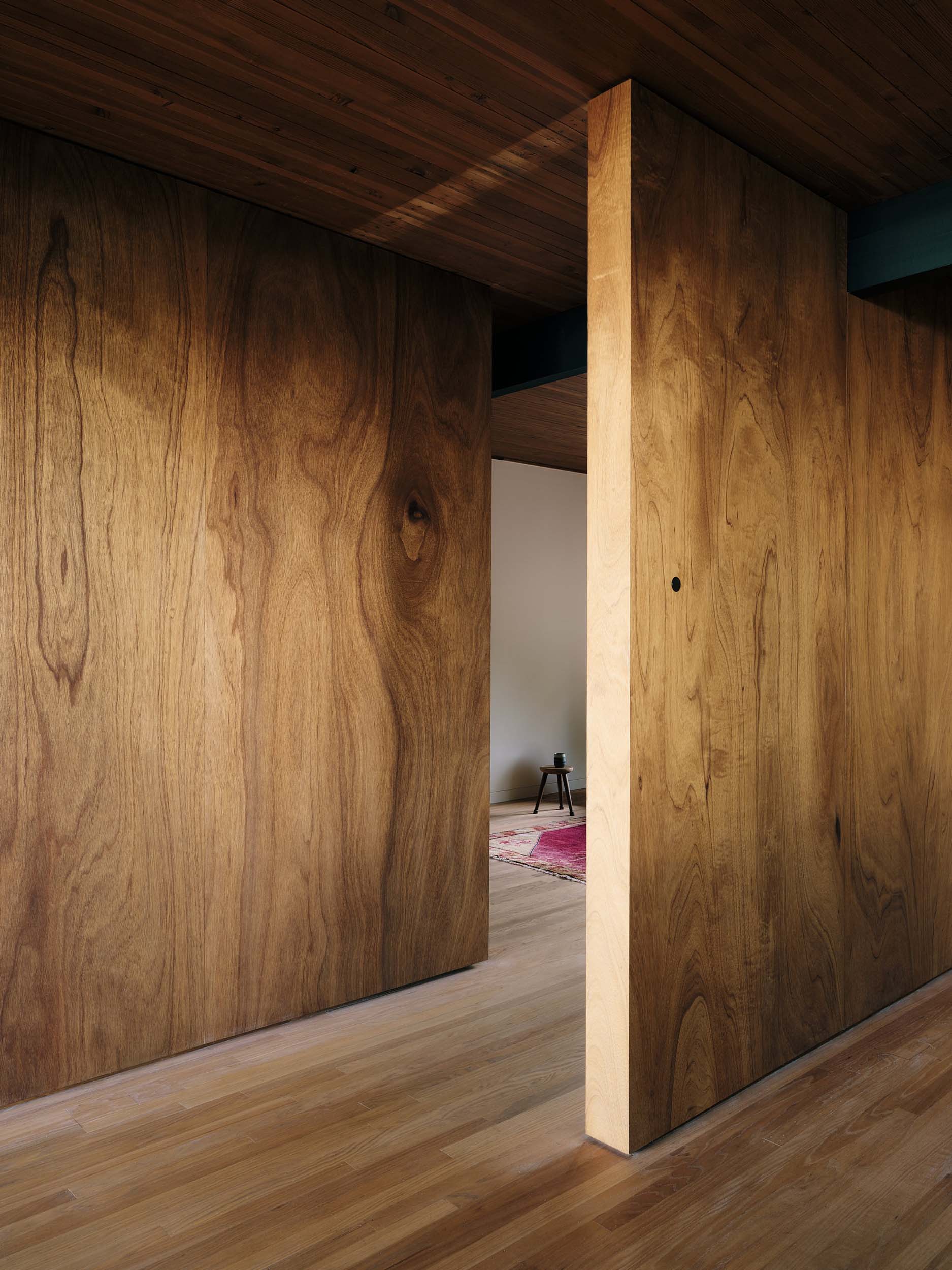
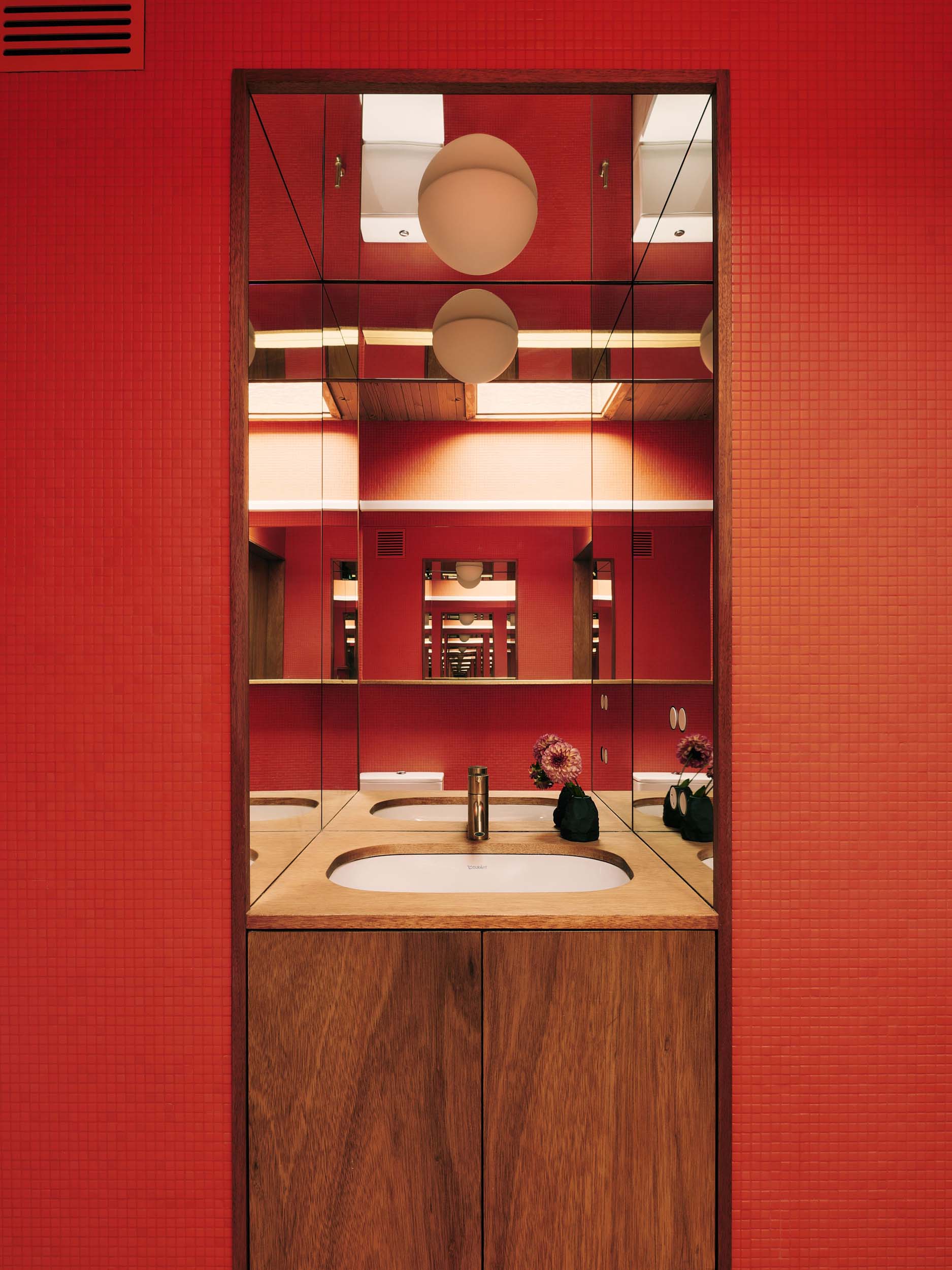
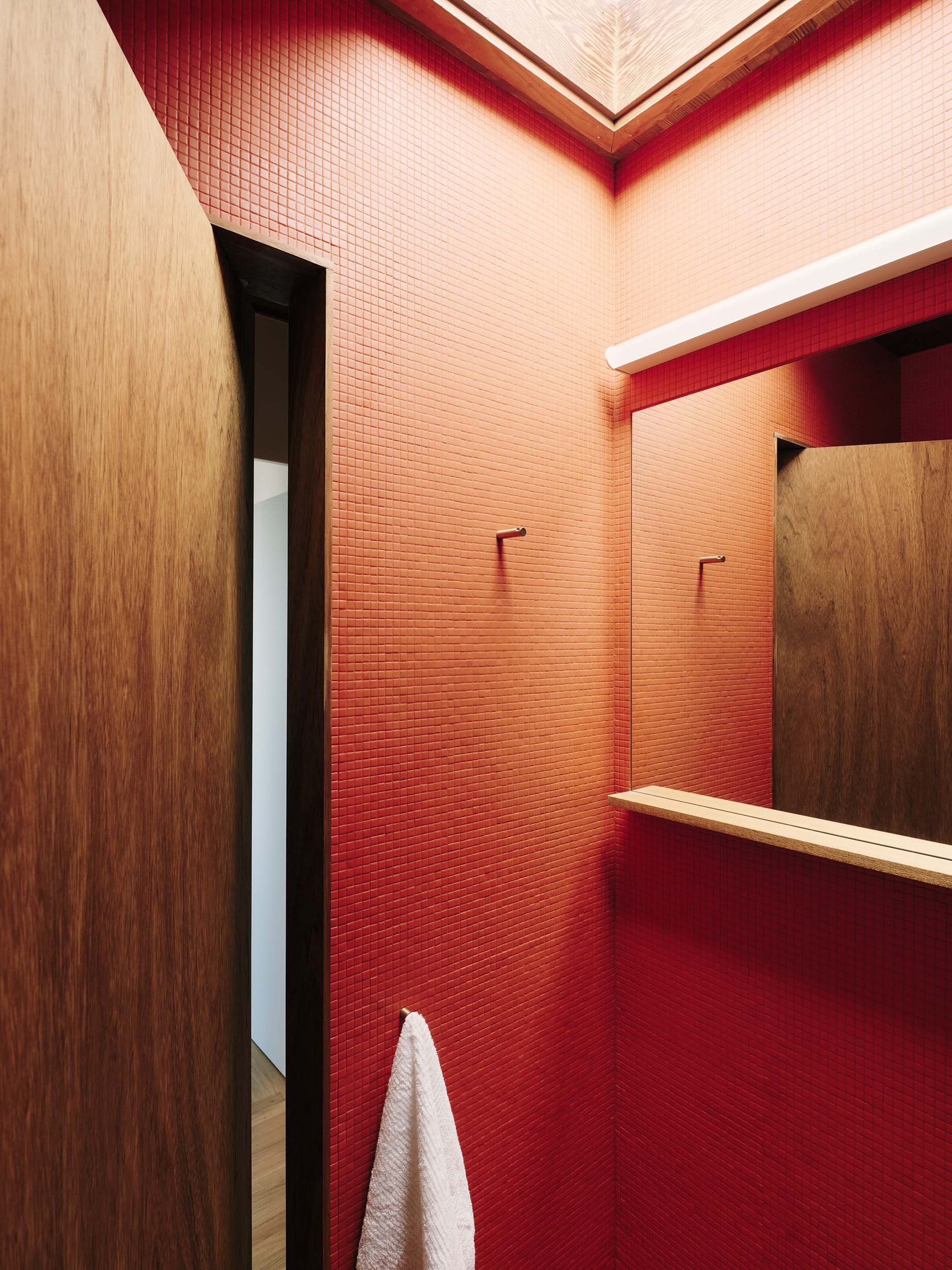
Plucking away at these walls also allows the central wooden volume to be more prominent within the floorplan. The structure conceals cabinetry, offering storage for the home as well as two bathrooms. The bathrooms are tucked behind two wooden doors that fall flush with the rest of the central form. Their interiors, however, tell a different story, as they are clad in small red tiles. Mirrors were applied to the walls and ceiling that surround a wooden sink. The four mirrors deliver a unique visual effect where the sink repeats indefinitely through the reflections. Although the bathroom designs are drastically different from the wood base of the home, the bathrooms are a playful contrast, integrated to still respect the integrity of the home.
Creston House celebrates its origins while exercising the power of restraint. Mork-Ulnes Architects applied traditional techniques when renovating the home, giving the original structure an upgrade while respecting its midcentury ethos.