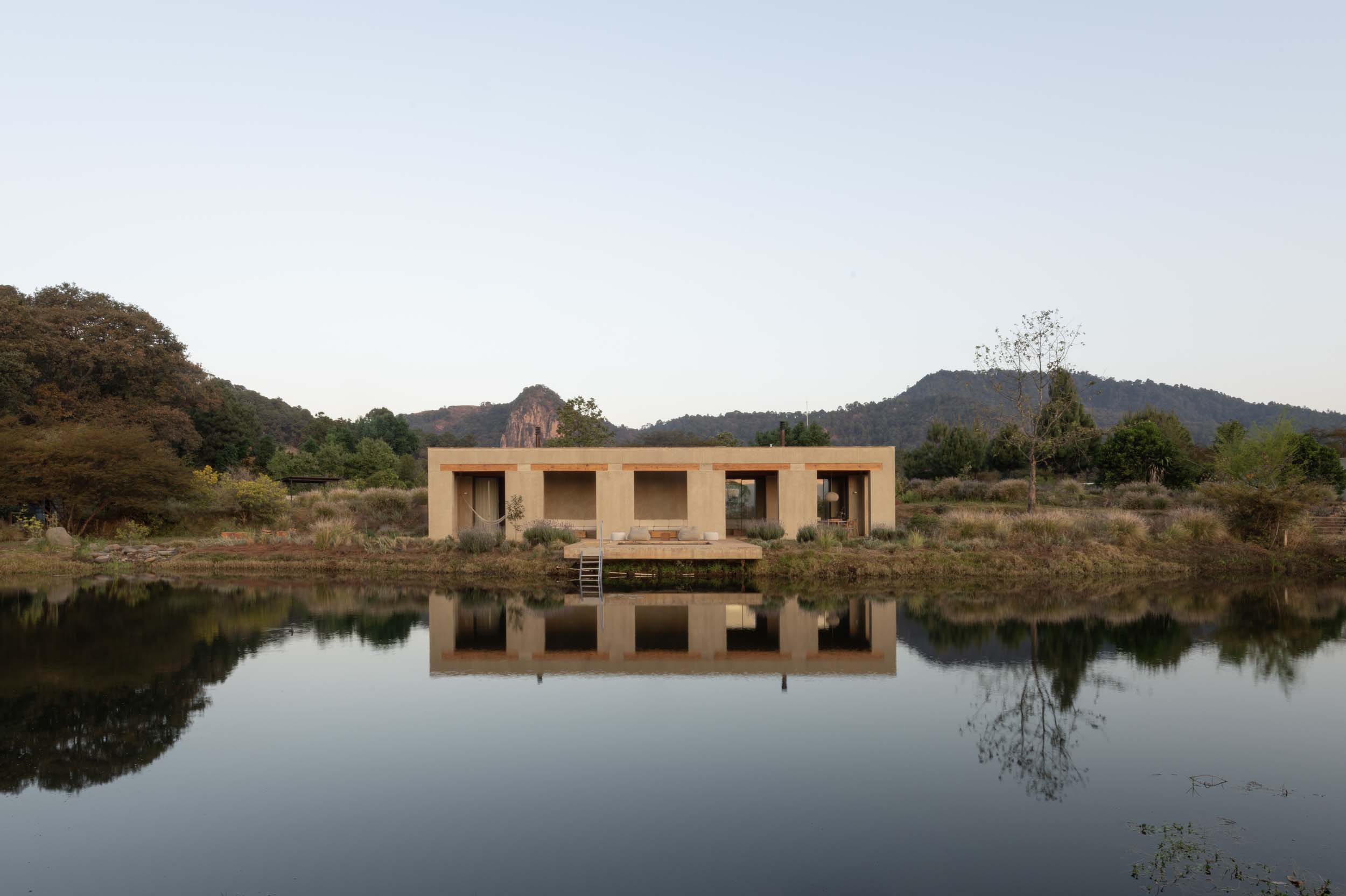
Set between two avocado orchids in Mexico on a site with no electricity, sewage, and potable water is Toronjos, a new vacation home by Mexico-based architects Pérez Palacios Arquitectos Asociados (PPAA). The firm, listed on AN Interior’s Top 50 architects and designers this year, designed the home to disappear into the land while also living lightly on it.

Built right up against a lake, Toronjos’s single-story structure, around 1,024 square feet, doesn’t attempt to overshadow the land. The structure is surrounded on its perimeter with a series of openings and walls to visually and conceptually live with the surrounding nature.

Toronjos does more than promote indoor-outdoor living. The architecture supports a self-sufficient lifestyle using solar panels and rainwater from the lake, as well as a minimal footprint. The generous openings help provide cross-ventilation and an interplay of light and shadow to decorate the interiors. It also helps frame the home for mediation; many of the residence’s rooms open up and look outward to the land. Hammocks throughout reinforce the design’s emphasis on relaxation and reflection in nature.


PPAA relied on regional builders and local materials. Construction relies on natural resources, built exclusively with adobe and wood. The former forms the floors, which were handcrafted and produced on site; the plaster walls; and some of the beams. The bricks were made from straw and earth and dried naturally by the sun. Exposed beams rhythmically support the openings using wood. Local availability of wood determined the size and sequence of the openings.


The sense of honest composition continues inside. Interior glazing, rounded walls, and a mix of wooden and steel furnishings make for a modern yet modest abode. The home unfolds into three longitudinal sections with the core components housing the private areas like the bedroom, bathroom, and changing room.


More social areas like the kitchen and living room lie on the perimeter to take advantage of the extensive openings. These areas, much like the building itself, are designed to harmonize with the surroundings—not dominate over them.