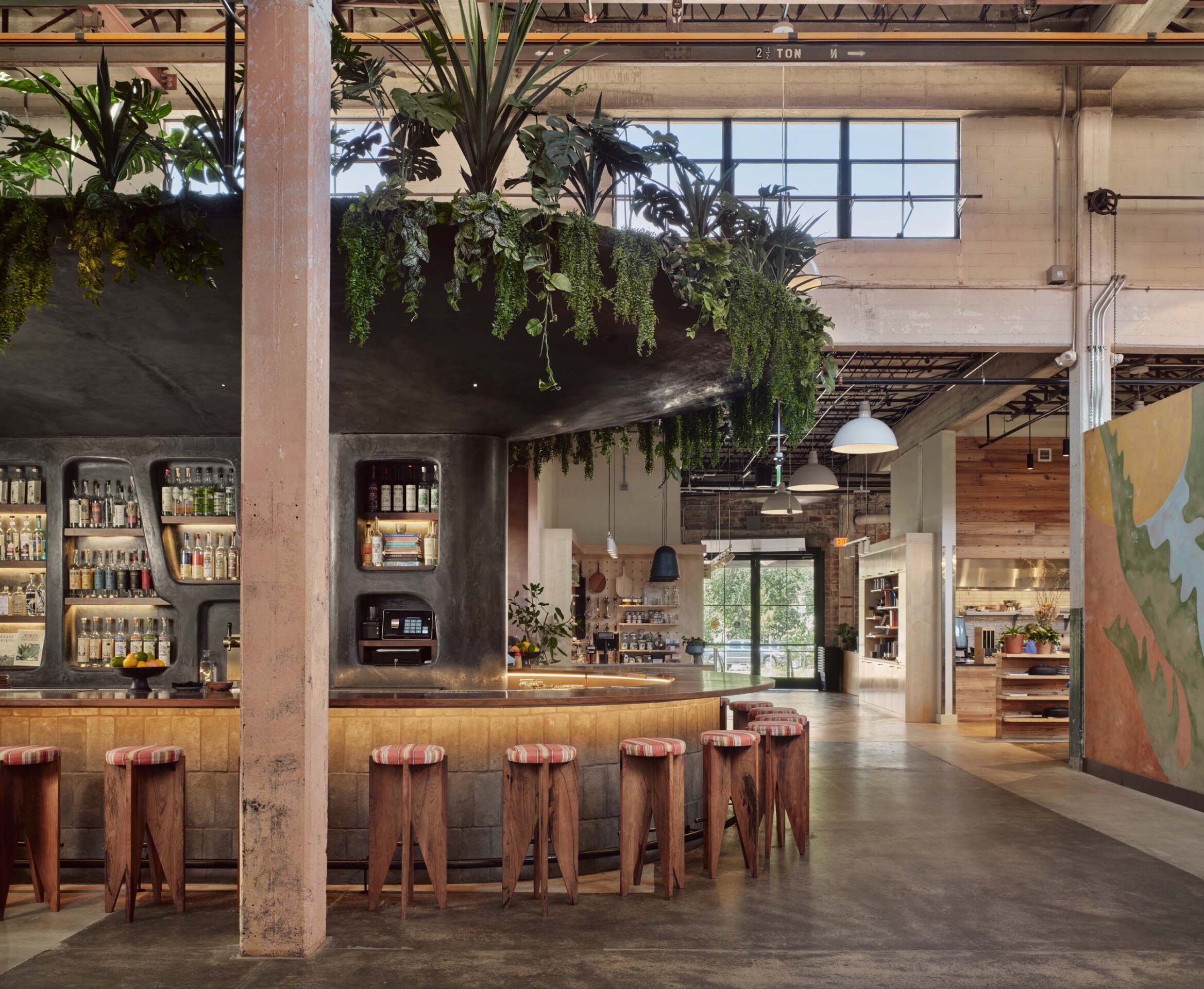
In 1948, the Samuels Glass building became part of the fabric of San Antonio, Texas. When Emmer & Rye Hospitality Group looked to convert the warehouse into a new food market, local firm Clayton Korte saw the opportunity to adapt much of the historic building into a layered, textured culinary locale. Thus, Pullman Market, the new 53,979-square-foot food hall, creates sensorial zones for each vendor while keeping the legacy of the building on full display.

“Preserving historic buildings like the Samuels Glass building is not only a sustainable practice but also adds a layer of grit and texture that enhances the sensory experience of the market. The building’s original materials and structure provide a rich backdrop for the new elements, creating a visual and tactile contrast,” said Sam Manning, partner at Clayton Korte.


The firm maintained the building’s original materials, even those with patinas or time-worn conditions like the exposed brick and marred columns. For the new layout, the architects used infill between structural elements to stitch together patios where skylights situated above exposed beams and plush seating create a relaxing lounge area, allowing for continuous flow within the space.

Despite the warehouse-like scale, the market remains inviting and elevated as it accommodates millwork-clad booths, chandeliers, plaster-wrapped walls, and a variety of plants from Word + Carr Design Group. The lofty ceiling heights and generous light monitors allow verticality from trees and planters to direct sightlines and incorporate new life into the building.

The design team worked with butchers, bakers, fishmongers, and baristas so each display felt personal, specific, and best highlighted the craft at hand. The warehouse now houses four sit-down restaurants in addition to the market: Mezquite and Mezcaleria bar; Fife & Farro, a pizza and pasta joint;, Nicosi, a dessert bar; and Isidore, a Texan restaurant. Pullman Market offers a tour of cultures through culinary destinations, rooted in the states’ own historic structure.