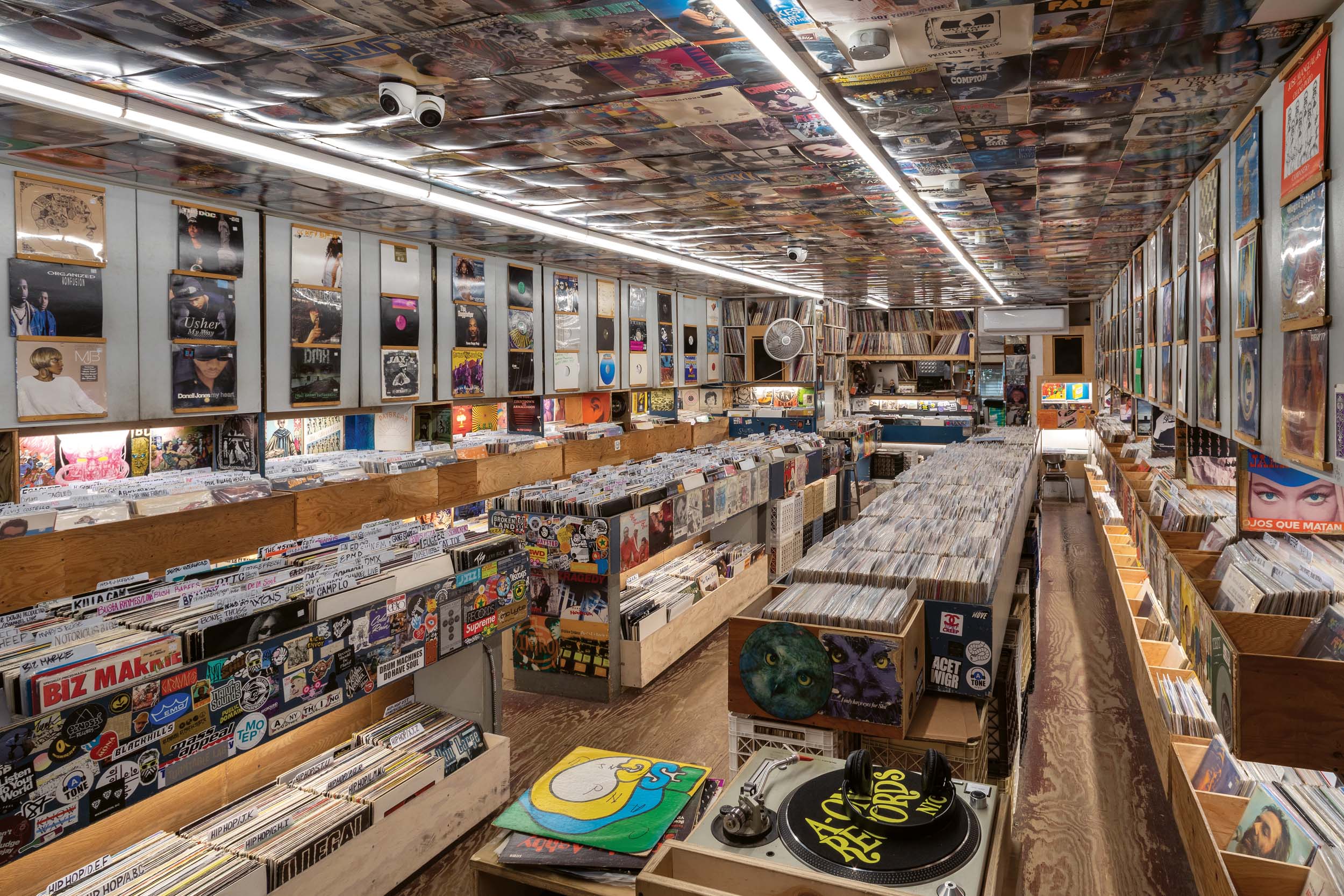
Most record stores—whether their design adheres to a minimalist palette or embraces the chaos of the stacks—are a kind of platonic ideal of the consumer experience. For shoppers whose bodies allow it, the act of crate digging, of sifting through the piles and extracting something incredible, is a physical pleasure. Then there’s the mental benefit of developing expertise, the social joy of sharing it, and the ambivalent power of showing it off. Oh, and there’s the almost-erotic thrill of constant discovery.
Record shopping refuses the mindless, algorithmic overconsumption of streaming. But it also rewards the idea of shopping as education, as lifestyle, as community-building. Each record contains a wealth of information, while signaling a knowing power with the graphics on its approximately 150 square inches of real estate. For example: The checkerboard cover of Manuel Göttsching’s 1984 proto-techno classic E2-E4 connects op art and the retrofuturist graphic strategies of New Wave. Its title puns on guitar tuning and chess, but its sounds link 1960s New York serial composition, 1970s Krautrock, 1980s postdisco, and 1990s Latin house. Buy it, and you’ll learn something. Buy it, and you’ll look—and will be—cool. Buy it, and you’ll join its community of fans.

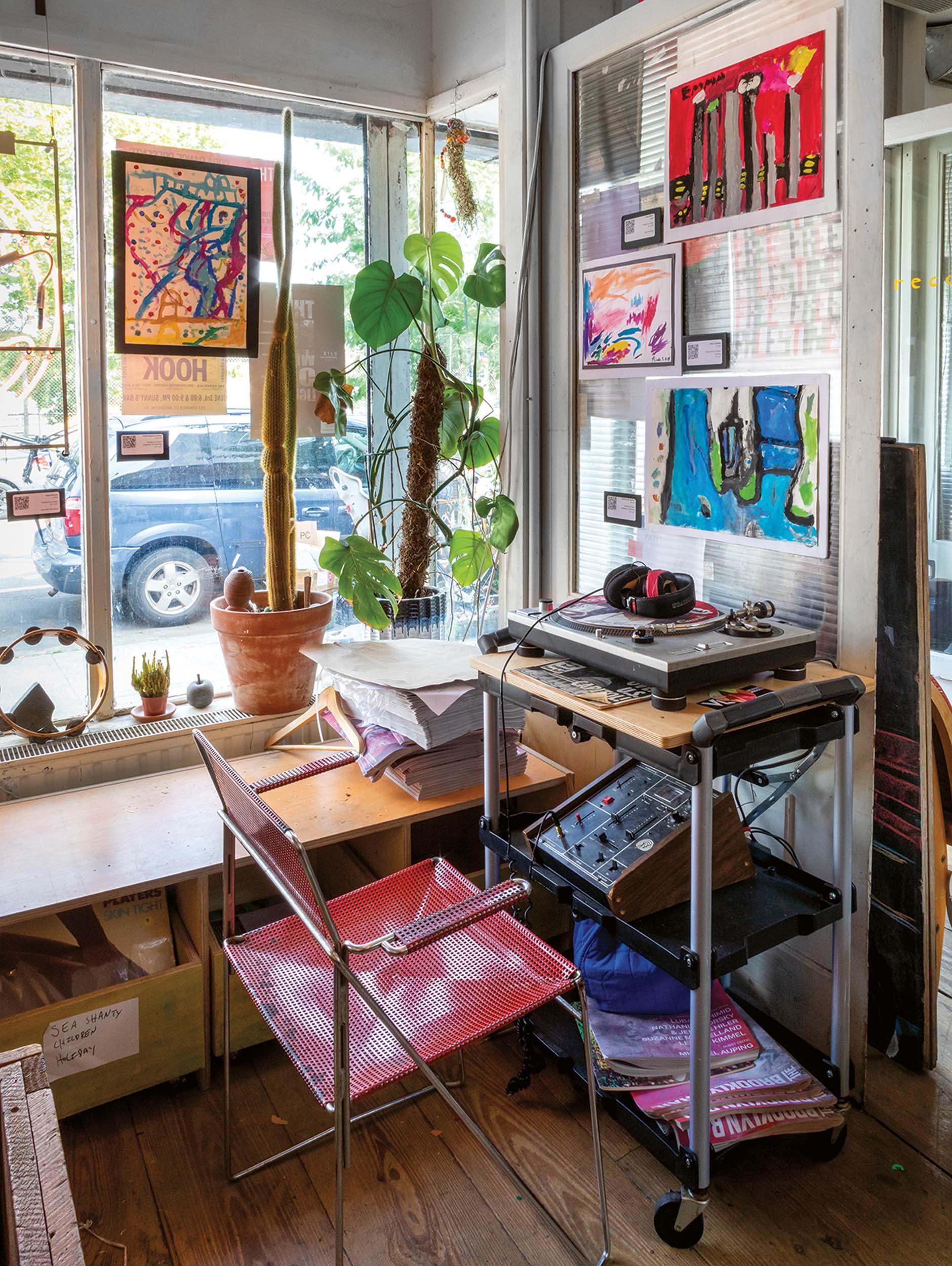
E2-E4 is barely visible on the wall of New York City’s essential A-1 Record Shop in a photo on the cover of Vinyl NYC, a new thirst-inducing survey of the city’s record stores published in September by Prestel. Photographed by James T. and Karla L. Murray, with text by Hattie Lindert, the book is itself a record—not just of the city’s love affair with vinyl, but also its retail potential.
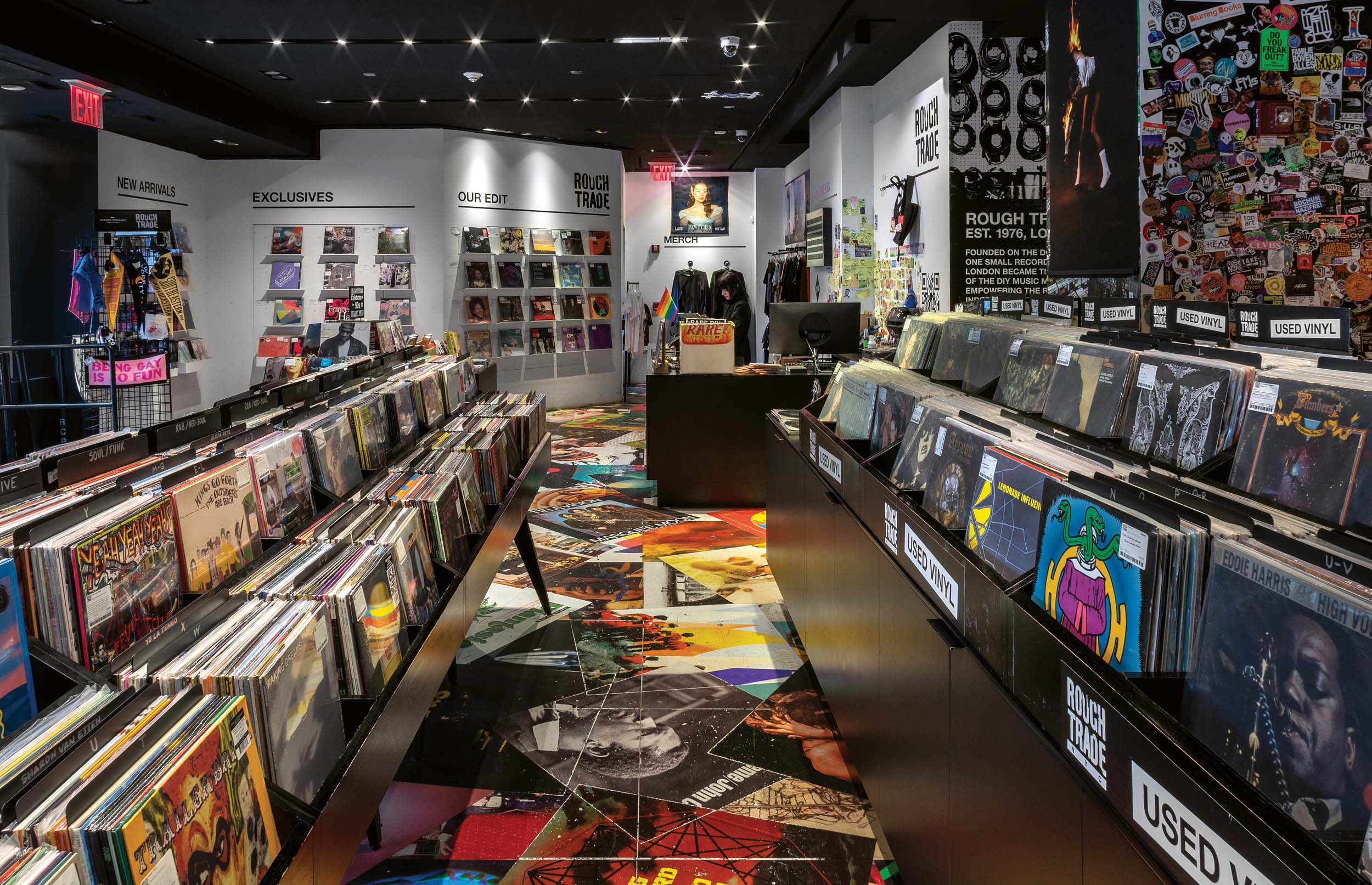
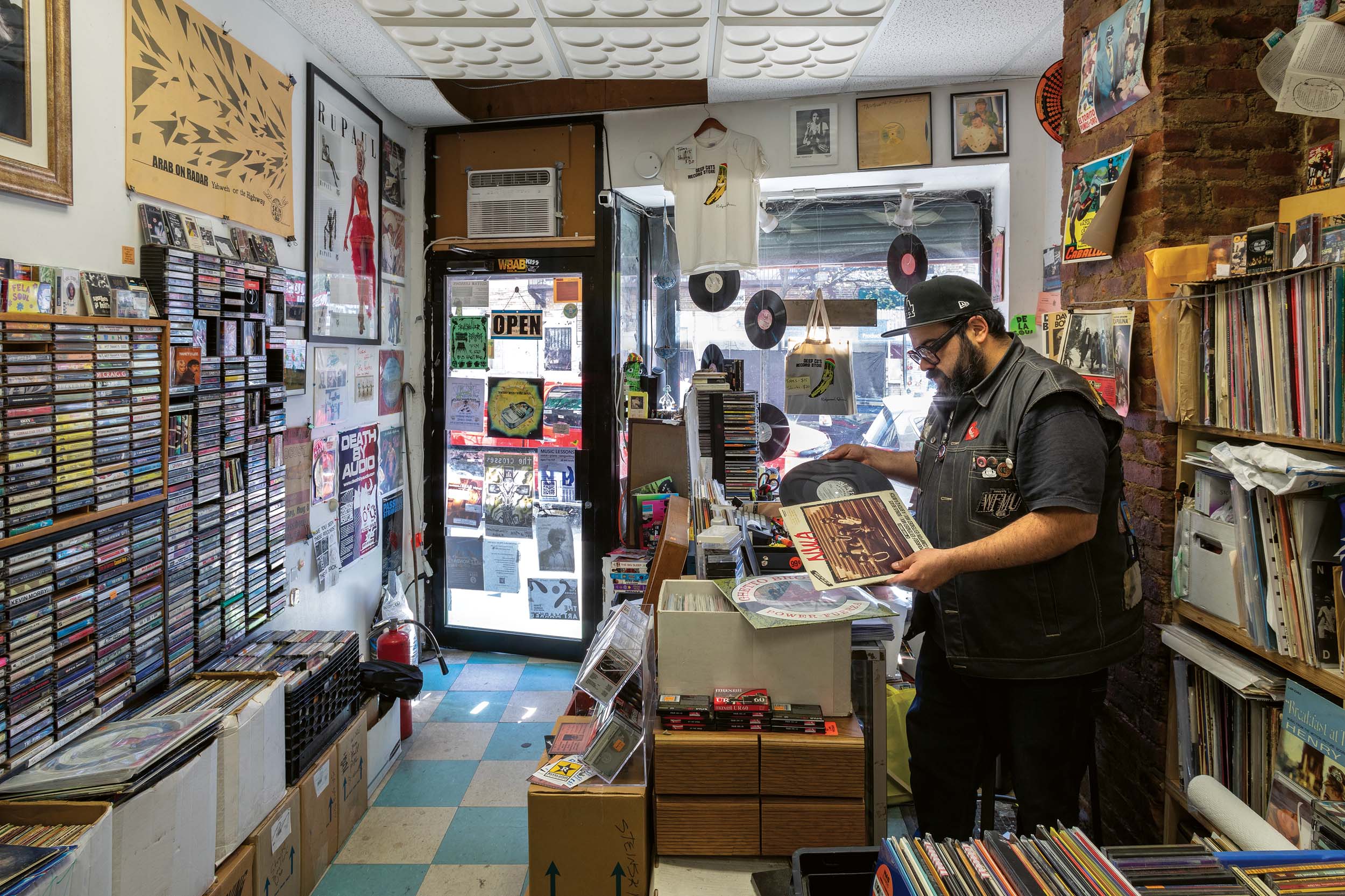
Any such catalogic endeavor is inherently incomplete, and any record collector worth their weight in first pressings will have fun bemoaning the missing shops. (No entry for Prospect Lefferts Garden’s African Record Centre? The glorious, notorious mess of Williamsburg’s The Thing?) Still, the book delivers an admirable mix of venues, ranging from tastemaking anchors like Academy Records to genre-heavier outposts like punk heroes Generation Records, egghead electronic specialists Ergot and Paradise of Replica, and the unassuming but encyclopedic Jazz Record Center in Chelsea.

Thankfully, though, the authors don’t stop there. Instead, their book documents local record stores that shape global histories. On the vibrant walls of Jamaica, Queens’s essential VP Records, for instance, you can witness the global trade of reggae and dancehall music between the Caribbean, U.K., and U.S.—with all the harmonies and dissonances of capitalism, colonialism, diasporic ambition, and extraction—in the lineup of records for sale.
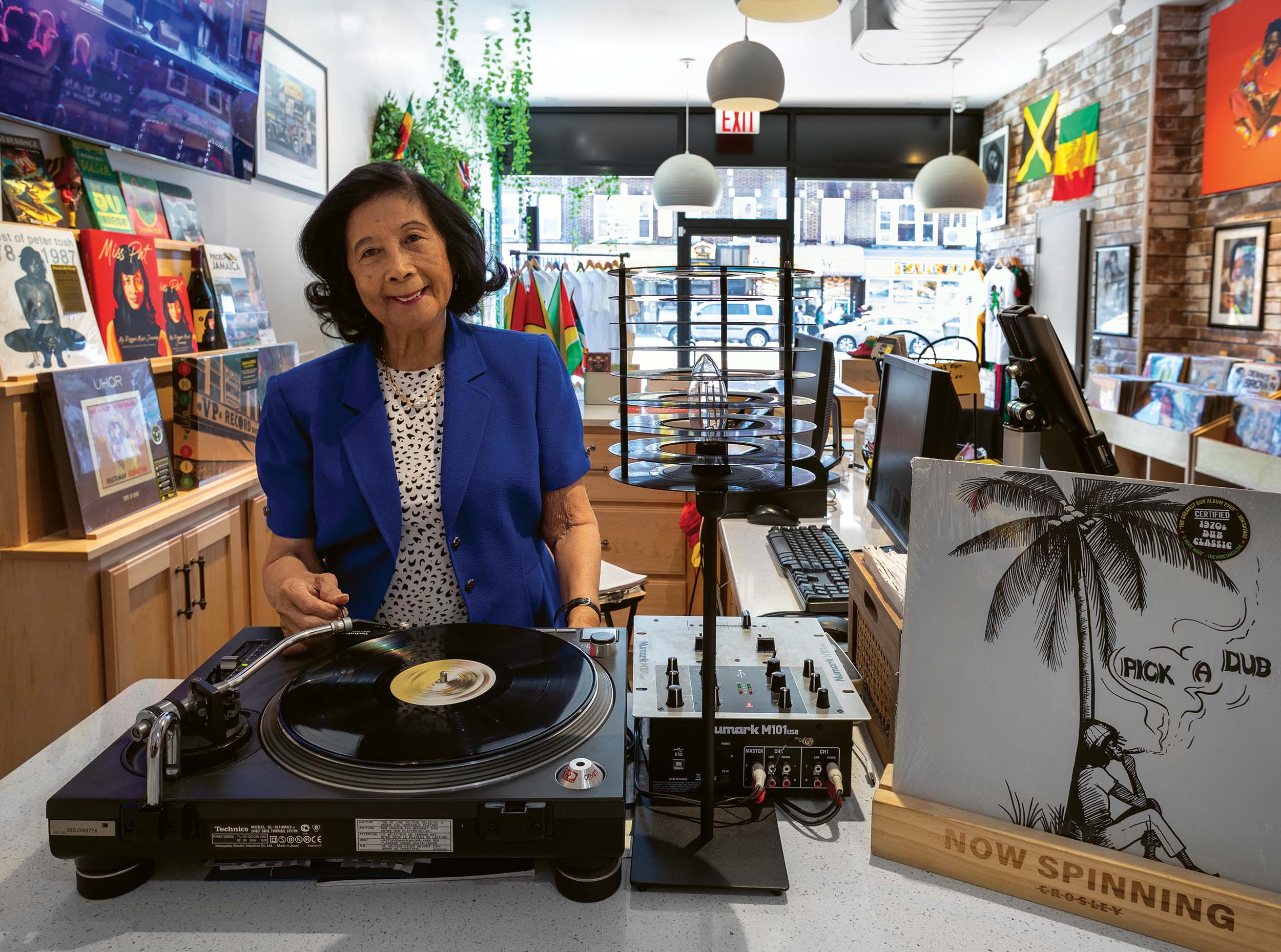
These politics are personal, as seen in the store’s shrine to its cofounder Miss Pat, who with her husband founded a record store in Kingston, Jamaica, in 1958, with an upstairs studio that recorded Bob Marley and the Wailers, among others. In 1979, Vincent and Pat Chin moved their family, and the family business, to Queens, where they opened VP Records, and then a label, which would become reggae and dancehall music’s most crucial imprint. All operations are still running today, which means its legacy remains alive. As is Miss Pat, who was photographed for the book triumphantly putting a needle on a record.
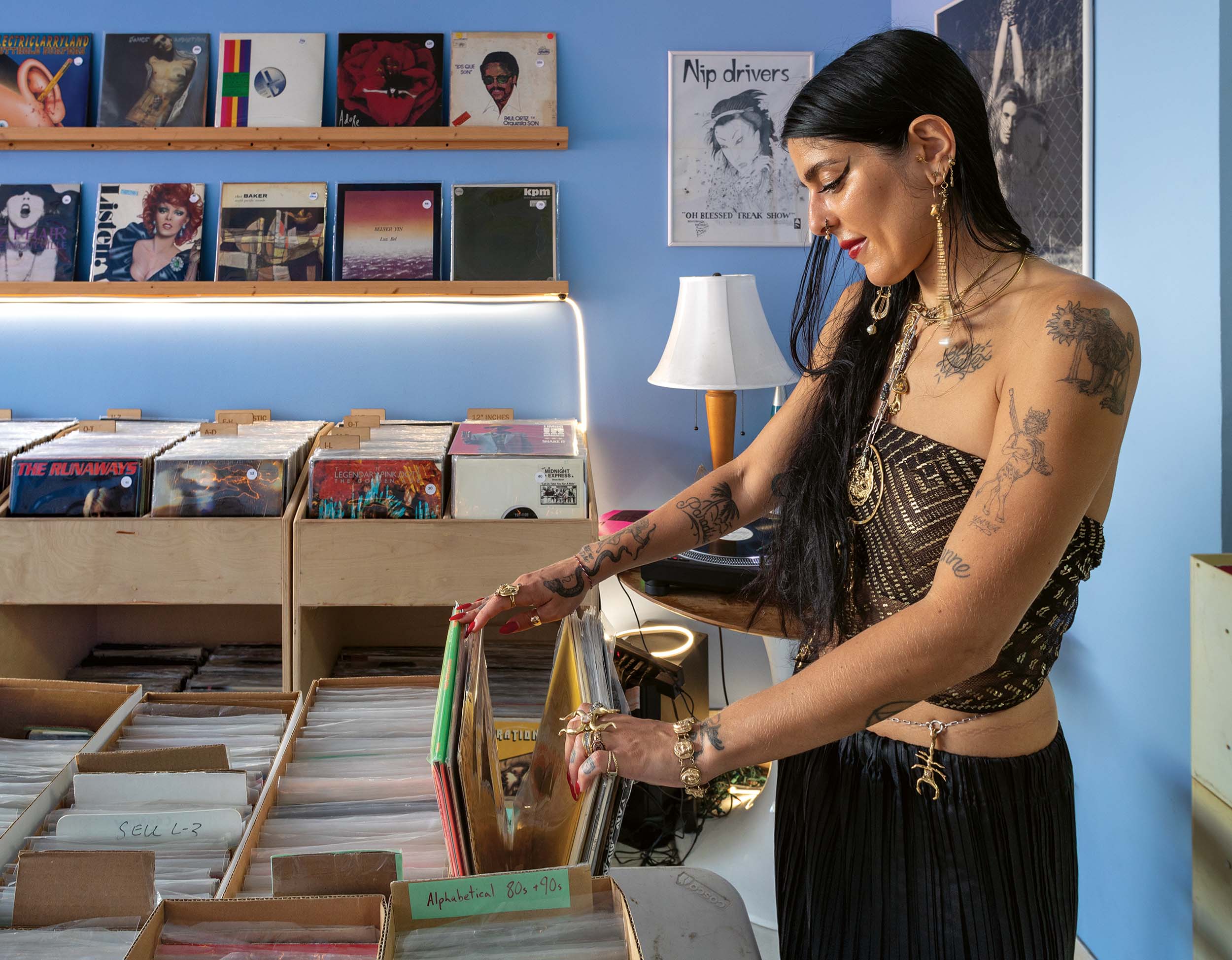
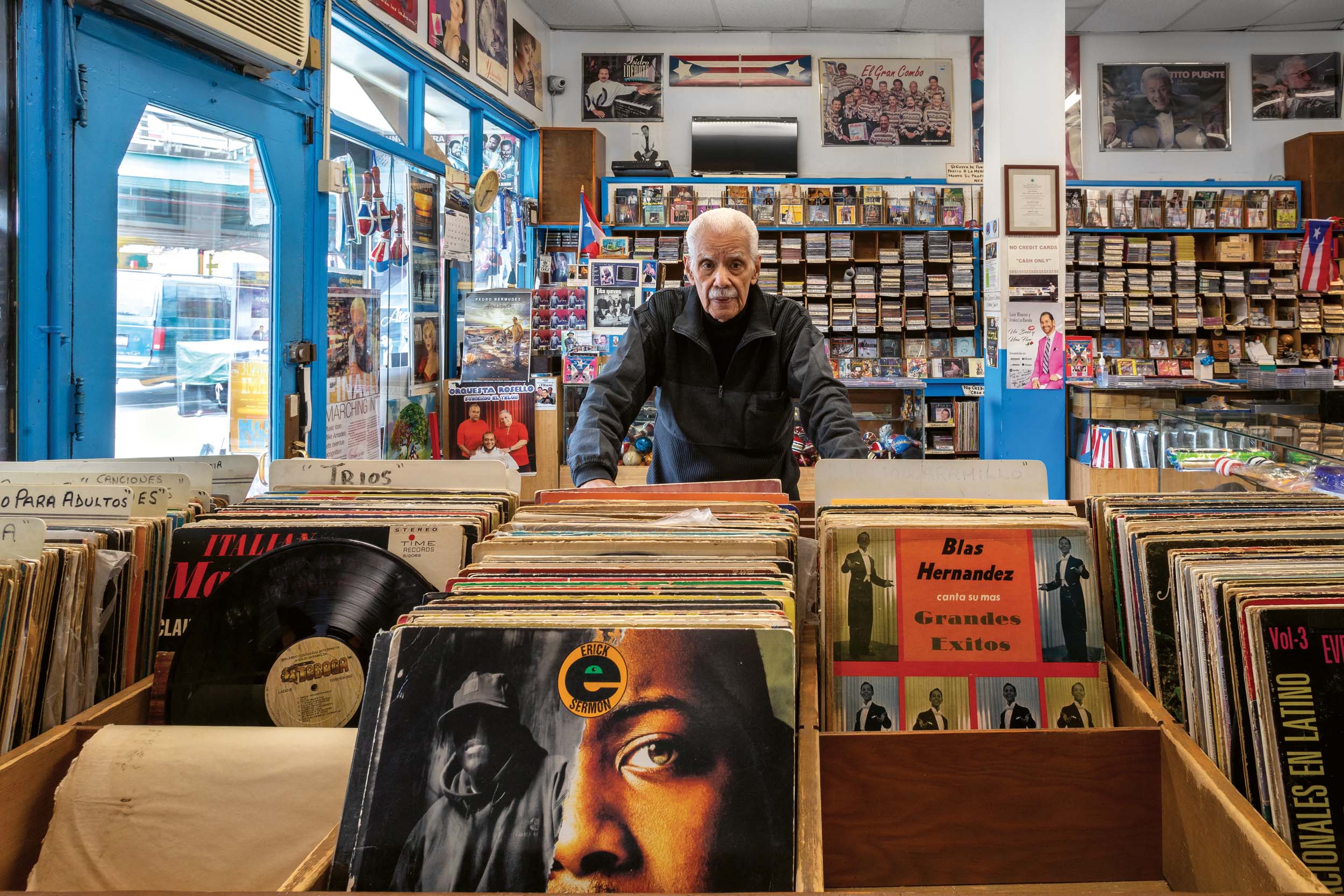
While VP’s interiors are undeniably Jamaican, other stores have other inspirations. Chinatown’s Paradise of Replica, for instance, is finished in glossy floors and robin’s egg blue walls, the same palette as the artwork for so many of the Japanese city pop and New Age records it carries. Flamboyant blue frames draw the eye to portraits of the many recording artists for whom Miguel Ángel “Mike” Amadeo wrote songs; they line the walls of his Casa Amadeo in the Bronx, the city’s longest-running Latin music store. Appropriately, techno purveyor Manhattan45 is black-on-black, with tags made on a vintage Dymo label maker. And, unsurprisingly, the show-tune specialist RPM Underground in Hell’s Kitchen is pure spectacle, with its choruses of neon signs, Americana kitsch, and display cases bursting with vintage boom boxes and microphones. Not to mention its 18 karaoke rooms, ersatz comedy club, and underground speakeasy.
This raises the flipside to the record store’s cache: The interior aesthetic can be sampled into almost any space. Boutique hotels around the world, including Brooklyn’s Ace Hotel, host vinyl emporiums. At nightclubs like Spot Lite Detroit and Public Records, you can buy a record, drink, and entry to a DJ set on the same bill. Retail stores, from Maison Kitsuné to Urban Outfitters to Walmart, will sell you a record along with everything else. As interest in vinyl grows, venues hope to press a little spirit of the beloved indie record store into their own grooves.
Usually, the corporate vibe doesn’t sync up. After all, as Academy Records founder Mike Davis remarks at the end of Vinyl NYC, the presentation of good music is personal: “There is some human interaction, buried deep in there.” Its warmth is waiting there, in all its complexity, for you to discover, within the stacks of a record store.